.avif)
This hands-on roundup lists the 10 CMMS platforms automotive facilities actually evaluate in 2026, ranks them (Makula #1), and gives the field-level vocabulary, procurement signals, and a pragmatic 30/60/90 pilot playbook that procurement, plant, and EHS leaders can act on immediately.
Last updated: February 25, 2026 — vendor feature claims and strategic positioning were verified on vendor product pages and recent industry roundups
Why this list? These vendors appear repeatedly in automotive-focused CMMS buyer guides and vendor directories; we validated core claims on vendor product pages and recent industry posts to ensure the list reflects what procurement and plant teams are actually reviewing.
Automotive plants tolerate very little downtime: a line stoppage cascades into OEM penalties, missed delivery windows, and expensive overtime. You need a CMMS that proves work was done, that supports multilingual crews and contractor workflows, and that ties directly to uptime metrics. This guide ranks the top CMMS platforms for automotive manufacturing in 2026, explains who each is best for, and gives a short pilot plan so you can test and scale quickly.
Summary
- Audience: Plant engineers, maintenance managers, facilities leads, EHS/compliance owners, and procurement.
- What we compared: audit & compliance features, PM & mobile/offline readiness, multilingual support, QR/requester workflows, and enterprise readiness (SSO/security).
- How we scored: weighted axis approach (Compliance 25% / PM 20% / Mobile 15% / Multilingual 15% / QR/requester 10% / Enterprise readiness 15%). Sources: vendor docs, product pages, recent automotive CMMS roundups.
Methodology note
We reviewed vendor product pages and authoritative industry roundups, looked for explicit automotive / Tier-1 use cases, and verified whether each vendor documents: refrigerant/EHS fields, QR requesters, offline mobile app behaviour, and enterprise SSO options. Where pricing was public, we noted indicative starting prices; otherwise,e we marked “contact vendor.” For procurement, always request the vendor’s security pack (SOC 2 / ISO) and a data-export statement.
CMMS Software Comparison
Quick winners (fast-scan)
- Best for compliance & OEM audits: Makula — audit trails, evidence capture, and multilingual support make it a clear choice for plants that must pass OEM and regulatory inspections.
- Best for ERP-native OEMs: SAP EAM — if your enterprise is S/4HANA-first, SAP’s native Plant Maintenance tools minimise ERP friction.
- Best mobile-first adoption: MaintainX — fast field adoption, great for technicians who need simple checklists and SOPs in their pocket.
- Best for OEE-linked insights: Fabrico — built to tie CMMS actions to OEE and the “hidden factory” problems Tier-1 suppliers worry about.
Top 10 Automotive CMMS Software
Below are ten CMMS platforms frequently evaluated by automotive manufacturing and facilities teams in 2026. The summaries that follow use standard industry terminology — MTTR, MTBF, OEE, preventive maintenance compliance, audit trails, SOP management, and ERP/SSO integration, and focus on the operational and procurement criteria that typically drive selection decisions. Each overview highlights documented capabilities, typical use cases, and practical considerations relevant to OEMs and Tier-1/Tier-2 suppliers.
Makula — #1 Automotive CMMS for Compliance & Multilingual Teams
Overview (what it does for automotive plants):
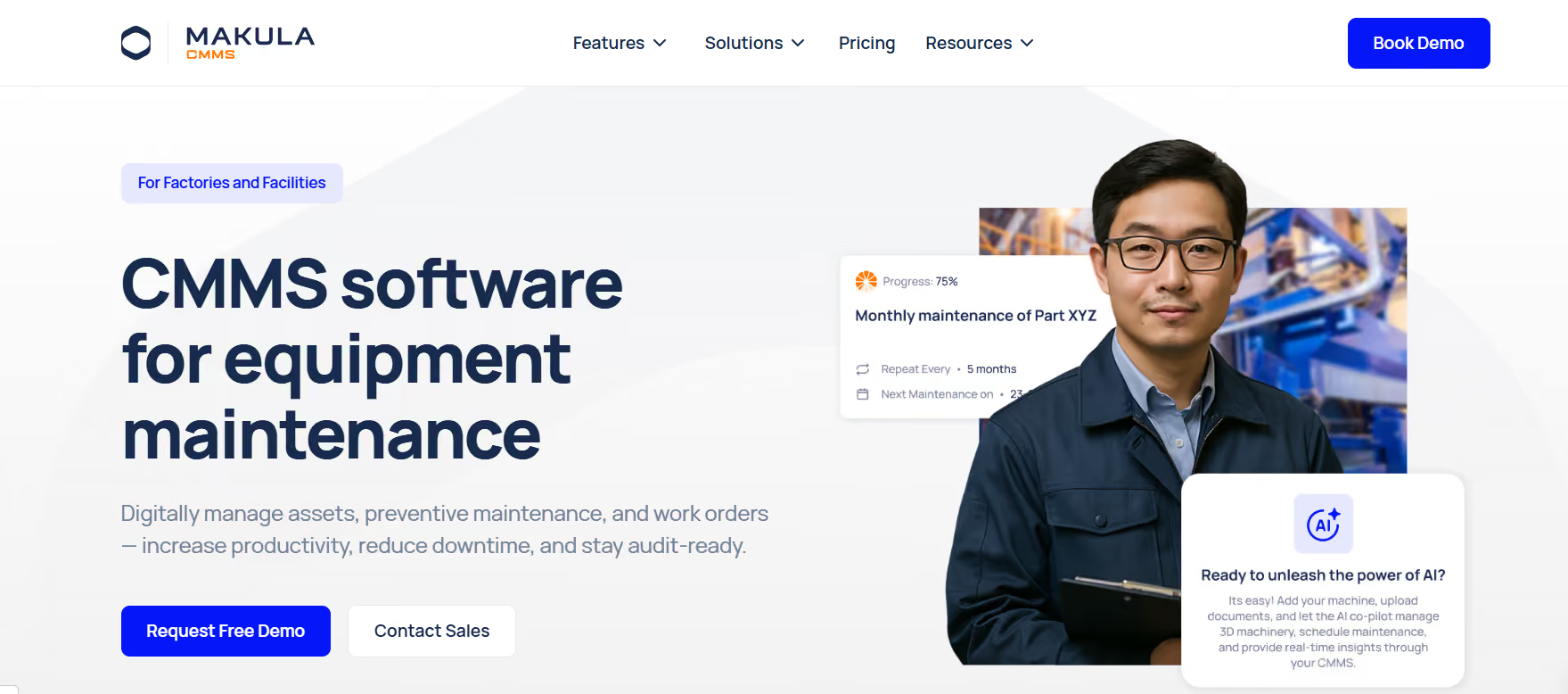
Makula is a cloud-first, compliance-oriented CMMS built to produce audit-ready records: timestamped work orders, technician sign-offs, photos, and exportable reports that meet OEM and regulatory evidence requirements. The platform is mobile-first, technicians can complete PM checklists, attach photos or invoices, and sync data when connectivity returns. QR code asset tagging and paperless inspections are core workflows designed to reduce search time and improve traceability.
Key automotive features
- Time-based preventive maintenance (PM) with digital checklists and attachments.
- Timestamped work-order evidence, technician signatures, and exportable audit packets.
- QR-code asset tagging and a requester flow for non-paid reporters (configurable workflows for routing reports).
- Mobile app with offline capability for use in areas with intermittent connectivity.
- AI Maintenance Copilot and search features for quicker troubleshooting and knowledge retrieval (where enabled).
Buyer decision signals
- You need a single source of truth for audit evidence (EHS, refrigerant records, supplier audits).
- You manage multilingual technician teams or many external contractors and require clear, retrievable work history.
Pros
- Strong compliance evidence; fast field adoption because of mobile UX.
- Practical QR + requester flows that fit facilities (restrooms, break rooms, common assets) and production assets.
Cons
- You’ll want an asset inventory import plan (CSV or ERP sync) to avoid spending time on manual asset creation.
- Heavier SAP/EAM-style integrations may need project scoping for data mapping.
Ideal use case: OEM supplier or plant with strict audit windows, a multilingual workforce, and a need to onboard contractors into a single evidence store.
Implementation tip (30/60/90): Pilot with 30–50 critical assets on one production line, enable QR reporting for 10 common assets, and run a compliance mock-audit at day 60.
Fabrico — OEE-first CMMS for Tier-1 suppliers (Rank #2)
Overview:
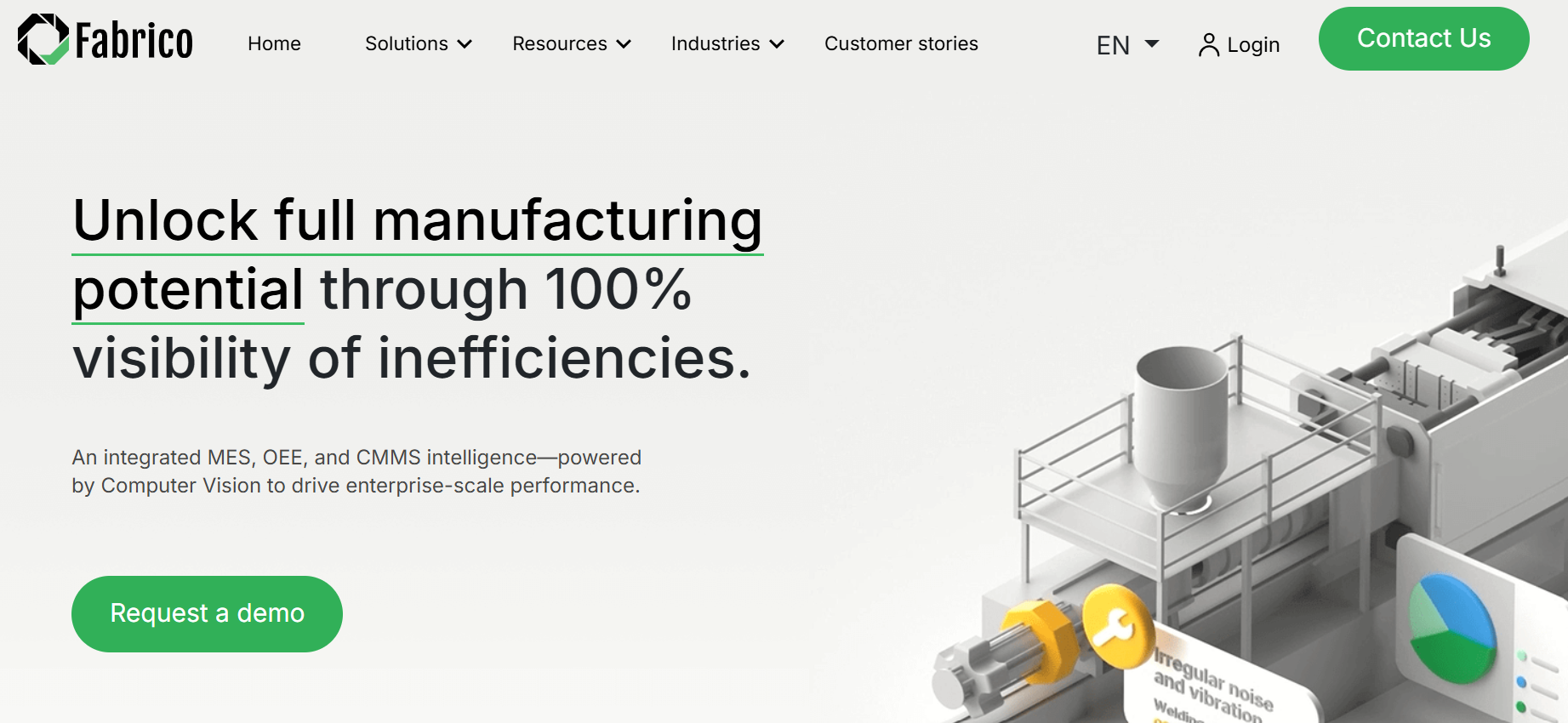
Fabrico’s positioning is factory-first: it prioritises linking maintenance actions to OEE drops and provides visual context (video & sensor signals) for root-cause analysis. For stamping, welding, or assembly lines where a single stoppage ripples across the schedule, Fabrico helps you find and fix the “hidden factory.”
Key automotive features
- OEE diagnostic overlays and event-to-workorder linking.
- Visual context (video snapshots) attached to incidents.
- Shop-floor ticketing that feeds back into production controllers.
Buyer decision signals
- You need to quantify production loss per failure and justify capital fixes to operations leadership.
- You want to integrate OEE telemetry into maintenance decisioning.
Pros
- Great for linking downtime to maintenance actions and CAPEX asks.
- Designed for high-speed, high-volume lines.
Cons
- Requires telemetry/OEE inputs — if your plant lacks reliable OEE, expect a preparatory data effort.
Implementation tip: Start with one process cell (press or assembly) and instrument OEE to correlate downtime events with work orders.
Fiix — proven CMMS with broad install base & strong support (Rank #3)
Overview:
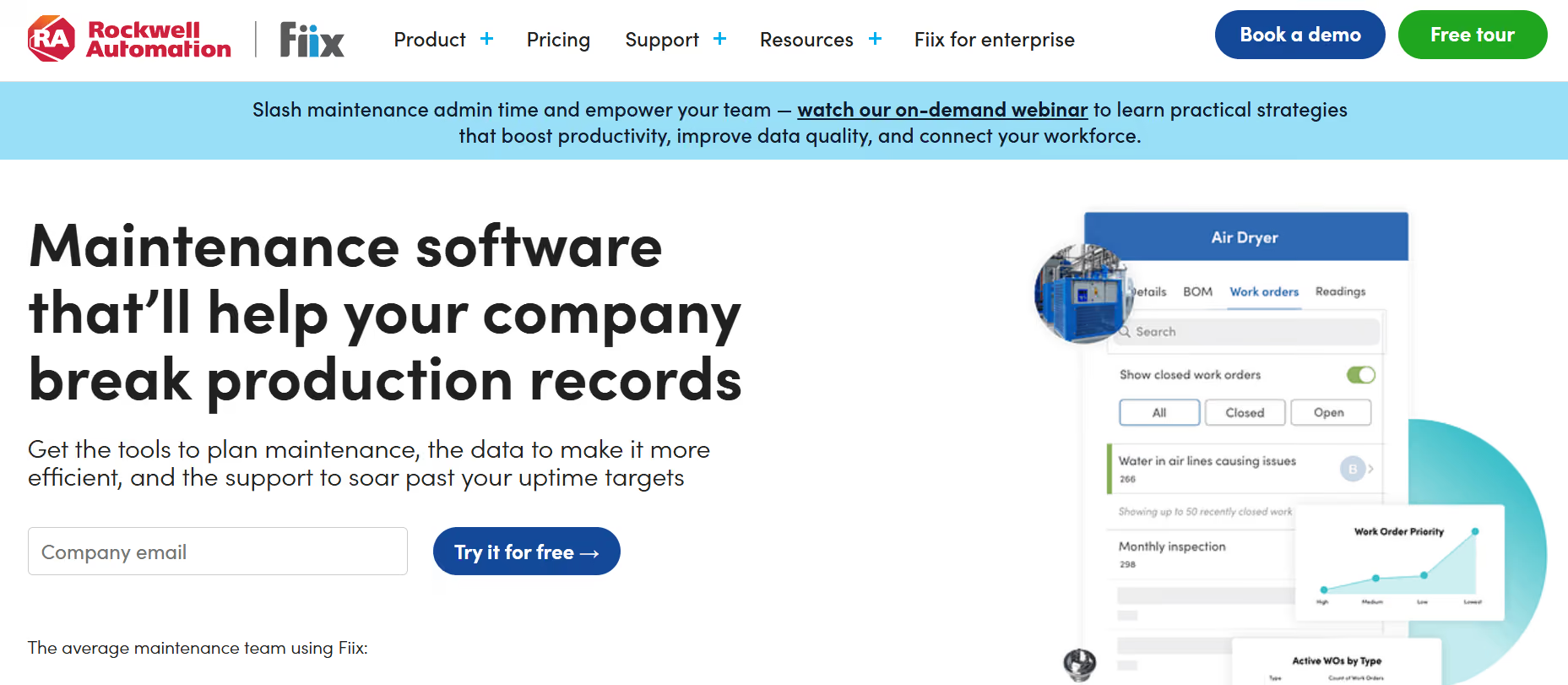
Fiix will feel familiar to procurement teams: a mature CMMS, a broad partner ecosystem, and documented case studies from automotive parts makers. It focuses on work-order management, inventory forecasting, and integrations to ERPs and PLC ecosystems. Fiix advertises large install bases and embedded AI features for prioritisation.
Key automotive features
- Standardised work orders, parts forecasting, and KPI dashboards.
- Integrations with common industrial automation & ERP stacks.
- Mobile work-order execution and offline capability.
Buyer decision signals
- You want a low-risk vendor with case studies in your industry and predictable time-to-value.
- You prioritise parts forecasting and structured inventory reduction.
Pros
- Easy to learn and use — fast onboarding for planners and technicians.
- Strong integrations and APIs for ERP and automation facilitate data synchronisation and parts forecasting, with comprehensive documentation available for maintenance workflows.
- Good mobile support and solid vendor documentation/customer success resources.
Cons
- Can be relatively costly at larger scales (enterprise packages) — pricing often requires a sales quote.
- Some power users report feature gaps vs. heavy EAM systems (so expect follow-up questions on edge cases).
Implementation tip: Use Fiix’s parts-forecast module in the initial pilot to reduce emergency purchases and measure inventory days-of-supply improvement.
SAP EAM / SAP PM — enterprise standard for SAP-centric OEMs (Rank #4)
Overview:
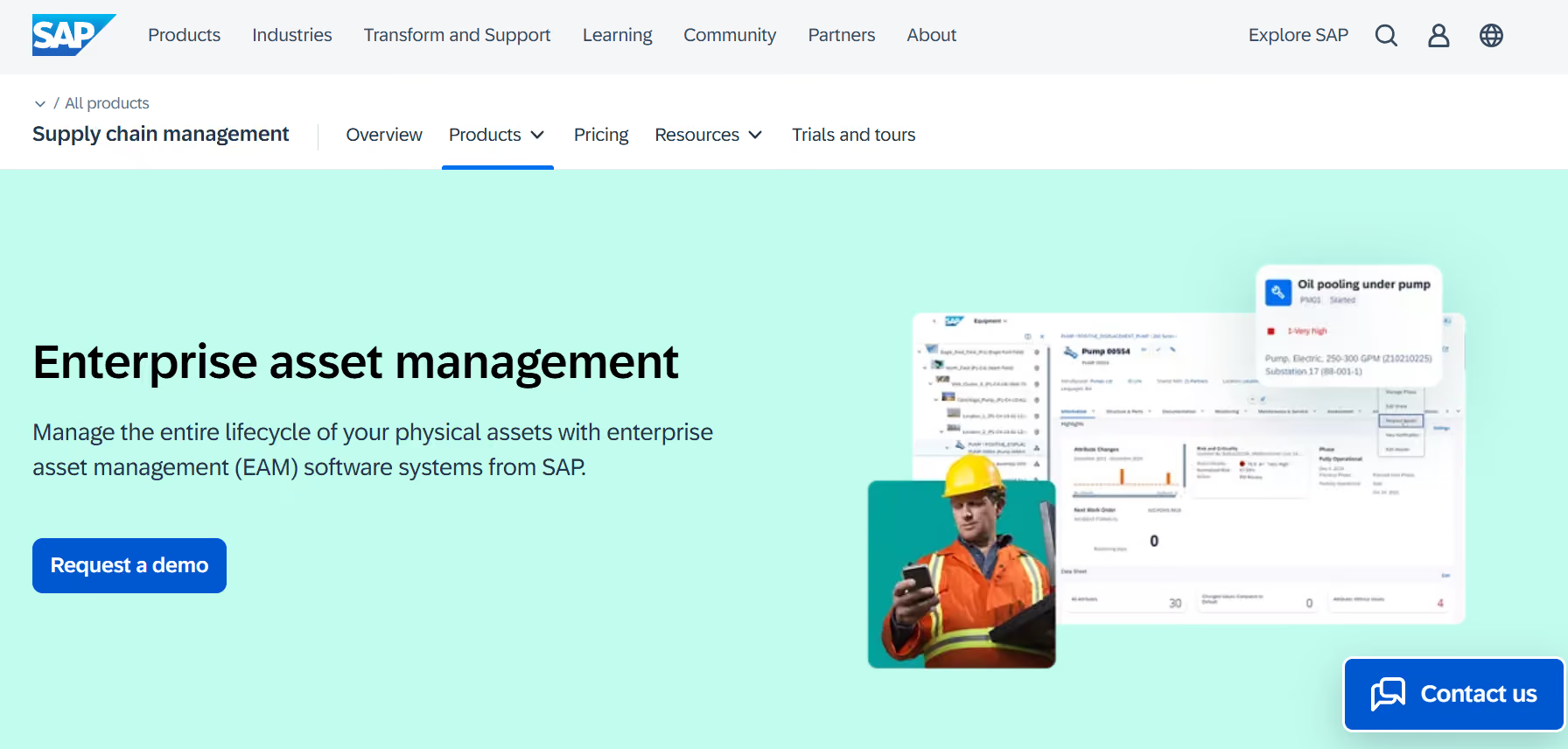
SAP’s Plant Maintenance (PM) and EAM modules are the obvious choice in SAP-first environments: they manage full asset lifecycles and keep maintenance financials and procurement tightly integrated with ERP ledgers. For global OEMs running S/4HANA, SAP PM reduces reconciliation overhead but often needs modernisation for field UX.
Buyer decision signals
- Your plant environment is SAP-centric, and you want maintenance accounting, procurement, and asset register all native in the ERP.
Pros
- Enterprise governance and native ERP traceability.
- Scales to global rollouts withcentralisedd master data.
Cons
- Higher upfront cost and longer implementation; consider a complementary field UX if mobile adoption is critical.
Implementation tip: Use Fiori or a best-of-breed mobile layer to give technicians an easy mobile experience while keeping SAP as the source of truth.
Infor / HxGN EAM — enterprise asset lifecycle & analytics (Rank #5)

Overview:
Infor (now part of Hexagon as HxGN EAM) is designed for complex fleets: asset health scoring, analytics, and lifecycle planning. It fits enterprises that need robust APM (asset performance management) and integration across planning, procurement, and IoT.
Buyer decision signals
- You have a large, heterogeneous asset base and want model-based lifecycle decisions and analytics.
Pros
- Comprehensive EAM feature set includes asset lifecycle management, predictive analytics, and enterprise reporting. For detailed functional documentation, refer to the Infor EAM User Guide.
- Built for large, regulated environments — strong for multi-plant rollouts and integration with ERP/IT stacks.
Cons
- Steeper learning curve and configuration complexity — often requires consulting/implementation resources.
- Higher total cost of ownership (licensing + implementation + consulting) compared with mid-market CMMS.
Implementation tip: Start with asset health scoring on the most critical assets to validate the predictive models before scaling.
eMaint (Fluke Reliability) — configurable CMMS for TPM and compliance (Rank #6)
Overview:
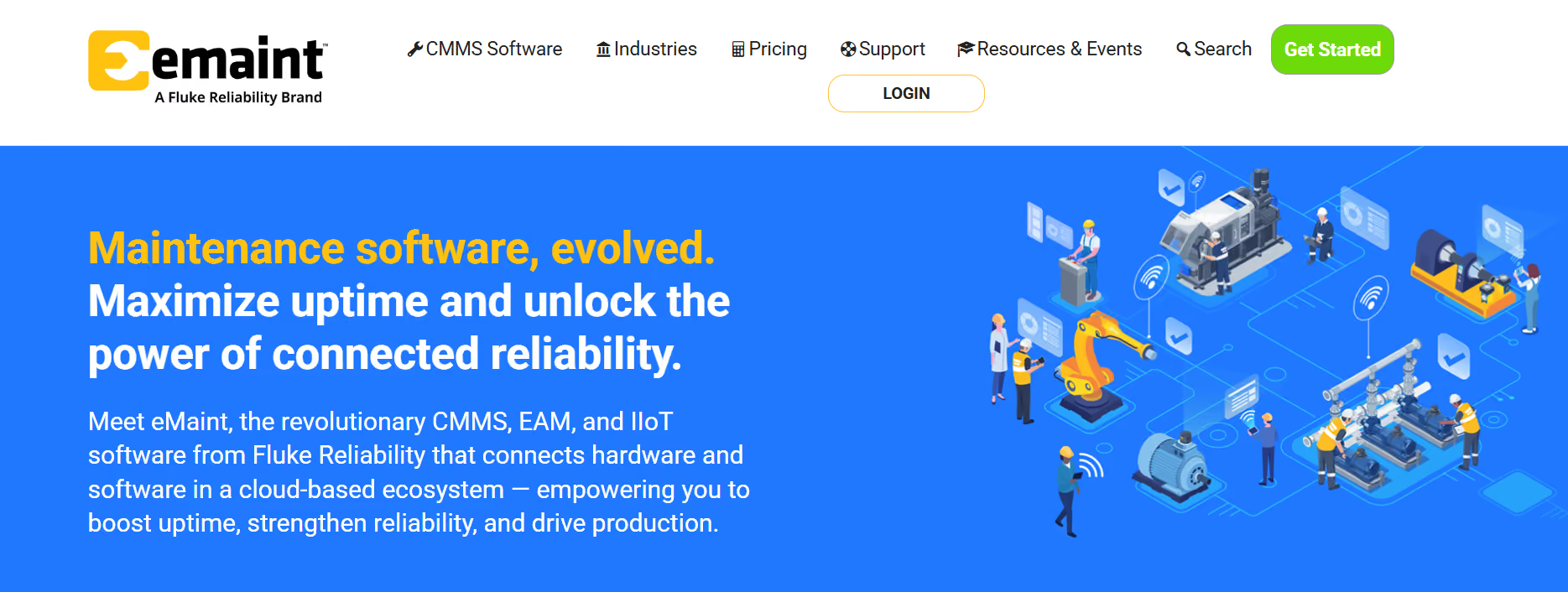
eMaint is battle-tested in compliance-heavy plants and sells strongly on configurability and integration into the Fluke Reliability family. It is suited for multi-site standardisation and TPM programs.
Buyer decision signals
- You need a flexible configuration to match established TPM and audit workflows without heavy coding.
Pros
- Very configurable — strong for TPM, custom workflows, and compliance dashboards.
- Good IoT / sensor integration options and mature reporting capabilities.
Cons
- Initial setup and configuration require time and learning (some customers point to a learning curve).
- A few users report UI/UX friction on complex workflows — plan for training & templates.
Implementation tip: Use eMaint templates to standardise PM tasks across sites and centralise audit evidence.
MaintainX — mobile-first, frontline adoption (Rank #7)
Overview:
MaintainX emphasises rapid field adoption — checklists, SOPs, and an intuitive mobile app. For plants moving from paper to digital, MaintainX shortens the change curve and increases wrench-time.
Buyer decision signals
- Technician adoption is your largest barrier; you need a UX that drives daily use.
Pros
- Mobile-first and highly user-friendly, it encourages quick technician adoption and increased checklist completion rates. Please refer to the official MaintainX documentation.
- Quick deployment and good support — useful for teams moving from paper to digital.
Cons
- Limited deep EAM analytics or heavy-duty integrations out of the box — may need add-ons for enterprise reporting.
- Some advanced workflow/asset-modelling capabilities are less mature than those of EAM vendors.
Implementation tip: Pilot with one shift and use the checklist completion rate as your early-adoption KPI.
Fogwing — budget-friendly IoT + AI for mid-market (Rank #8)
Overview:
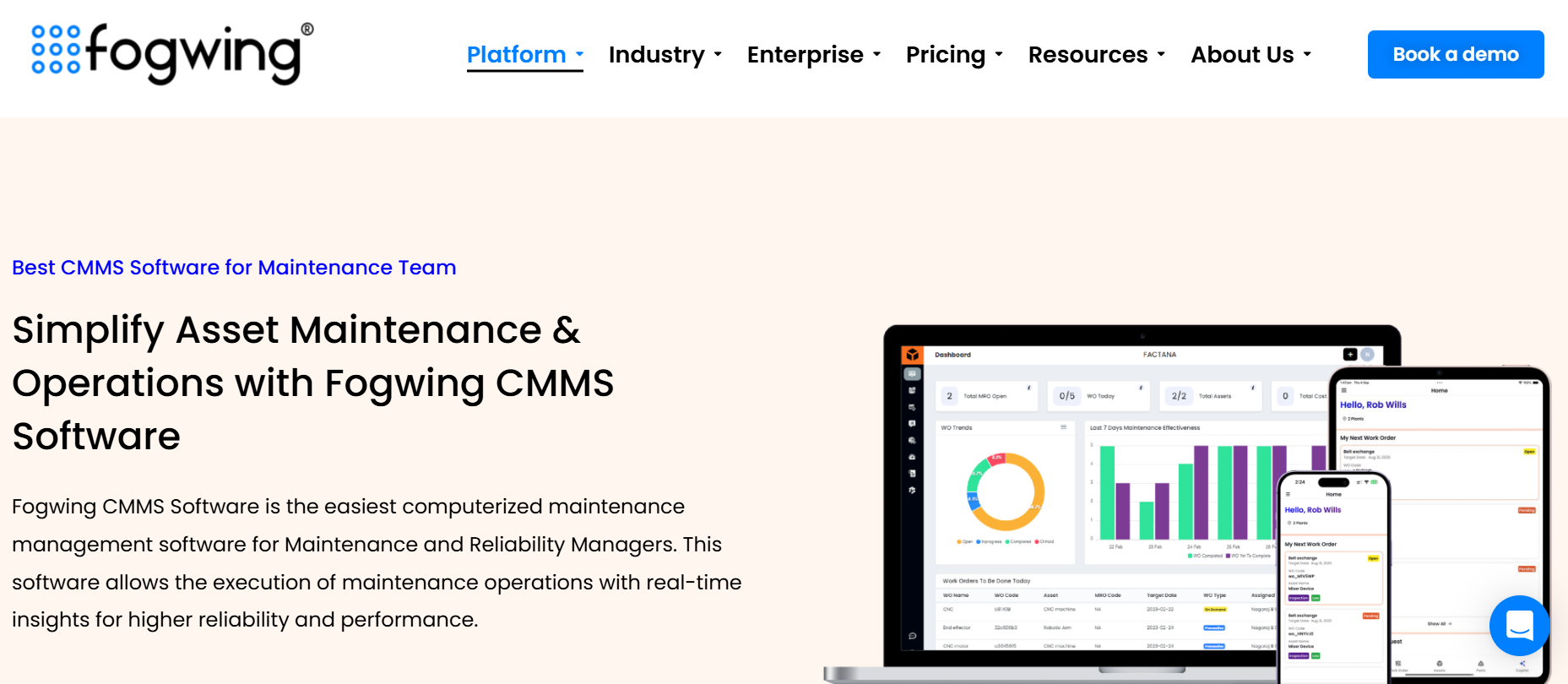
Fogwing offers an economical path to combine CMMS workflows with sensor telemetry and AI alerts. Public pricing shows a low entry point, making it attractive to cost-sensitive mid-market manufacturers experimenting with predictive features.
Buyer decision signals
- You want to trial predictive alerts without a large EAM commitment.
Pros
- Modern IoT + AI capabilities built in — good option for manufacturers trialling predictive maintenance at modest cost.
- Generally positive feedback on ease of use and rapid sensor onboarding.
Cons
- Enterprise integrations & advanced SSO/legal packaging can be more limited or vendor-dependent.
- Some reviewers note bandwidth/performance variability on low-spec networks — test in your shop-floor environment.
Implementation tip: Connect a single sensor to one critical asset and validate alert precision before scaling.
LLumin — rules-driven manufacturing CMMS (Rank #9)
Overview:
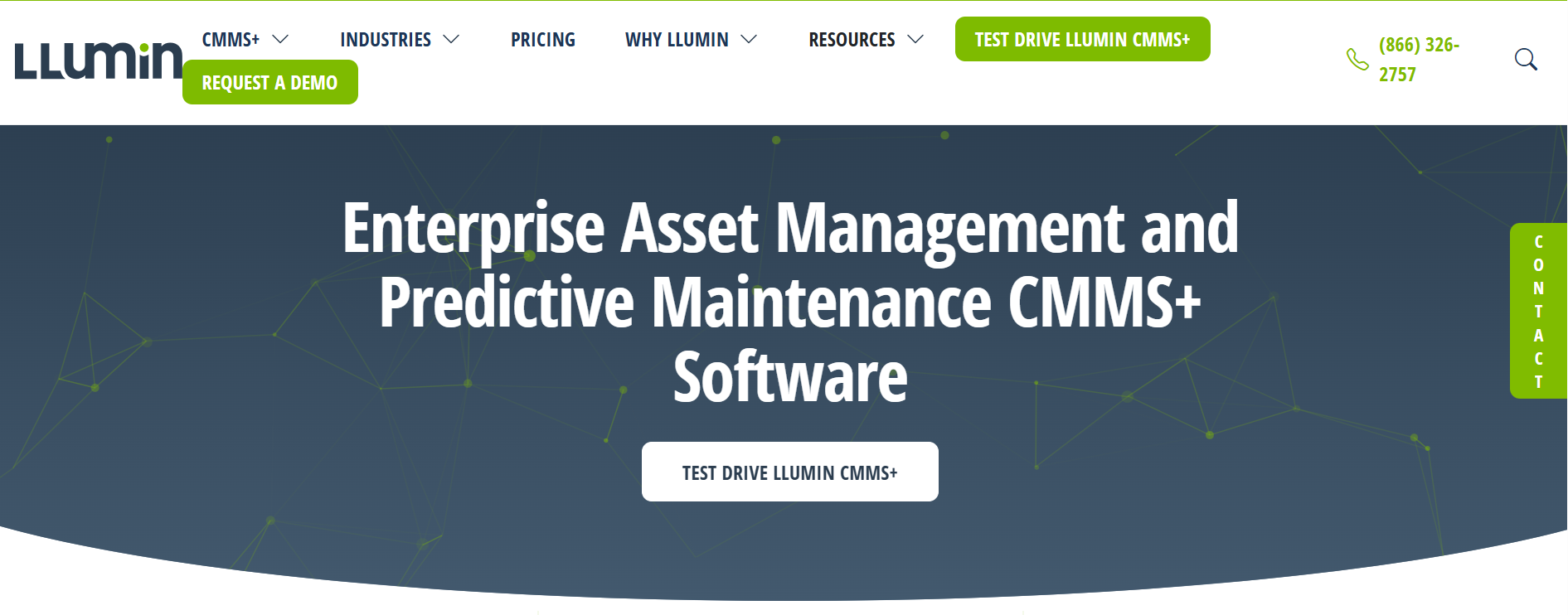
LLumin positions itself on automation: rule engines drive work order creation and tie into SAP-light integrations. It’s a fit for plants that want lightweight automation without heavyweight EAM implementation.
Buyer decision signals
- You want immediate automation (e.g., vibration > threshold → create work order) without a full EAM rip-and-replace.
Pros
- Built for heavy manufacturing: rules engines, PLC/SCADA integration, and strong KPI dashboards (OEE, MTTR/MTBF).
- Highly configurable with strong customer support and onboarding in user reviews.
Cons
- Some users report minor UI/navigation friction (extra clicks) and occasional performance slowdowns in specific screens.
- Smaller vendor footprint vs the global EAM vendors — validate enterprise SLAs if you need 24/7 global support.
Implementation tip: Map 3 real shop-floor rules and deploy them to measure the reduction in reactive work.
TeroTAM — AI-first mid-market CMMS (Rank #10)
Overview:
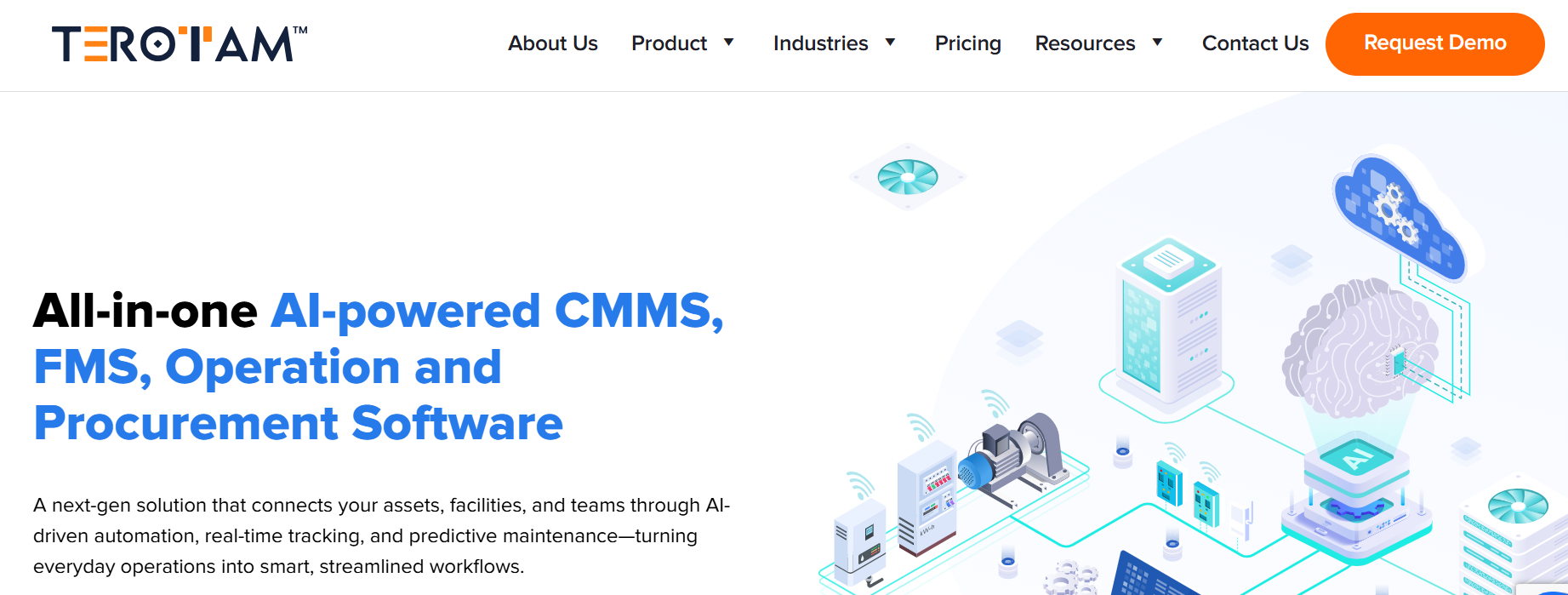
TeroTAM brings modern AI scheduling and analytics to the mid-market. If you want AI-assisted prioritisation in a cost-efficient package, it’s a candidate worth piloting.
Buyer decision signals
- You want modern tooling and prioritisation without EAM complexity.
Pros
- Competitive pricing for mid-market; good set of features for asset tagging (QR/NFC/RFID), scheduling, and basic AI prioritisation.
- Positive user feedback on usability and rapid deployment for smaller/mid-size plants.
Cons
- Less enterprise brand recognition and fewer third-party integrations documented than in larger CMMS/EAM platforms.
- If you require deep ERP/SSO/secure multi-site legal packaging, confirm capabilities and SLAs with the vendor pre-sale.
Implementation tip: Let the AI prioritise a 30-day backlog and measure MTTR improvement.
How to choose (buyer checklist)
Answer these procurement-friendly questions to narrow the shortlist:
- SSO & enterprise legal required? → Prioritise SAP EAM, Infor / HxGN EAM, Fiix, or Makula (enterprise options). If yes, request SAML/OIDC details and SOC2 documentation.
- Do you need UI translation (Spanish / Korean)? → Test language packs in vendor demos and ask for a sample translated maintenance form. Makula documents multilingual workflows as an explicit capability.
- Contractor-heavy shop with many external vendors? → Confirm requester pricing and contractor accounts; Makula, eMaint, and Fiix have explicit contractor/requester flows.
- Want OEE-linked maintenance decisions? → Prioritise Fabrico or platforms with OEE connectors.
- Is mobile-offline essential? → Verify offline sync behaviour on each vendor demo (MaintainX, Makula, Fiix support offline modes).
30/60/90 implementation roadmap (practical)
Industry benchmarks show that well-structured maintenance strategies typically achieve 30–45 % improvements in planned maintenance ratios and significant reductions in breakdown frequency.
30 days — discovery & quick wins
- Inventory and tag 25–50 critical assets. Export with asset IDs for vendor import.
- Attach QR codes to 10 critical assets and publish a public requester flow for facilities (restrooms, compressors).
- Create PM templates for critical assets and pilot with one crew.
60 days — operationalise & integrate
- Run the 1st full PM cycle and validate compliance evidence capture.
- Onboard 1–2 contractors into the requester workflow and confirm billing/authorisation policies.
- Build a weekly KPI dashboard: completed WOs, overdue PMs, MTTR, MTBF.
90 days — measure & scale
- Run an audit simulation and measure time-to-evidence retrieval.
- Compare downtime baseline vs pilot line and compute early ROI (hours saved × labour + reduced penalties).
- Plan rollout tothe second line/plant if ROI is positive.
Procurement & RFP checklist
Ask each vendor for:
- SSO (SAML/OIDC) details and enterprise onboarding SLA.
- SOC2 Type II or ISO 27001 evidence.
- Data export formats (CSV/JSON) and retention policy.
- Language packs and translation workflow (who translates, how updates are deployed).
- Requester / public reporter pricing model.
- Offline mobile behaviour and sync conflict handling.
- Sample implementation plan and rollout timeline for 2–3 pilot sites.
Choosing the Right Automotive CMMS — Why OEMs and Tier Suppliers Standardise on Makula
Selecting a CMMS for automotive manufacturing is not just a software decision. It is a plant-floor, compliance, and risk-management decision that directly affects uptime, audit readiness, and production stability.
In automotive environments—whether OEM assembly plants, Tier 1 stamping operations, powertrain machining, plastics moulding, or EV battery production—maintenance systems must support:
- High PM compliance to prevent line stoppages
- Structured documentation for IATF-aligned audits
- Clear asset history for critical equipment
- Multilingual technician teams
- Fast onboarding across multiple sites
Among the tools reviewed in this article—such as Fiix, Infor EAM, eMaint, MaintainX, and others—each has strengths depending on use case, scale, and IT maturity.
However, for automotive organisations that prioritise:
- Structured preventive maintenance (time-based programs)
- Clean audit trails and documentation control
- Multi-language support across global teams
- Fast deployment without heavy ERP complexity
- Standardisation across multiple plants
Makula CMMS is often the most balanced and practical choice.
Why Makula Aligns Well with Automotive Requirements
1. Built for Structured Preventive Maintenance
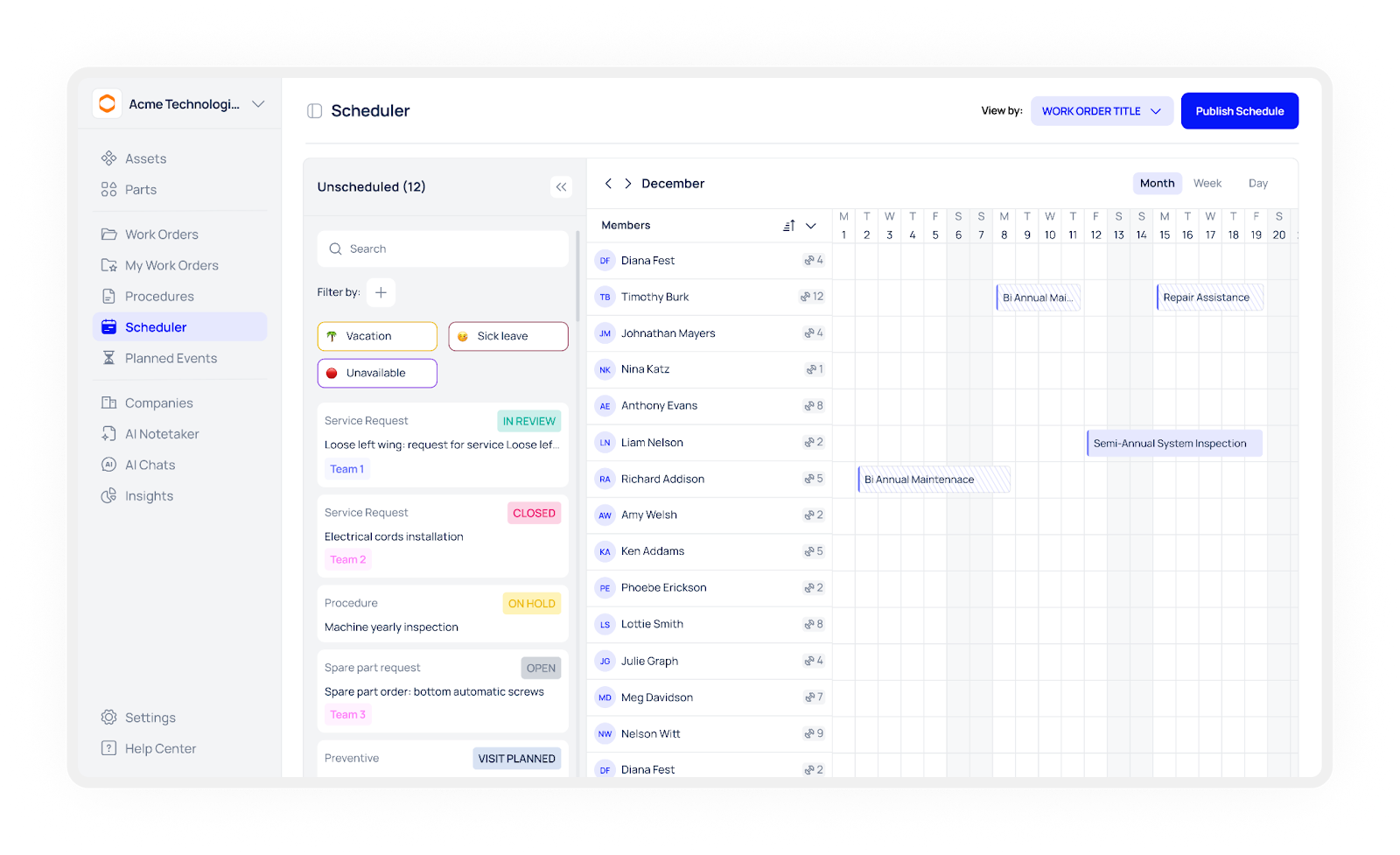
Automotive plants run on disciplined, calendar-driven PM schedules. Makula’s time-based preventive maintenance model supports standardised PM intervals, controlled documentation, and consistent execution across shifts and sites.
2. Audit-Ready Documentation
For facilities operating under IATF 16949-aligned quality systems, audit traceability matters. Makula maintains structured work order histories, service records, and maintenance documentation that support internal and external audit reviews.
3. Multilingual Workforce Support
Automotive plants frequently operate with multilingual teams. Makula includes language flexibility to support technicians, supervisors, and compliance teams without fragmented documentation.
4. Scalable Across Sites
Whether you operate one plant or a global manufacturing footprint, Makula allows standardisation of asset hierarchies, PM programs, and reporting structures across locations.
5. Focused, Practical Implementation
Unlike large-scale EAM platforms that may require extensive ERP integration and long deployment cycles, Makula offers a more controlled and focused rollout approach, helping maintenance teams see operational value faster.
Final Thought for Automotive Maintenance Leaders
Every CMMS on this list can serve a purpose. Some are better suited for enterprise ERP-heavy environments, others for small facilities or mobile-first teams.
But if your priorities are:
- Reducing unplanned downtime
- Increasing PM compliance
- Improving audit confidence
- Standardising maintenance across automotive plants
- Supporting global teams without unnecessary complexity
Then implementing Makula CMMS is a strategic decision—not just a software purchase.
In high-volume automotive manufacturing, maintenance discipline directly impacts production output, warranty risk, and customer satisfaction. Choosing a CMMS that reinforces structure, compliance, and operational clarity can significantly strengthen plant performance.
For many automotive OEMs and Tier suppliers, Makula provides that balance.