
It’s a familiar scene on many shop floors and in leadership meetings. The question comes up: “What’s our average downtime this quarter?” or “How efficiently are we resolving faults?” Immediately, the maintenance team scrambles. People dig through work orders, collate spreadsheets, and try to piece together a coherent picture from fragmented data, and often come up empty. The truth is: you don’t have a clear answer.
When someone asks, “What are your MTTR and FTFR?”, the frantic dash for data begins. This isn’t just stressful, it’s a signal that you’re operating without reliable insight. Not knowing these core metrics means you’re flying blind. You can’t prove your team’s value, justify investments, or identify where to improve. In short: it’s costing you more than you think. It’s time to move from scrambling for answers to making decisions with accurate data.
Demystifying the Acronyms: MTTR and FTFR
Before we dive into solutions, let’s be clear about the definitions, because consistency matters when you measure.
What is MTTR (Mean Time To Repair)?
MTTR is the average time taken to repair a failed component or asset. The clock starts when repair work begins and stops when the asset is back in service. Low MTTR means fast diagnosis and effective repair processes; a high MTTR points to knowledge gaps, missing parts, or slow diagnosis workflows.
What is FTFR (First Time Fix Rate)?
FTFR measures how often engineers resolve the issue on their first visit without a follow up. It’s a strong indicator of diagnostic accuracy and readiness. High FTFR means technicians usually arrive prepared with the right parts and information; low FTFR points to misdiagnosis, poor parts planning, or insufficient troubleshooting guidance.
The Hidden Costs of Not Knowing Your Metrics
Operating without clear MTTR and FTFR figures leads to hard-to-see losses:
1. You can’t justify resources
When you ask for more budget, leadership wants numbers. Without data you’re asking on gut feel. With metrics, you can turn requests into quantifiable business cases — e.g., “Our MTTR rose by X% and cost £Y in lost production; investing in spare-part buffers or improved diagnostic tools will cut that by Z%.”
2. Morale suffers
Technicians who fix things quickly still go unrecognised if there’s no way to prove it. Conversely, low FTFR caused by systemic issues can unfairly reflect on teams. Metrics let you recognise wins and address root causes rather than blaming individuals.
3. Inefficiencies remain invisible
You can’t fix what you can’t see. If technicians spend 30–60 minutes hunting a manual, that time inflates MTTR. If repeat faults are misdiagnosed, FTFR sinks. Metrics make those patterns visible so you can change processes.
From Reactive Scrambling to Proactive Strategy
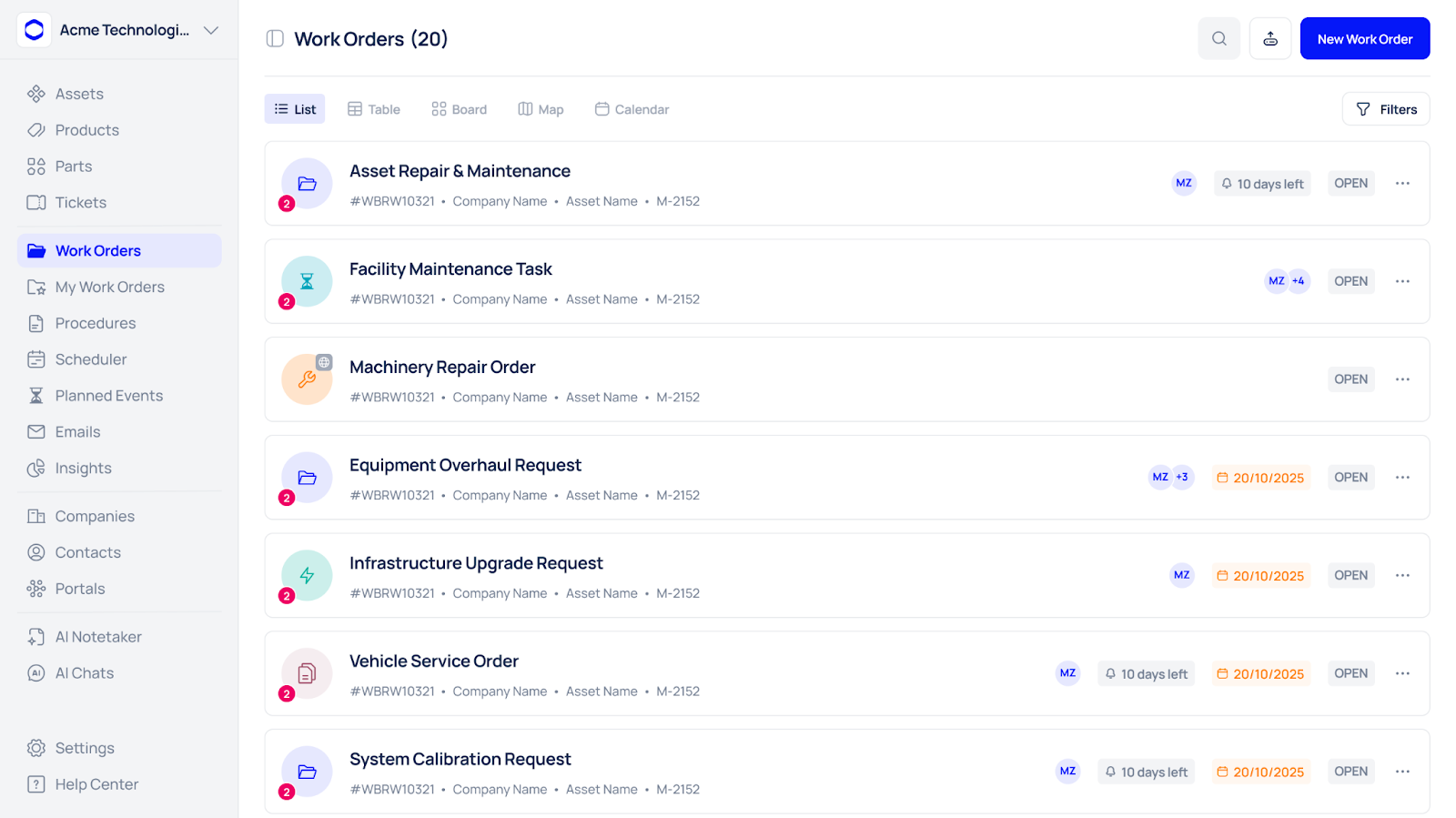
The goal is to stop treating metric questions as a fire drill. Move to a culture where data is always available, accurate, and trusted. That shift requires two things: consistent data capture and a system that stores that data in a structured way.
Implementing a system to track MTTR and FTFR is the first step to operational control. But measurement only works when inputs are clean and consistent.
How to Start Tracking MTTR & FTFR (practical steps)
You don’t need a huge project to begin, start with process and discipline:
- Standardise work-order timestamps
Make sure every work order captures: fault reported time, repair start time, and repair completion time. - Define what “fixed” means
Agree on a clear definition of a successful first-time fix so FTFR is measured consistently. - Make fields mandatory
Require technician name, asset ID, fault code, parts used and brief resolution notes for every work order. - Keep repair history searchable
Ensure past work orders, photos and supplier notes are linked to the asset so technicians can find “golden fixes” quickly. - Start small and measure
Pilot on a single asset family for 30–60 days. Track MTTR, time-to-diagnosis and FTFR before/after process changes.
Time-Based Preventive Maintenance and Why It Helps MTTR & FTFR
A practical way to reduce emergency repairs—and therefore improve MTTR and FTFR—is to reduce the number of failures that require diagnosis in the first place. Time-based preventive maintenance (PM) schedules, applied consistently, help you do exactly that.
- Less unplanned work means technicians can focus on planned, well-prepared tasks, improving first-time fix readiness.
- Standardised PMs create structured work orders and checklists, generating cleaner historical data that feeds accurate MTTR calculations.
- Regular PMs reduce failure severity, which shortens repair times and improves the chance of a first-time fix.
Make sure your time-based PMs are optimised (not just calendar-driven for the sake of it): prioritise critical assets, ensure spare parts are available, and attach clear checklists to PMs so each PM run produces useful, searchable records.
Tie the Metrics to Your CMMS
Tracking MTTR and FTFR only works when your work orders are structured, timestamped, and consistently logged. A time-based CMMS with standardised checklists and mandatory fields ensures every repair is recorded properly so your metrics reflect reality, not guesswork. That same CMMS then turns those records into reliable reports for leadership.