.jpg)
A critical mixing machine stops on the production line. The maintenance team knows a replacement valve is needed immediately, but when they check the storeroom, the part is missing.
The purchasing manager calls suppliers, asks for overnight delivery, and pays a premium to keep production moving. The downtime is expensive, but the rush shipping cost adds even more pressure.
This was the reality for Plant X before it reworked its spare parts process.
In this case study, we look at how a mid-sized processing facility reduced emergency rush orders by 40% by cleaning up inventory data, tightening storeroom controls, and using Makula CMMS to connect spare parts to maintenance work.
Why rush orders become so expensive
Many plants rely on disconnected systems to manage maintenance and inventory.
The maintenance team may use paper forms. The storeroom may track stock in Excel. Purchasing may work from a separate ERP or email chain. When these systems do not match, no one can fully trust the numbers.
That creates familiar problems:
- hidden stockouts
- duplicate purchases
- delayed repairs
- expensive overnight shipping
- frustrated technicians
- excess dead stock on the shelf
Plant X had all of these issues. The team knew they needed a better way to manage inventory before they could reduce emergency buying.
Step 1: Audit the storeroom properly
The first move was a full physical audit.
Over one weekend, the maintenance team counted every important spare part in the storeroom. They did not trust old spreadsheets or outdated records. They verified what was actually on the shelf.
During the audit, they also removed obsolete stock tied to equipment that had already been retired. This cleared space and eliminated confusion.
Just as importantly, they standardised part names. The same belt or valve had been entered in several different ways, which made searching and reordering unreliable. Standard naming rules fixed that problem.
Step 2: Classify parts by criticality
Once the inventory was clean, Plant X grouped parts by importance.
Not all spares deserve the same treatment. A cheap consumable should not be managed the same way as a bespoke valve with a long lead time.
The team introduced a simple criticality model:
- A parts: critical, high-value, long lead time, production-stopping items
- B parts: important but easier to source or replace
- C parts: low-cost consumables and fast-moving items
This helped them focus time and budget on the parts that mattered most to uptime.
Step 3: Connect inventory to Makula CMMS
Cleaning the data was only the beginning. The real change came when Plant X moved the process into Makula CMMS.
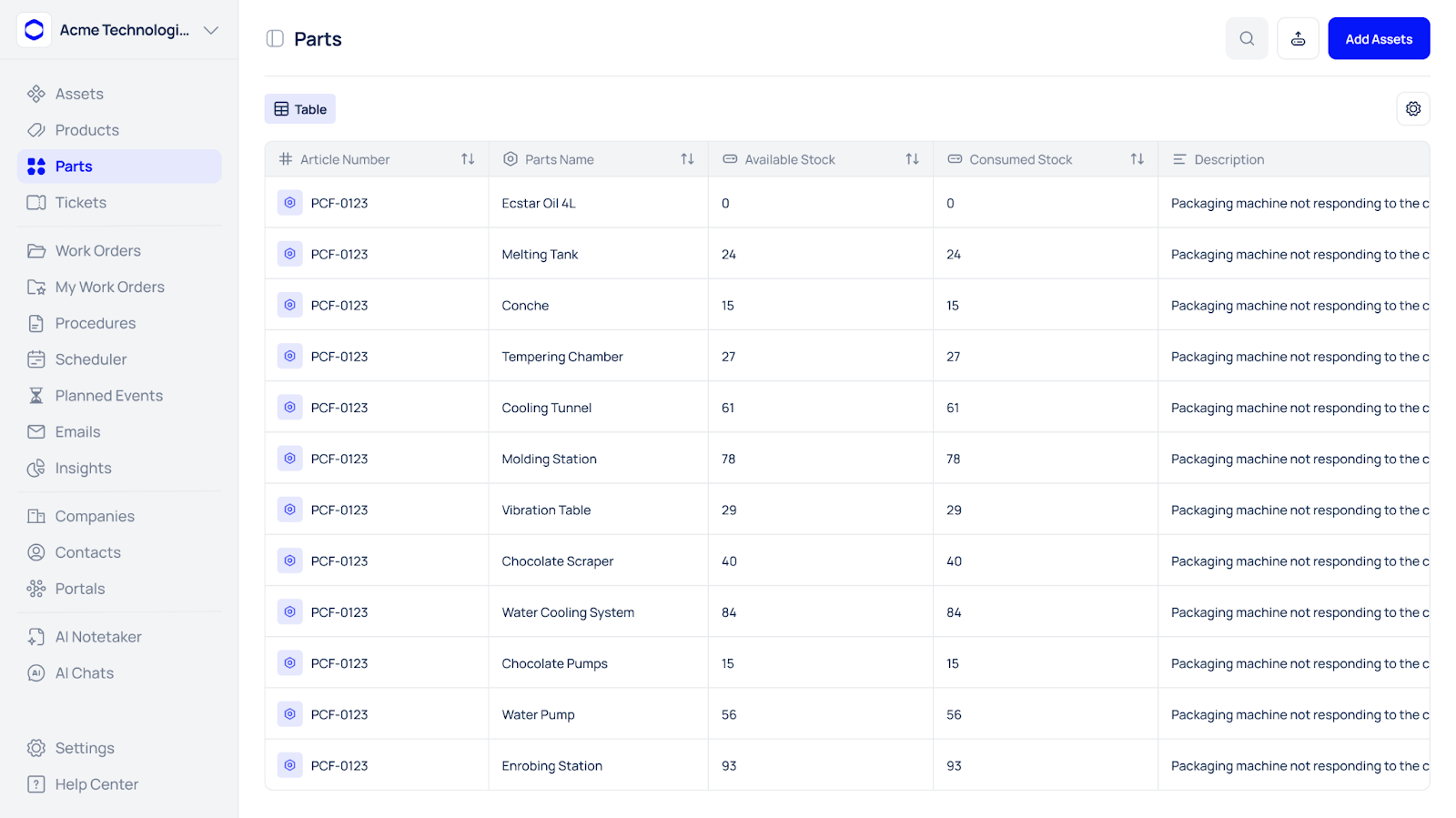
With Makula, spare parts were no longer managed in isolation. They were connected to maintenance activity, so the team could see what parts were used, what was available, and what needed to be reordered.
When a technician issued a part for a work order, the system updated the inventory record. That meant the team no longer depended on memory or paper forms to know what had been consumed.
This created a single source of truth for parts across maintenance and storeroom operations.
Step 4: Enforce checkout discipline
Plant X also tightened its issue process.
Technicians could no longer take parts without logging them. Every item had to be scanned and assigned to a work order or maintenance task.
That simple change made the data far more reliable.
It also improved accountability. The team could see:
- who took the part
- when it was issued
- which job it was used on
- whether the part was tied to a planned task or a breakdown
The result was cleaner records and far fewer surprises.
Step 5: Set minimum and maximum stock levels
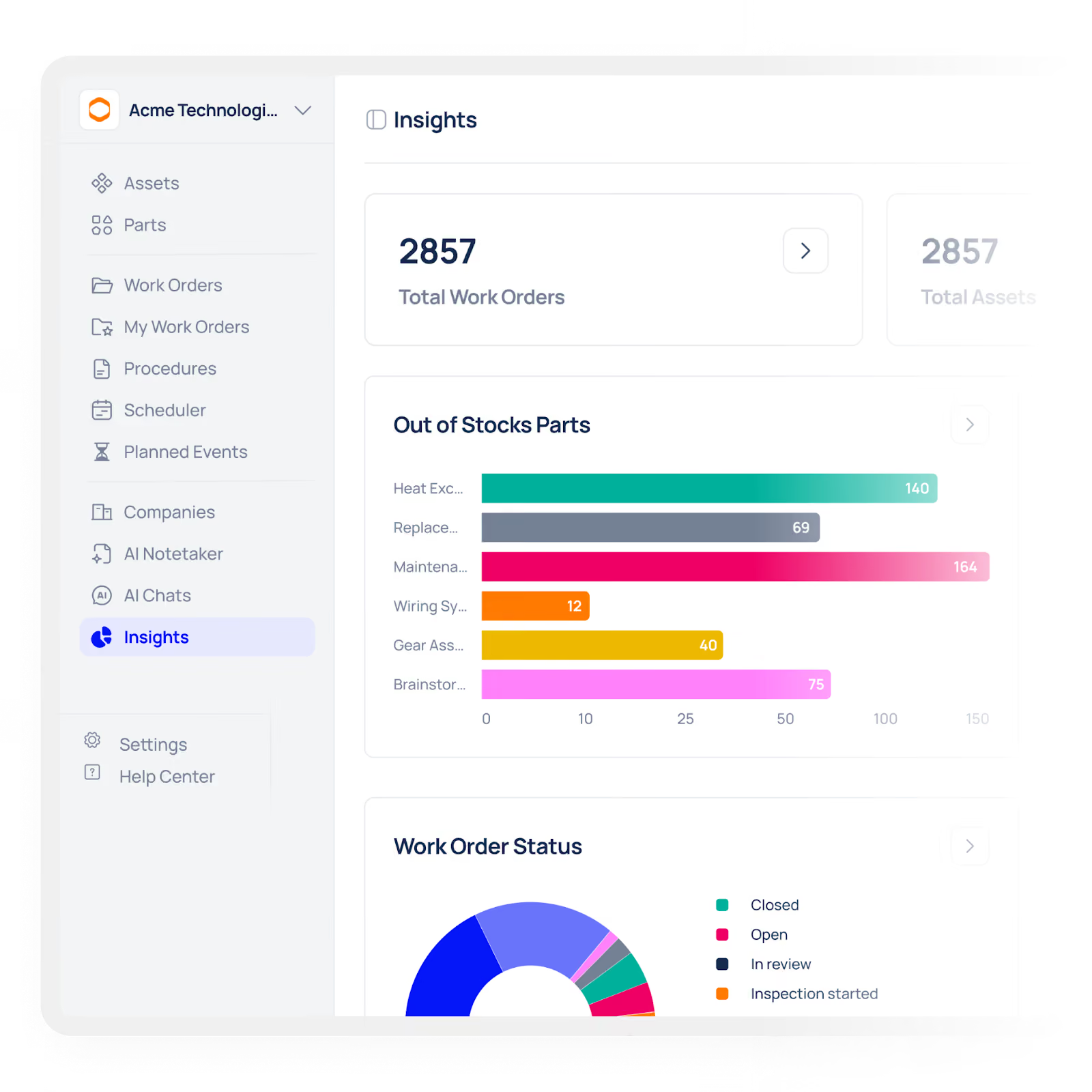
With accurate usage data in place, Plant X defined minimum and maximum stock levels for critical spares.
They used:
- historical work order activity
- supplier lead times
- asset criticality
- repair frequency
For high-risk parts, they set reorder points early enough to avoid panic buying. That meant the team could place standard orders before stock became urgent.
Instead of paying for next-day delivery, they planned replenishment in advance.
The results
The impact was immediate.
The biggest improvement was not just cost savings. It was control.
The storeroom stopped being a source of stress and became a reliable part of the maintenance workflow.
The cultural change on the shop floor
Before the process change, technicians did not trust the storeroom. Some kept spare parts in lockers just in case.
After the new workflow went live, that behaviour dropped off. Technicians could check the system, find the right part, and complete jobs faster.
That built confidence across the team. Less time was wasted hunting for materials, and more time went into actual maintenance work.
Why this case study matters for Makula users
This story fits Makula CMMS because it shows how better spare parts control supports the wider maintenance operation.
It is not only about inventory. It is about:
- linking parts to work orders
- improving data accuracy
- reducing downtime
- preventing emergency purchases
- giving planners and technicians the same information
- turning storeroom control into a maintenance advantage
Conclusion
Rush orders are usually a symptom of poor inventory visibility, not just poor purchasing.
When Plant X cleaned its data, set clear controls, and managed parts through Makula CMMS, it reduced emergency shipping, improved stock accuracy, and gave its maintenance team a far more reliable workflow.
The result was less panic, fewer stockouts, and stronger control over maintenance costs.