.avif)
A critical machine stops on the production line. Your lead technician heads to the storeroom for a replacement motor, confident the part is available.
One system says there are two in stock. Another spreadsheet says there are none. The shelf is empty.
This is the reality in many maintenance operations. Spare parts data is scattered across spreadsheets, ERP systems, handwritten logs, and separate maintenance tools. When teams cannot trust inventory records, breakdowns take longer to resolve, emergency purchases increase, and technicians lose valuable time searching for parts.
Makula CMMS helps maintenance teams build a single source of truth for spares so every part, count, and transaction stays connected to real maintenance work.
Why scattered spare parts data creates problems
Inventory problems usually start with good intentions.
Finance tracks purchasing in one system. The storeroom uses Excel. Maintenance planners work from a separate CMMS. Technicians keep their own notes. Over time, the same spare part ends up with multiple names, multiple counts, and multiple records.
That creates real operational damage:
- Stockouts when the system says a part exists but the shelf is empty
- Duplicate purchasing when teams reorder parts already in stock
- Wasted technician time searching for the right component
- Poor planning when maintenance schedules are built on unreliable data
If your team cannot trust the inventory record, every breakdown becomes more expensive.
What a single source of truth for spares actually means
A single source of truth means one central record that reflects the real state of your spare parts inventory.
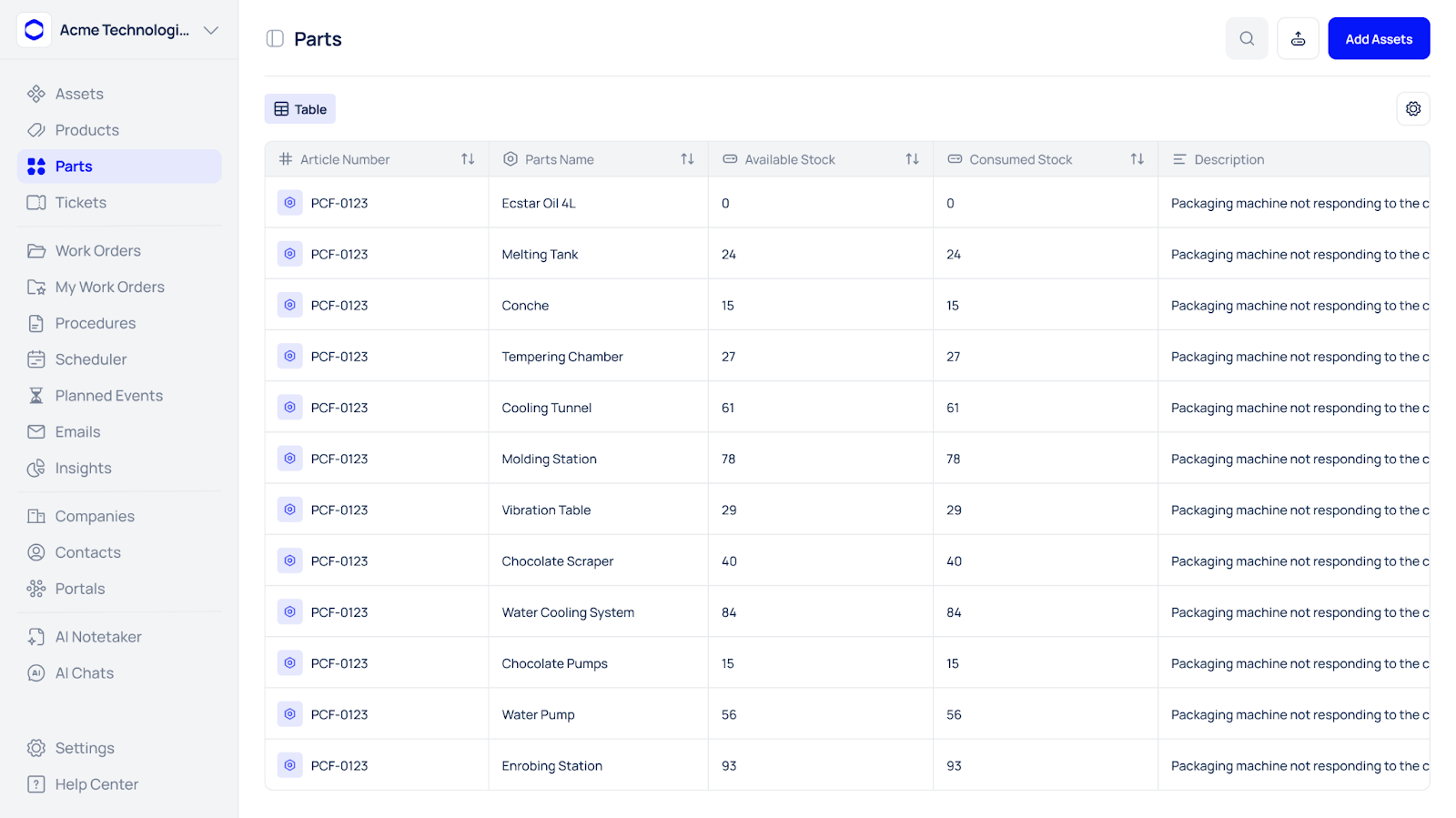
When a technician issues a part to a work order, the count updates immediately. When stock falls below a minimum level, the system can trigger a reorder review. When planners schedule maintenance, they can see whether required parts are available before the job begins.
In a CMMS like Makula, that creates a direct link between inventory, work orders, and maintenance planning.
Step 1: Audit your current inventory
You cannot clean up your inventory data until you know what you actually have.
Start with a physical audit of the storeroom. Count every important item, verify what is on the shelf, and compare it against current records. Do not rely on old spreadsheets or outdated purchase logs.
During the audit, identify:
- obsolete parts
- duplicate items
- mislabeled stock
- items stored in the wrong location
- parts tied to equipment that no longer exists
This step is time-consuming, but it is the foundation of accurate inventory control.
Step 2: Standardize part naming and structure
Once the physical count is complete, the next challenge is data consistency.
A single motor might be listed as:
- 50HP Motor
- Motor 50 HP
- MTR-50
- Main Drive Motor
Those all look different to a system, even if they refer to the same item.
To fix that, create a standard naming structure for all spare parts. For example:
Part Type - Specification - Size - Brand - Model
A consistent format makes it easier to search, reorder, and report on parts accurately.
Step 3: Centralize inventory inside your CMMS
This is where the value of Makula CMMS becomes clear.

Instead of keeping inventory in separate spreadsheets, Makula connects spare parts to the maintenance workflow itself. That means maintenance teams are working from the same live data set.
When a technician raises or completes a work order, the required parts can be tracked against the job. When a part is consumed, the inventory record updates. When planners review upcoming work, they can see what is available before assigning the job.
That gives maintenance teams one reliable system for:
- part visibility
- stock usage
- job planning
- reordering support
- audit readiness
Step 4: Control every part movement
A single source of truth only works if every part movement is logged.
If technicians take parts from the storeroom without recording them, inventory accuracy breaks down quickly.
Put a clear check-out process in place:
- issue parts against a work order
- log who took the part
- record quantity and time
- update stock immediately
- require barcode scanning where possible
This keeps inventory records aligned with actual usage and helps ensure that the maintenance team is always working from current data.
Step 5: Connect spares to work orders and preventive maintenance
The strongest inventory systems do more than count parts. They support maintenance execution.
Makula CMMS helps teams connect spare parts to work orders and planned maintenance tasks so parts can be prepared before the job starts. That reduces delays, prevents missing items, and makes scheduling more reliable.
When parts are tied to specific jobs, your team can:
- prepare kits in advance
- reduce unplanned trips to the storeroom
- improve technician productivity
- reduce downtime caused by missing materials
Step 6: Set reorder rules and review stock levels regularly
Once your inventory data is accurate, you can use it to improve procurement decisions.
Set minimum stock levels for critical spares and review them based on usage history, lead times, and asset criticality. That way, parts are reordered before they become a problem.
This helps avoid:
- emergency orders
- unnecessary excess stock
- production delays
- poor supplier planning
A CMMS gives maintenance and procurement teams the visibility they need to manage stock more intelligently.
The result of a unified spares system
When spare parts data is centralized, the operation becomes much more stable.
Teams gain:
- accurate stock visibility
- faster repair response
- fewer duplicate purchases
- better maintenance planning
- less technician downtime
- stronger financial control
Instead of guessing what is on the shelf, your team knows.
Summary: Scattered vs. unified inventory
To understand the operational impact of this transition, review the table below. It highlights the drastic differences between managing multiple spreadsheets and operating from a unified database.
Why this matters for Makula CMMS users
This topic fits Makula very well because it sits at the intersection of maintenance execution and inventory control. Maintenance teams do not just need a list of parts. They need a system that connects parts to jobs, usage, and operational planning.
That is exactly why a single source of truth matters. It turns spare parts from a messy administrative problem into a reliable part of maintenance operations.
Conclusion
A single source of truth for spares is not just an inventory improvement. It is a maintenance performance strategy.
When spare parts are accurate, accessible, and connected to work orders, technicians move faster, planners make better decisions, and downtime becomes easier to control.
Makula CMMS helps make that possible by giving maintenance teams one reliable place to manage their spare parts data.