Utility asset management software helps utilities manage complex infrastructure, reduce downtime, control spare-parts costs, and improve asset reliability across plants, networks, and field operations. By centralising asset data, maintenance execution, inventory, and reporting, utilities can move from reactive firefighting to predictable, data-backed maintenance.
Below are 10 practical, measurable ways utility asset management software delivers value, covering maintenance, inventory, mobility, reporting, and ROI, along with examples of how Makula CMMS supports these outcomes where it naturally fits.
1. Centralised Asset Hierarchies for Utility Networks
- Utilities manage 30–40% of assets beyond their intended lifecycle, increasing failure risk and maintenance cost.
- Asset-centric organisations report 15–25% lower reactive maintenance spend compared to asset-light tracking approaches.
What this looks like in practice: Utilities need asset hierarchies that reflect real infrastructure: plants → systems → sub-systems → components.
Utility asset hierarchy model
What this improves: Asset visibility, prioritisation, and root-cause analysis
Modern utilities manage thousands of assets across treatment plants, pumping stations, substations, and buried or linear networks. Utility asset management software organises these into parent–child hierarchies, allowing teams to understand how components roll up into systems, sites, and regions.
When asset hierarchies are structured correctly, maintenance history, failure patterns, and spare-parts usage can be analysed at any level—from a single valve to an entire network.
How Makula CMMS supports utility asset hierarchies
Makula CMMS models parent–child relationships, linear assets, and site networks so every valve, pump, and pipeline segment is traceable to its work history and spare parts. This enables prioritised maintenance planning and KPI rollups by site, system, or region.
2. Time-Based Preventive Maintenance for Utility Reliability
- Preventive maintenance programs reduce unplanned outages by 30–50% in utilities.
- Time-based PM remains the most widely adopted PM model in water, wastewater, and energy utilities.
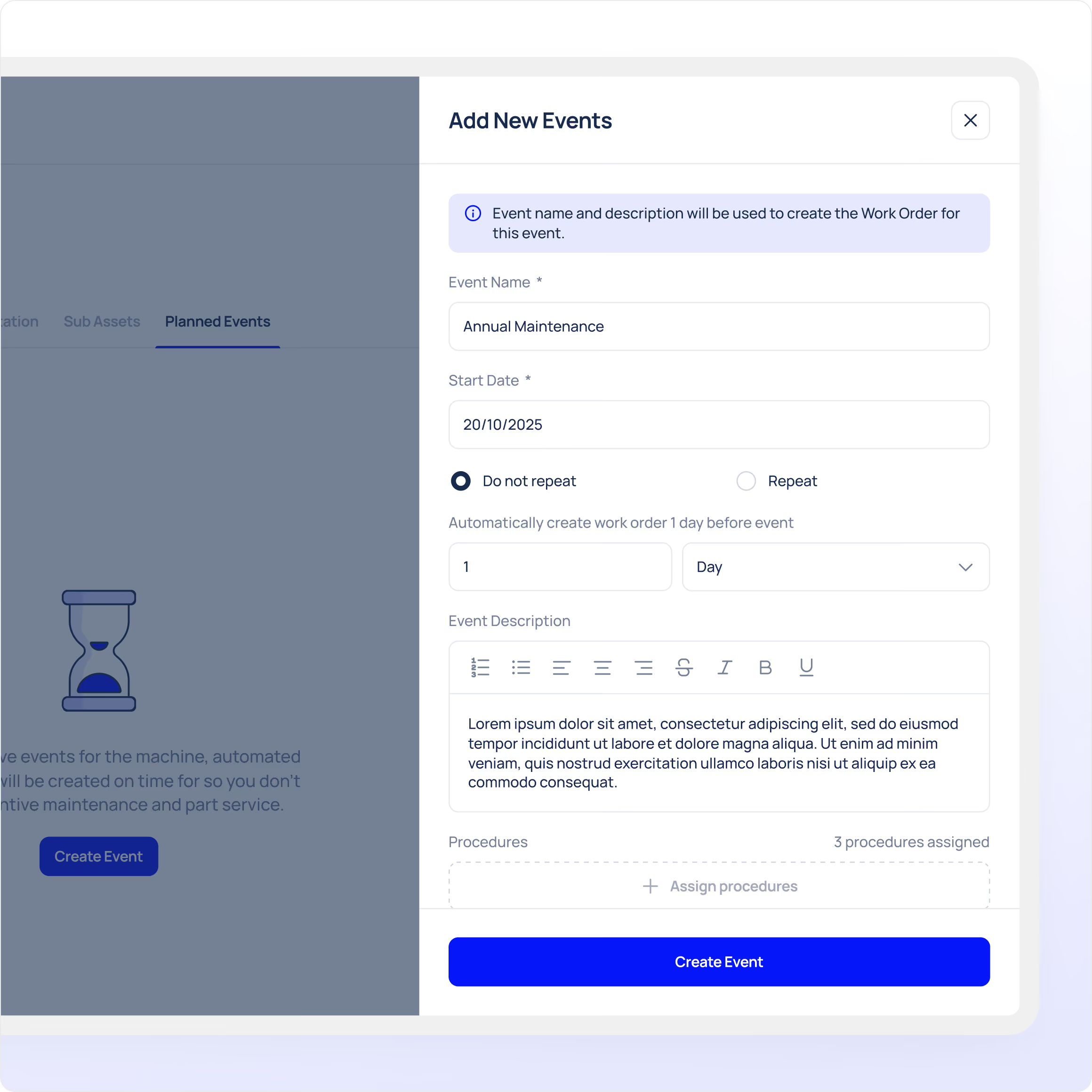
Why time-based PM works for utilities. Utilities operate regulated assets where inspections and servicing are calendar-driven.
Preventive maintenance impact
What this improves: Maintenance consistency and failure prevention
Time-based preventive maintenance (PM) remains the foundation of most utility maintenance programs. Calendar-based inspections, recurring safety checks, and seasonal tasks help utilities prevent failures and maintain regulatory readiness.
A well-executed PM program improves asset reliability, increases PM compliance rates, and reduces unplanned corrective work.
How Makula CMMS manages time-based preventive maintenance
Makula CMMS makes it simple to create and manage time-based PM schedules, attach checklists and parts lists, and track PM compliance over time—helping teams establish a predictable maintenance cadence.
3. Spare parts and BOMs linked directly to assets
- Utilities lose 10–15% of maintenance hours due to missing or unavailable spare parts.
- Asset-linked inventory can reduce downtime by 20–30%.
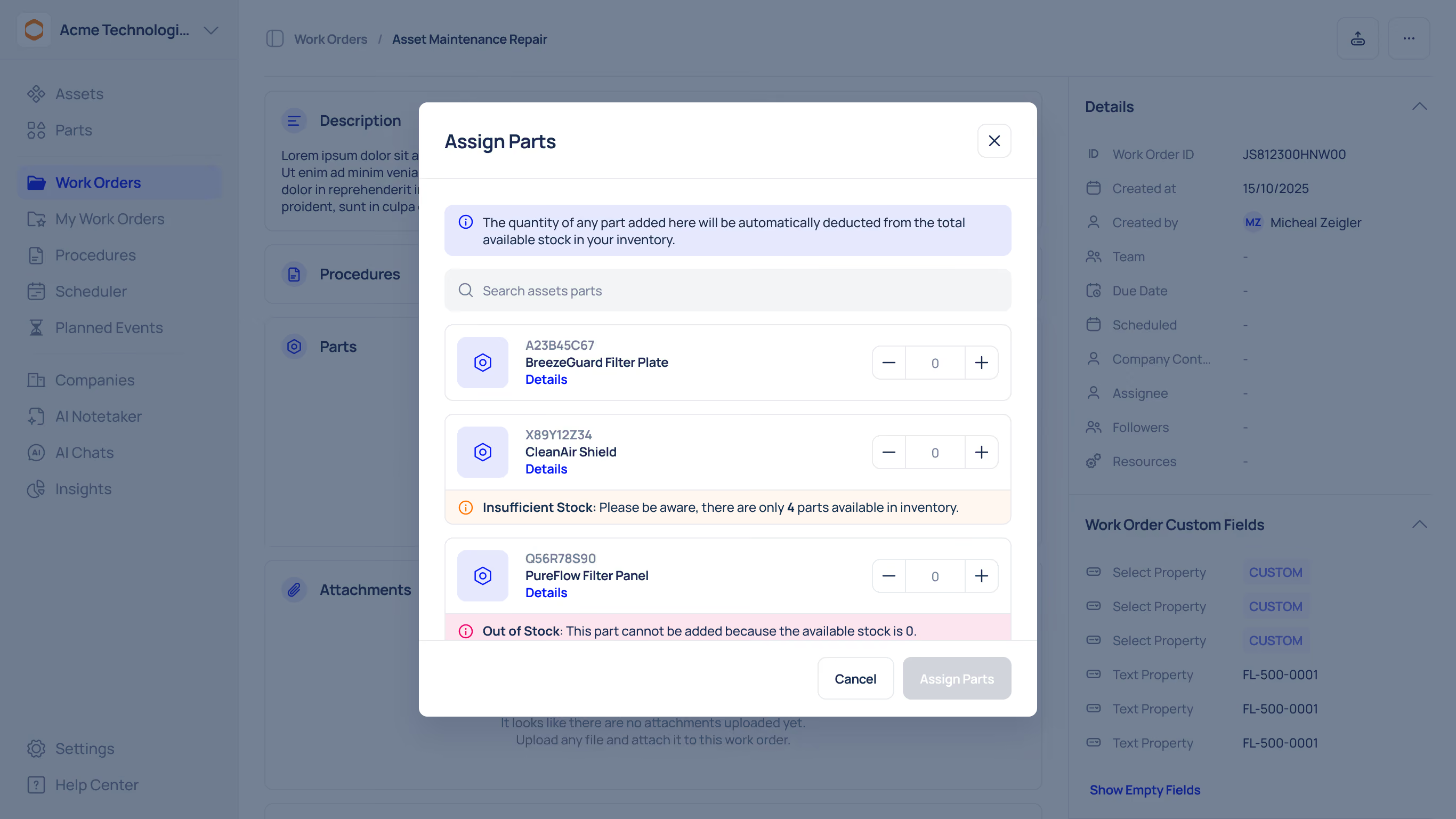
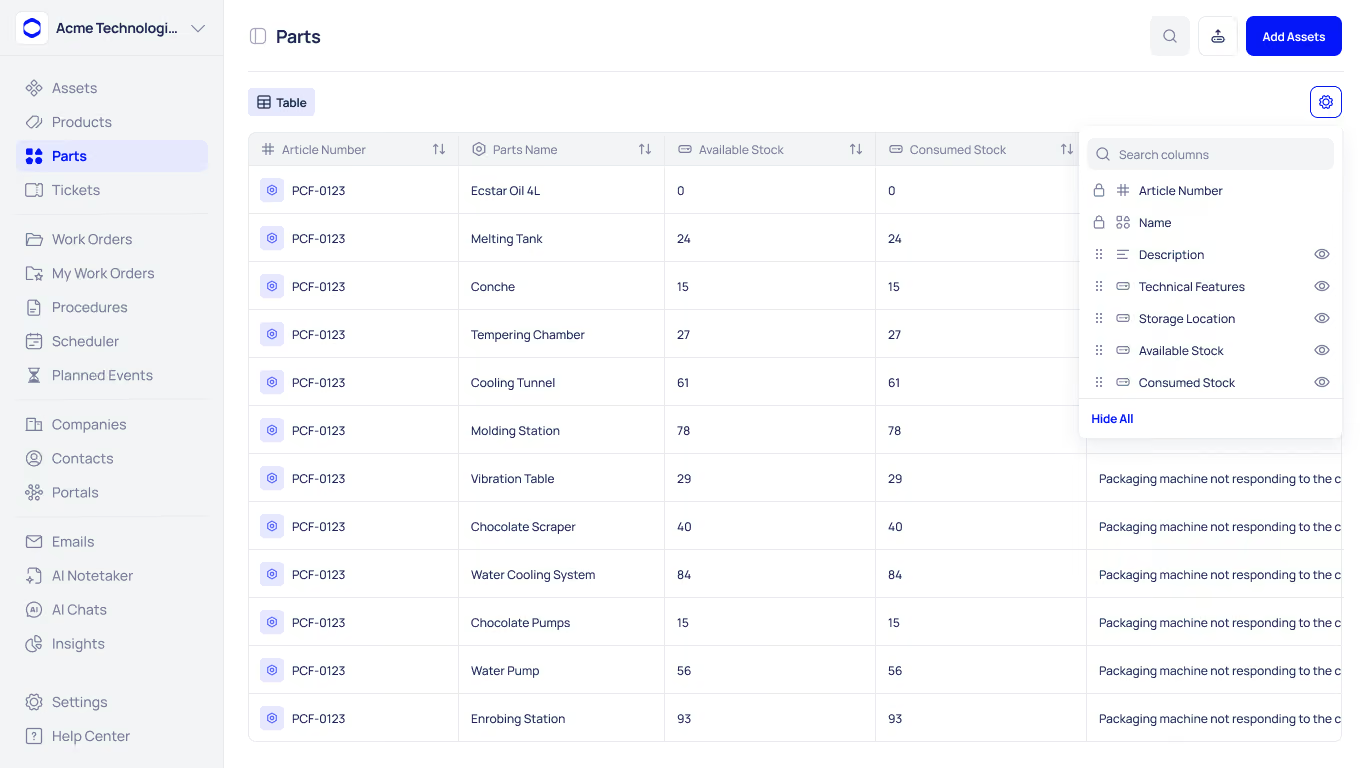
Why this matters: Spare parts should be linked to the assets they support, not stored as generic SKUs.
Asset-linked vs generic inventory
What this improves: First-time-fix rates and maintenance efficiency
One of the most common causes of repeat maintenance visits is missing or incorrect spare parts. Utility asset management software solves this by linking spare parts and bills of materials (BOMs) directly to asset records.
When technicians can see exactly which parts are required—and where they are stocked—before leaving the depot, first-time-fix rates increase and downtime drops.
How Makula CMMS links spare parts and BOMs to assets
Makula CMMS maps SKUs and BOMs directly to asset records and surfaces part availability on the work order, helping technicians arrive prepared and reducing empty-handed site visits.
4. Mobile-first field execution with offline capability
- Mobile CMMS adoption improves technician productivity by 15–25%.
- Offline access is critical for utilities operating in remote or underground environments.
Why mobile matters. Field crews need instant access to work orders, asset history, and parts availability.
Desktop vs mobile CMMS
What this improves: Technician productivity and data accuracy
Utility field crews often work in areas with limited or no connectivity. Mobile-first CMMS tools with offline capability ensure work continues uninterrupted while maintaining data integrity.
Technicians can complete work orders, capture photos, enter readings, and collect signatures offline—then sync automatically once connectivity is restored.
How Makula CMMS supports mobile and offline work execution
Makula’s mobile workflows allow technicians to complete work orders offline and sync data when back online, ensuring accurate records from remote or underground locations.
5. Higher first-time-fix rates and fewer repeat visits
- Utilities report that 20–30% of field jobs require a repeat visit, often due to missing parts or incomplete asset information.
- Improving first-time-fix rates can reduce maintenance labour costs by 10–20% annually.
Why first-time-fix matters for utilities: Distributed infrastructure, travel time, and service-level commitments make repeat visits expensive. When technicians arrive without the right context—asset history, known failure patterns, or required spare parts—work is delayed and outages last longer.
Time-based maintenance programs, asset-linked work orders, and pre-job planning significantly improve first-time-fix performance.
First-time-fix impact
What this improves: Labour efficiency and operating costs
First-time-fix rate (FTFR) is a critical maintenance KPI for utilities. Higher FTFR means fewer repeat visits, less travel time, and lower labour and fuel costs.
For example:
- Monthly work orders: 1,000
- FTFR improves from 65% to 80%
- Repeat visits drop from 350 to 200 per month
That’s 150 fewer repeat visits, directly reducing operating costs.
How Makula CMMS improves first-time-fix rates
By combining asset history, step-by-step instructions, and parts availability within the work order, Makula CMMS gives technicians the context they need to complete jobs correctly on the first visit.
6. Inventory analytics that reduce carrying costs
- Utilities typically hold 20–30% excess inventory due to poor demand visibility and risk-averse stocking.
- Inventory analytics can reduce carrying costs by 15–25% without increasing stockout risk.
Why inventory analytics matter: Utility inventory is complex: slow-moving critical spares, regulated components, and geographically dispersed warehouses. Without analytics, organisations overstock “just in case,” tying up capital and storage space.
Usage-based insights, asset-linked spare parts, and historical consumption trends allow utilities to balance availability with cost control
Inventory cost optimisation
What this improves: Working capital and stock availability
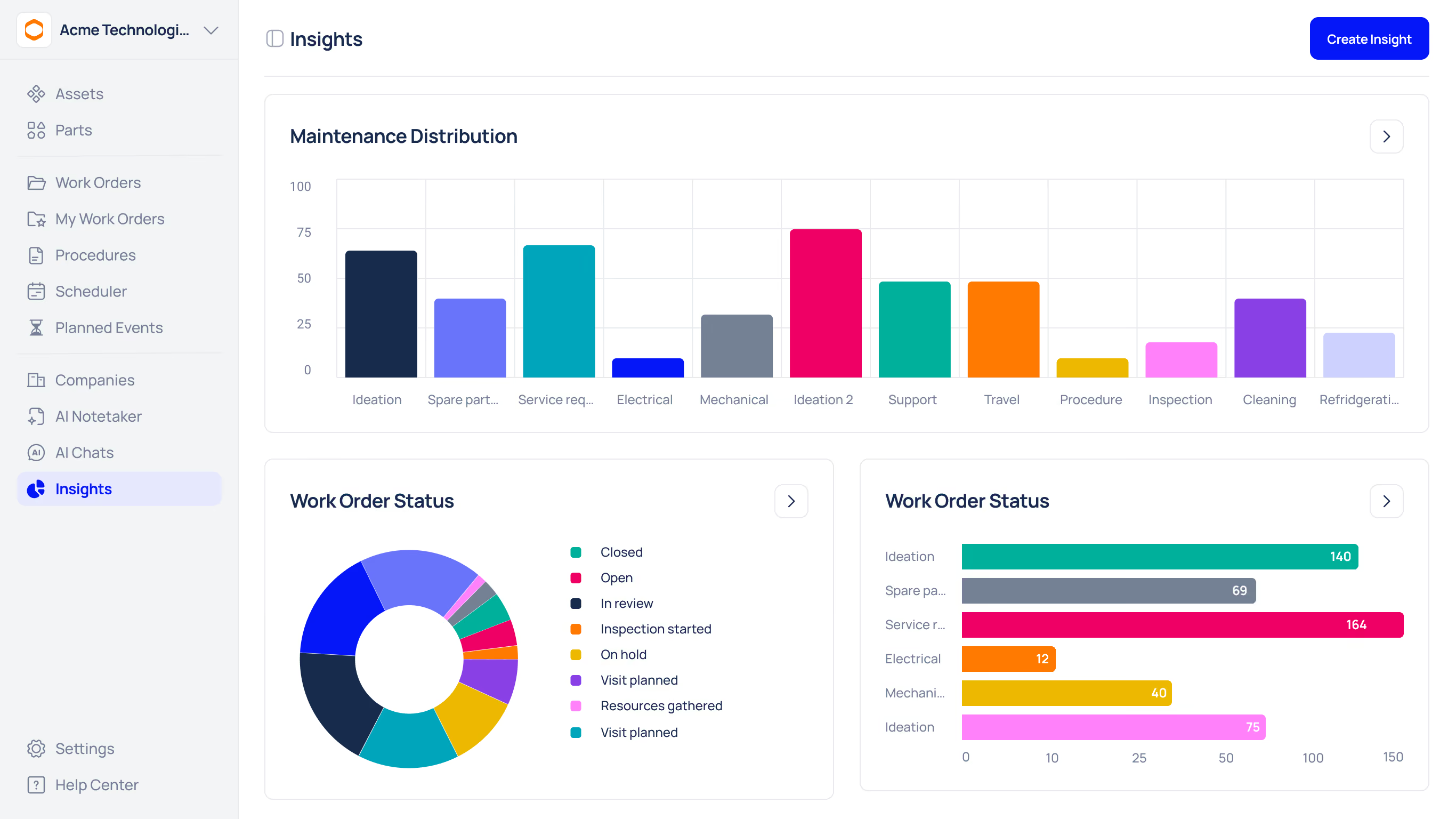
Utilities often carry excess or obsolete inventory “just in case.” Asset management software introduces inventory analytics—such as usage velocity, ABC classification, and days-on-hand—to optimise stock levels.
Industry benchmarks estimate inventory carrying costs at 20–25% of inventory value annually, making optimisation a major cost-saving opportunity.
How Makula CMMS supports utility inventory optimisation
Makula CMMS provides inventory analytics that highlight slow-moving stock, support reorder rules, and help utilities reduce excess inventory without increasing stockout risk.
7. GIS and enterprise integrations for better context
- Utilities using GIS-integrated asset management systems report 20–40% faster fault location and response times.
- Lack of spatial and enterprise context is a leading contributor to delayed dispatch, mis-prioritised work orders, and extended service outages in network-based utilities.
Why GIS and enterprise integration work for utilities: Utility assets are geographically distributed and highly interconnected. GIS systems provide spatial awareness—where assets are located and what services they affect—while enterprise systems add financial, procurement, and operational context. When maintenance teams can view asset location, service impact, and historical work data together, response accuracy and coordination improve significantly.
Impact of GIS and enterprise integration
What this improves: Dispatch accuracy and system alignment
Utility asset management software often integrates with GIS for spatial context and enterprise systems for procurement and finance. GIS integration improves dispatching and outage analysis, while ERP integration streamlines purchasing and reconciliation.
Phased integration—starting with asset location data and expanding to procurement workflows—helps utilities manage complexity.
How Makula CMMS enables integration workflows
Makula supports integration with GIS and procurement systems, allowing utilities to align field operations, asset records, and purchasing processes more effectively.
8. Condition-based maintenance and event-driven workflows
- Utilities that supplement scheduled maintenance with condition-based insights can reduce unexpected failures by 10–25%.
- Event-driven maintenance workflows help utilities respond faster to abnormal operating conditions detected through inspections, operator observations, or system alerts.
Why condition-based and event-driven maintenance works for utilities: While time-based maintenance remains the foundation for most utility programs, condition-based signals help identify emerging issues between scheduled inspections. Abnormal readings, visible deterioration, or operational alarms can trigger targeted maintenance actions before failures escalate. This hybrid approach balances proactive planning with real-world operational awareness—without over-maintaining assets.
Maintenance response before and after event-driven workflows
What this improves: Early failure detection and risk management
Many utilities complement scheduled maintenance with condition-based signals from monitoring or SCADA platforms. These signals are typically validated by operators and translated into maintenance work orders.
This hybrid approach balances proactive maintenance with practical operational controls.
9. Post-job reporting, audit trails, and compliance
- Regulatory audits require utilities to demonstrate who performed the work, when it was completed, and on which asset.
- Utilities using digital post-job reporting reduce audit preparation time by 40–60% and improve record consistency.
Why post-job reporting works for utilities: Utilities operate in highly regulated environments where incomplete or inconsistent maintenance records increase compliance, safety, and liability risk. Structured post-job reporting ensures labour, materials, findings, and corrective actions are permanently linked to the asset record, creating a defensible audit trail and improving long-term asset lifecycle analysis.
Post-job reporting impact
What this improves: Regulatory readiness and transparency
Post-job reporting is essential for regulated utilities. Timestamped work logs, photos, parts usage, and technician signatures create an auditable record for inspections and compliance reviews.
How Makula CMMS streamlines post-job reporting and audits
Makula CMMS captures detailed job evidence and enables fast export of regulator-ready reports, helping utilities respond quickly to audits and compliance requests.
10. Clear ROI through performance and cost metrics
- Utility asset management and CMMS initiatives typically deliver 3–6× ROI within 18–24 months.
- The largest financial gains come from reduced downtime, optimised inventory levels, and improved labour productivity.
Why ROI tracking works for utilities: Executives, regulators, and procurement teams increasingly require measurable justification for technology investments. When maintenance performance metrics—such as PM compliance, first-time-fix rate, downtime, and inventory usage—are directly tied to cost and service outcomes, asset management software becomes a strategic decision-support tool rather than an operational expense.
ROI impact before and after asset management software
What this improves: Executive buy-in and investment justification
Utility leaders need a clear ROI to justify software investments. Asset management software connects operational improvements—like FTFR, PM compliance, and inventory reduction—to financial outcomes.
Example ROI calculation:
- Monthly technician hours: 2,000
- Hourly cost: $35
- 8% productivity gain = 160 hours saved/month
- Annual value: $67,200
How Makula CMMS supports ROI tracking and reporting
Makula CMMS dashboards and exports make it easy to track KPIs and build defensible ROI models for internal stakeholders and procurement teams.
Final takeaway
Utility asset management software is no longer just a system of record—it is a performance engine for maintenance, inventory, and reliability. By combining asset hierarchies, preventive maintenance, spare-parts control, mobile execution, reporting, and ROI tracking, utilities can deliver safer, more reliable services at lower cost.
Maintenance-first platforms like Makula CMMS are designed to support these outcomes by aligning day-to-day field execution with long-term asset performance goals.