An external auditor walks into your reception area, unannounced. They ask to see the latest safety certificates for your primary manufacturing equipment. Your stomach drops. You know the maintenance team completed the work, but finding the signed paperwork will take hours of digging through filing cabinets and scattered digital folders.
If your first thought in this scenario is, "We can’t prove inspection compliance right now," you are not alone. Many facility and maintenance managers struggle with fragmented data. When your compliance records live across spreadsheets, paper forms, and disconnected software, proving your readiness becomes a massive administrative headache.
Failing to produce compliance documentation quickly does not just look unprofessional; it triggers heavier scrutiny, operational downtime, and potentially severe financial penalties. You need a fast, reliable way to consolidate your records and identify your gaps. This is precisely where an inspection audit snapshot changes the game, giving you complete clarity in just 48 hours.
The true cost of poor compliance visibility
Operating without clear compliance visibility carries heavy risks. Auditors expect instant access to maintenance logs, safety checks, and equipment certifications. When you stall, you signal that your facility lacks control over its fundamental operations.
This lack of control often translates into direct financial losses. Regulatory bodies do not hesitate to issue fines for missing documentation. Furthermore, if an incident occurs on site and you cannot immediately produce the relevant safety checks, your business faces massive legal liabilities.
Beyond the external threats, poor compliance visibility destroys internal productivity. Your engineering team wastes countless hours chasing down historical records instead of performing proactive maintenance. You end up paying skilled technicians to act as filing clerks. To eliminate this waste, you must transition from reactive panic to proactive readiness.
What is an inspection audit snapshot?
An inspection audit snapshot is a highly focused, rapid-delivery assessment of your current compliance status. Instead of spending months implementing a massive operational overhaul, you get a clear, actionable picture of your audit readiness in exactly two days.
The process targets the specific documentation that auditors care about most. We extract your existing maintenance records, safety checks, and asset histories. We then process this information to deliver three core components that instantly upgrade your compliance posture.
First, you receive a clean, structured CSV file containing all your critical compliance data. Second, you get a visual dashboard that highlights your current readiness score. Finally, and most importantly, we provide a prioritised action list detailing exactly which certificates or inspections are missing.
Breaking down the 48-hour process
Achieving total clarity in two days requires a highly structured approach. We do not ask your team to pause their daily tasks. Instead, the inspection audit snapshot runs smoothly in the background, following a strict timeline.
Day one: rapid data extraction
The first 24 hours focus entirely on gathering your existing information. We connect to your current systems whether they are basic spreadsheets, older software, or manual logs and pull the raw data regarding your mandatory inspections. We look for gaps in asset histories, missing signatures, and expired safety certificates.
Day two: analysis and dashboard generation
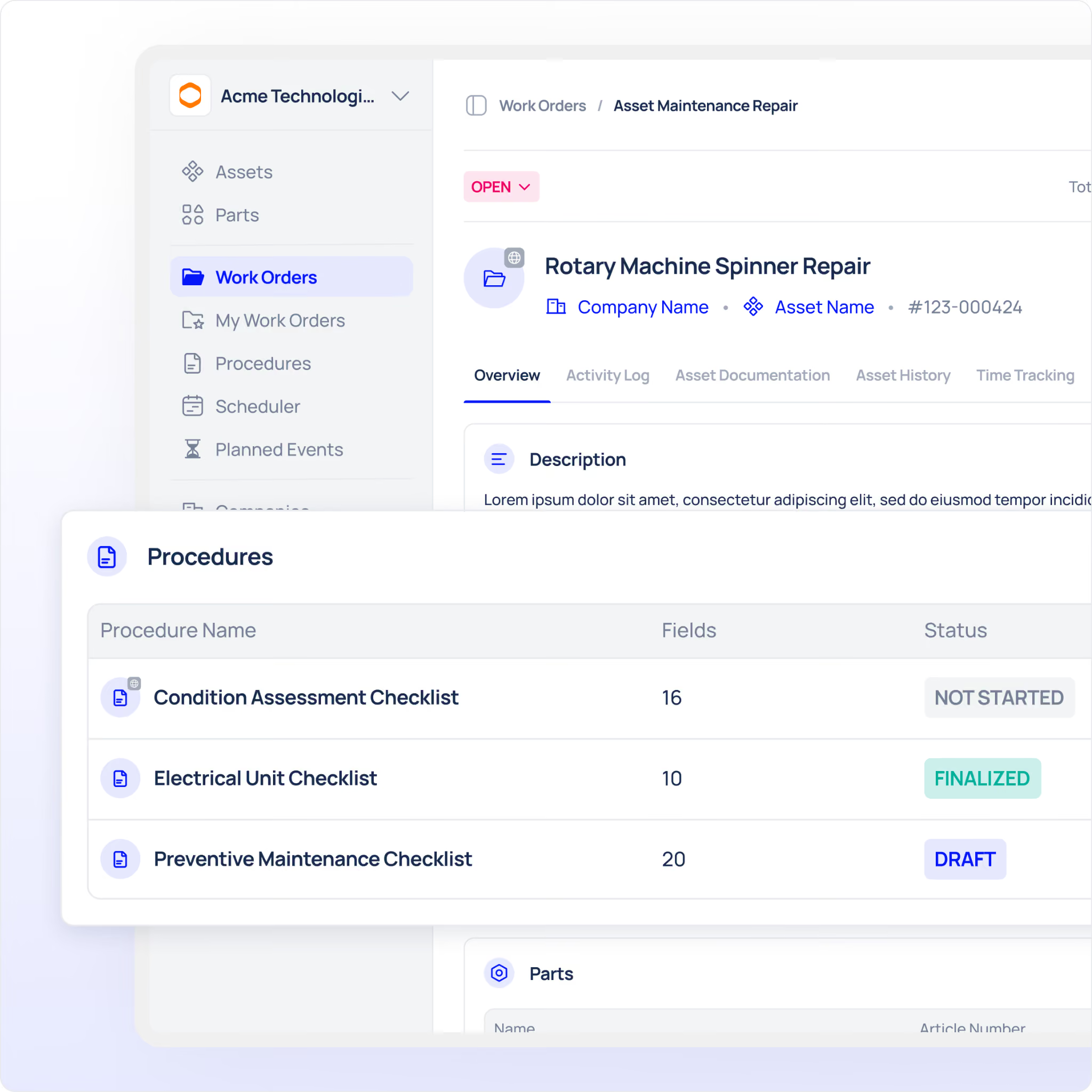
Once we have the data, we spend the second day mapping it against standard regulatory requirements. This is where the visual dashboard comes to life. We categorise your assets based on their compliance status, using simple colour coding to highlight areas of immediate concern. Red means you have a critical compliance failure; green means you are fully audit-ready.
The final handover: your action list
At the end of the 48-hour window, we hand over the deliverables. You will not receive a dense, unreadable consultancy report. You receive a direct, prioritised action list. It tells your team exactly which machines need immediate inspections and which documents require urgent signatures. You can start closing the gaps the very next morning.
Visualising your compliance transformation
To understand the immense value of this rapid assessment, look at how a facility operates before and after undergoing the snapshot process.
Maintaining readiness with the right tools
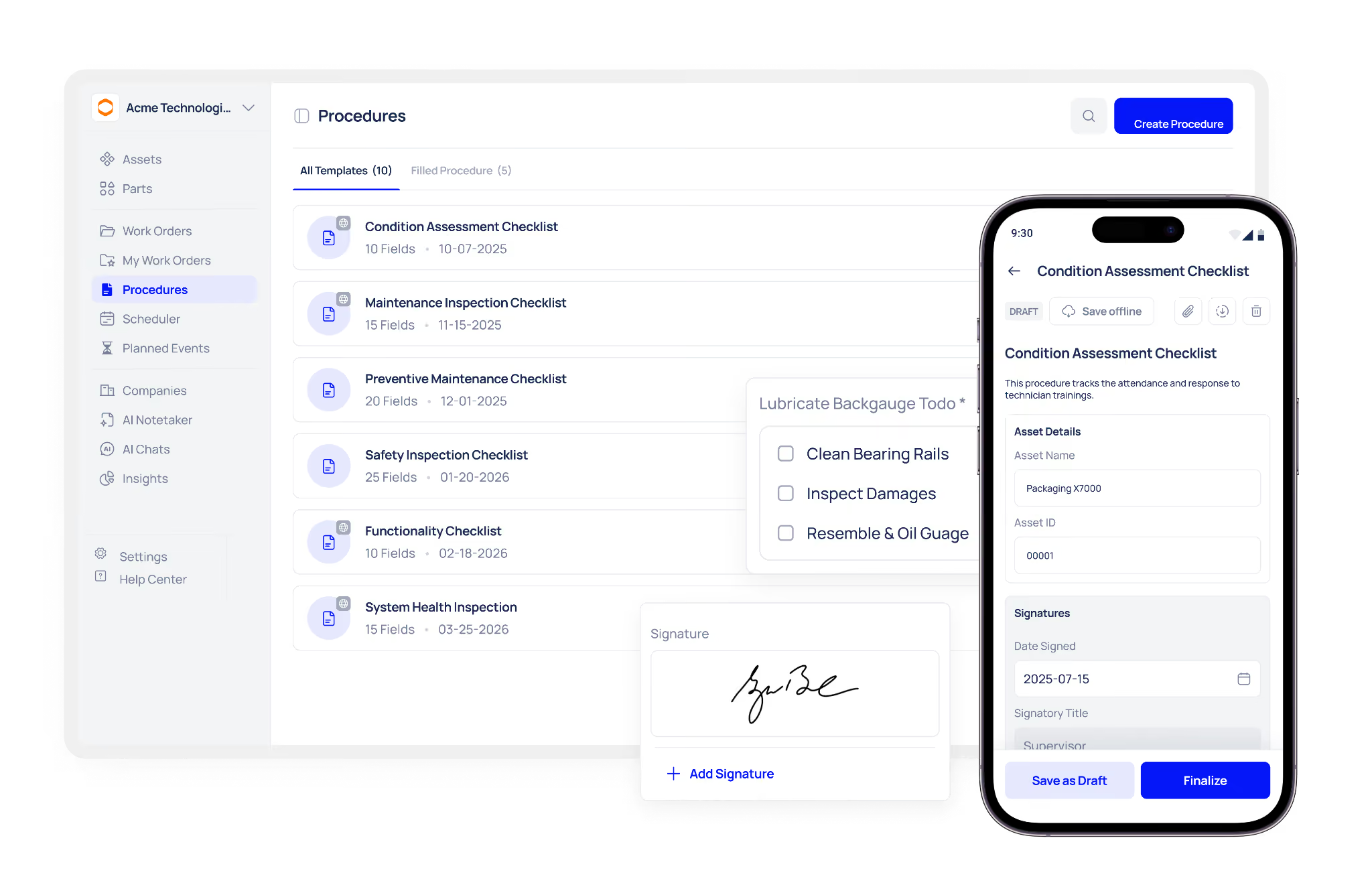
Completing an inspection audit snapshot gives you the immediate clarity you need to survive an upcoming audit. However, keeping that data clean over the long term requires a more permanent solution. You cannot rely on manual data extraction forever.
Using a dedicated maintenance platform like Makula allows you to maintain this level of readiness every single day. By running your daily work orders and safety checks through a centralised system, your dashboard updates automatically. When an auditor arrives, you simply hand them a tablet showing your flawless, real-time compliance history.
Repurpose your success: build compliance case studies
Once you fix your compliance gaps, you possess an incredibly valuable story. The results of your inspection audit snapshot should not just sit in an internal folder. You can leverage this data to build powerful trust with your stakeholders.
Consider turning your snapshot results into detailed case studies. Document how you moved from fragmented data to 100% audit readiness in a matter of weeks. You can share these case studies with prospective clients to prove your operational excellence. Showing a major client that you take safety and compliance seriously is often the deciding factor in winning large, long-term contracts.
Stop fearing the auditor's clipboard
You can no longer afford to rely on guesswork when it comes to regulatory compliance. The financial and reputational risks are simply too high. When you cannot prove your inspection compliance, you leave your entire business vulnerable to fines, operational shutdowns, and lost contracts.
You have the power to change this narrative immediately. By taking a targeted, data-driven approach, you can uncover every missing document, identify every expired certificate, and build a foolproof plan to fix them.
Do not wait for the auditor to arrive before you take action. Take control of your data and secure your facility's future today.