
A single missing document can bring an entire service operation to a standstill.
A field service technician arrives on site to resolve an unexpected equipment failure. Downtime is escalating. Customer pressure is mounting. They reach for the service manual, only to discover it is outdated, missing critical updates introduced months ago.
Instead of clear, actionable guidance, they encounter inconsistencies and gaps that slow diagnosis and delay resolution. What should have been a straightforward repair turns into guesswork, phone calls, and wasted time.
This scenario highlights a common failure in field service documentation, where outdated or inaccessible service documentation directly impacts technician performance and equipment uptime.
At its core, service documentation breaks down in the field not because information does not exist, but because it fails to reach the right people at the right time.
Effective service documentation management ensures that technical documentation reaches field technicians when and where it is needed. It should act as a reliable bridge between engineering teams and technicians, enabling consistent execution, faster issue resolution, and safer work.
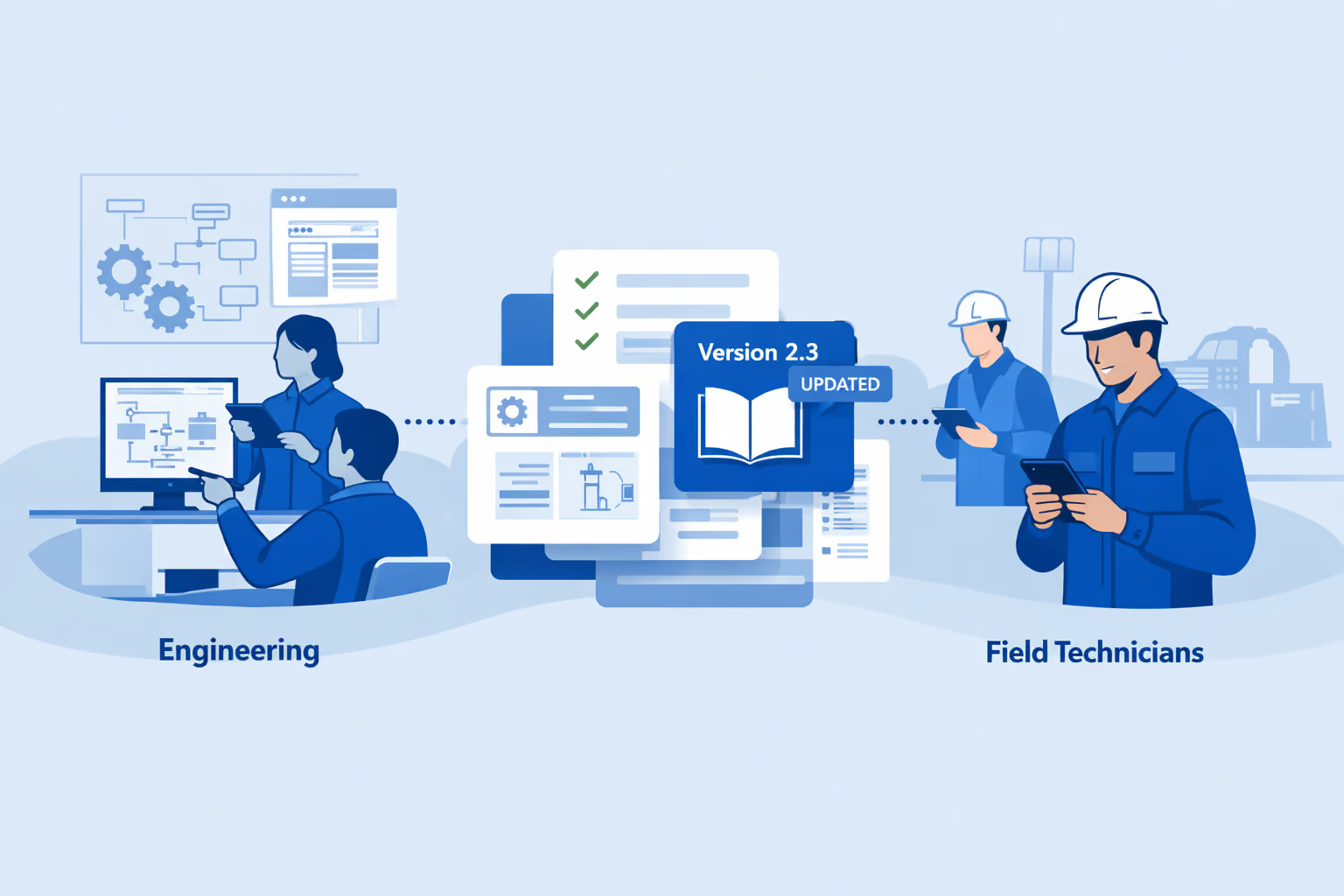
When that bridge fails, due to fragmented manuals, limited access, version control challenges, or the loss of undocumented tribal knowledge, service organisations face rising costs, extended downtime, and declining customer satisfaction.
These breakdowns are common in organisations relying on disconnected systems for service documentation, work instructions, and asset data.
This article explores why service documentation breaks down in the field and outlines how modern service organisations can close the gap to restore efficiency, reliability, and trust.
The Impact of Paper-Based Documentation
Despite advances in digital technology, paper-based documentation still persists in many service operations, and it continues to undermine efficiency and accuracy.
To understand why documentation fails in the field, we must first examine the specific problems caused by paper and static digital systems.
1. Problems with paper:
- Binders get greasy, wet, and damaged in real-world environments.
- Pages tear, fade, or disappear entirely.
- Crucial handwritten notes in margins never make it back to headquarters.
Paper creates a one-way flow of information: knowledge goes out, but learning never comes back.
2. Issues with static digital files:
- PDFs and shared drives are not connected or updated in real time.
- Technicians often store files locally on laptops or tablets.
- Updates from engineering never reach the field consistently.
This leads directly to massive version control problems.
3. Version control failures:
- One technician follows Revision A.
- Another references Revision C.
- A critical safety or installation step exists only in the latest version.
This paves the way for procedure confusion and inconsistent workflows.
What are the consequences of failed documentation?
- Inconsistent repairs across teams
- Service errors and rework
- Additional truck rolls
- Frustrated technicians
- Dissatisfied customers
A single outdated instruction can turn a routine job into a costly failure.
The Accessibility Gap: Documentation Access in the Field
Another major reason documentation breaks down is simple: it is hard to get to.
If a technician must call the back office and wait on hold for a schematic, they may guess instead. Under pressure, friction becomes a risk. Documentation access in the field must be instant.
If your mobile field service tools do not integrate directly with your knowledge base, you are creating delay at the worst possible moment. Technicians do not need a generic product-family manual, they need asset-specific documentation:
- The exact configuration
- The modification history
- The service record of this machine
This is where Installed Base Management becomes critical. By linking documentation directly to the specific asset record, technicians see precisely what they are working on, no assumptions, no blind spots.
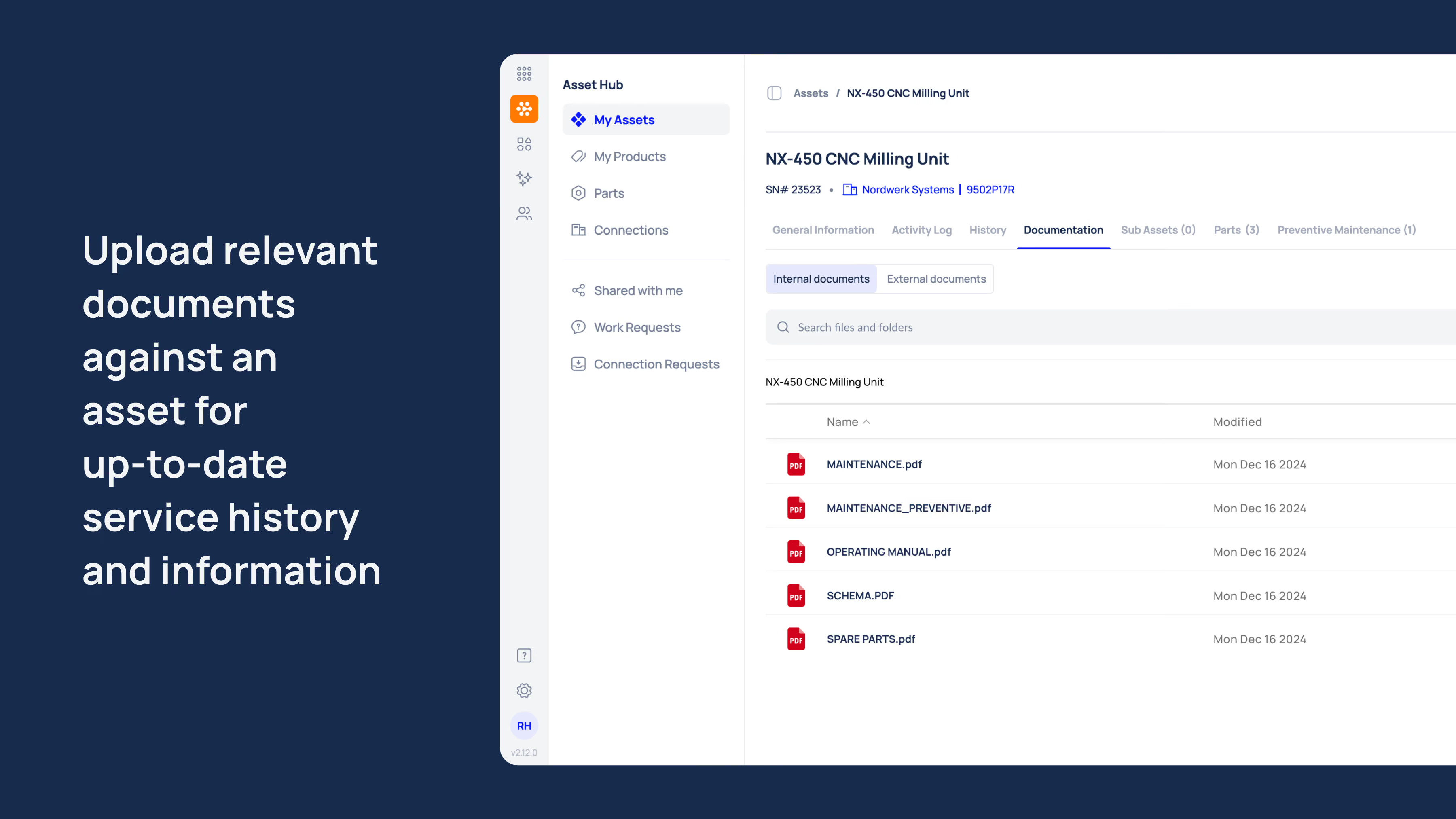
When access is immediate and contextual, documentation becomes a tool, not an obstacle.
Technician Knowledge Gaps and Tribal Knowledge
When documentation is hard to use, technicians rely on memory, or “phone a friend.”
This reliance on tribal knowledge is dangerous.
When your most experienced technician retires, that knowledge often leaves with them. Service quality declines overnight.
Knowledge gaps widen further when service process standardisation is weak. One technician bypasses a sensor to get equipment running but never documents it. The next technician arrives unaware, and wastes hours diagnosing a mystery fault.
Digital work instructions close this gap. They:
- Guide technicians step-by-step
- Enforce best-practice workflows
- Ensure every visit follows a consistent standard
- Capture deviations and learnings
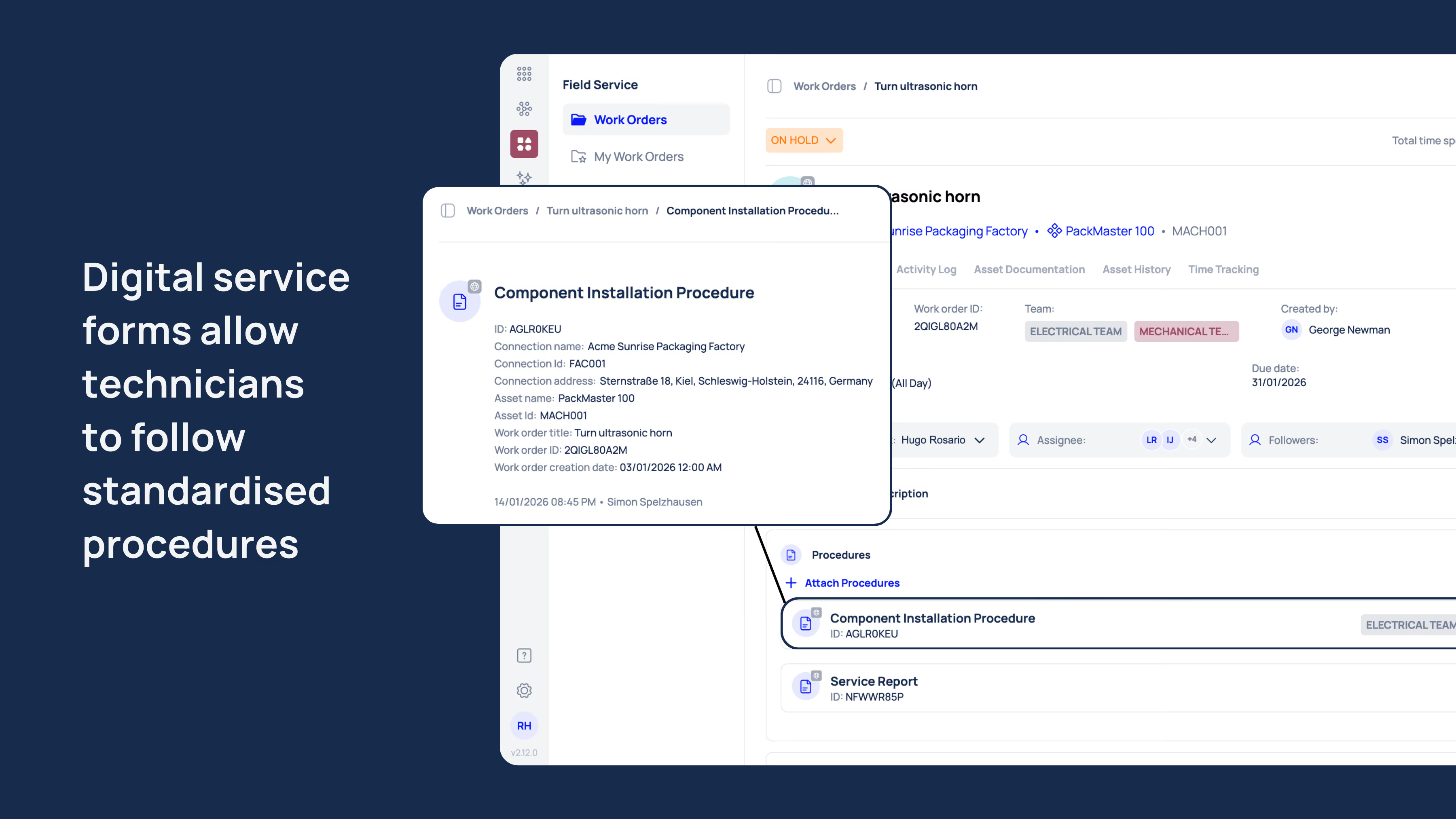
The result: performance becomes repeatable, not dependent on who happens to be on-site.
It is not only about pushing manuals to the field, it is about capturing what actually happens during service visits. Field service data accuracy collapses when documentation feels like a burden.
If a technician must fill out a messy paper form or a clunky spreadsheet at the end of the day, details are rushed or skipped. What was really fixed? What part failed? What workaround was applied?
That intelligence disappears.
With Digital Service Forms, data is captured in real time:
- Photos
- Fault codes
- Part usage
- Root cause
- Technician notes
Explore Makula's Digital Service Forms below to get the full experience of how they work:
Maintenance records remain accurate and immediately available for the next visit. Documentation becomes a living system that evolves with every job, improving field service data accuracy.
The Role of Digital Service Documentation
True digital service documentation transforms static text into interactive, searchable intelligence.
Instead of flipping through 500 pages, a technician types a fault code and goes directly to the solution.
This shift is essential for improving first-time fix rates. When technicians have the right information instantly, they diagnose correctly the first time.
Digital documentation also integrates into broader workflows:
- Scheduling & Dispatch systems can identify complex jobs
- Dispatchers ensure the right technician is assigned
- Required manuals are preloaded before arrival
Preparation replaces reaction.
Bridging the Gap with Technology
Solving documentation breakdowns requires more than buying tablets. It requires connecting systems into a single service ecosystem.
1. Empowering the Technician
A robust Mobile App becomes the technician’s lifeline. It must provide:
- Offline access in low-connectivity environments
- Asset history and service records
- Integrated documentation
- Help Desk & Ticketing history
Makula's mobile app empowers your field service teams to deliver faster, more accurate maintenance with everything they need in their pocket:
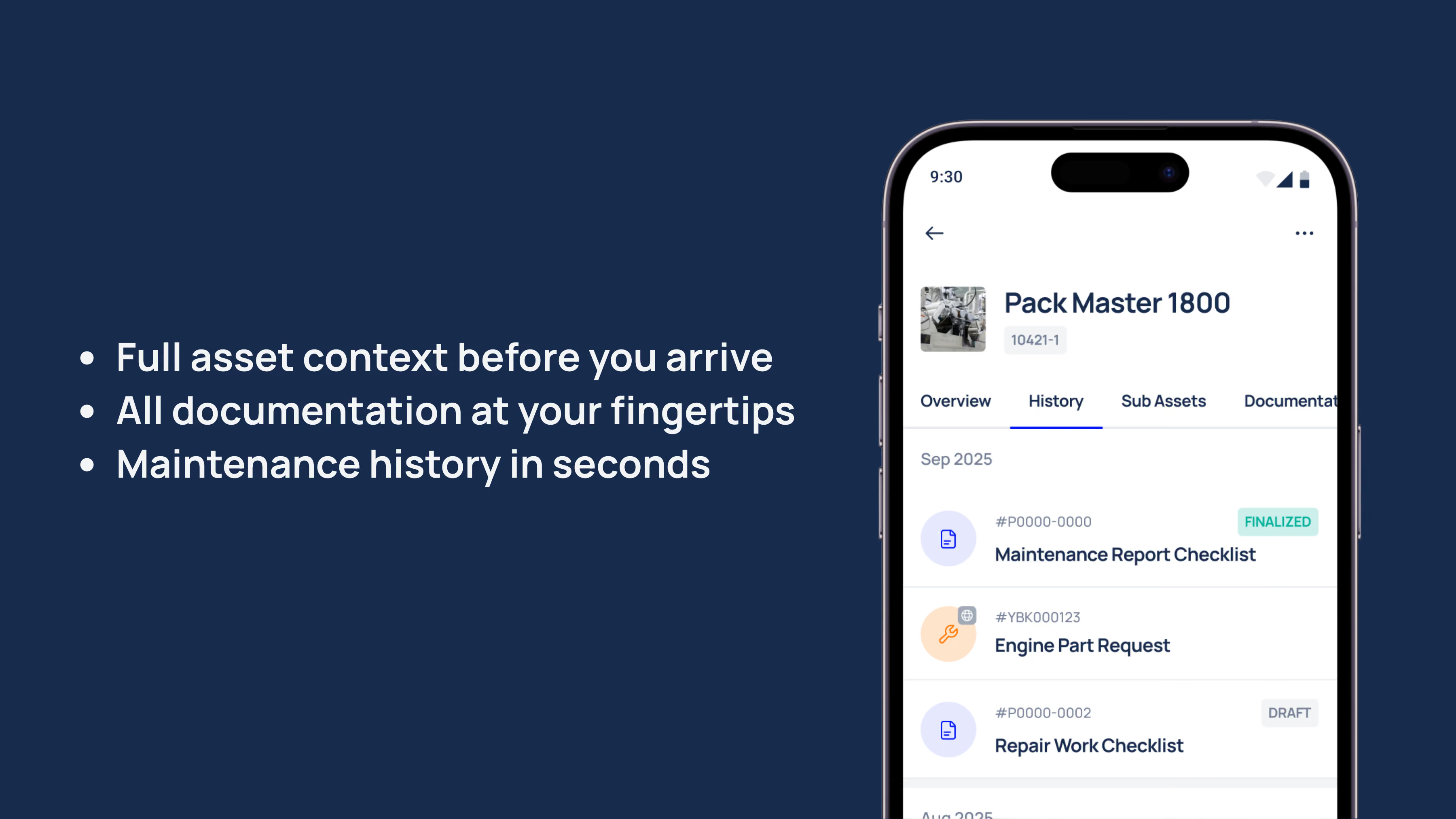
When knowledge is always available, confidence replaces guesswork.
2. Smart Assistance
We are entering the era of the AI transformation.
Imagine a system that reads your documentation and suggests likely causes based on symptoms in the ticket. Documentation shifts from passive reading to active problem solving.
Makula's AI Maintenance Copilot gives your technicians and operators instant access to the right instructions, parts, and procedures:
Technicians no longer search, they are guided.
3. Customer Visibility
Documentation is not only for internal teams.
Through a branded Customer Portal, organisations can share:
- User guides
- Maintenance schedules
- Safety instructions
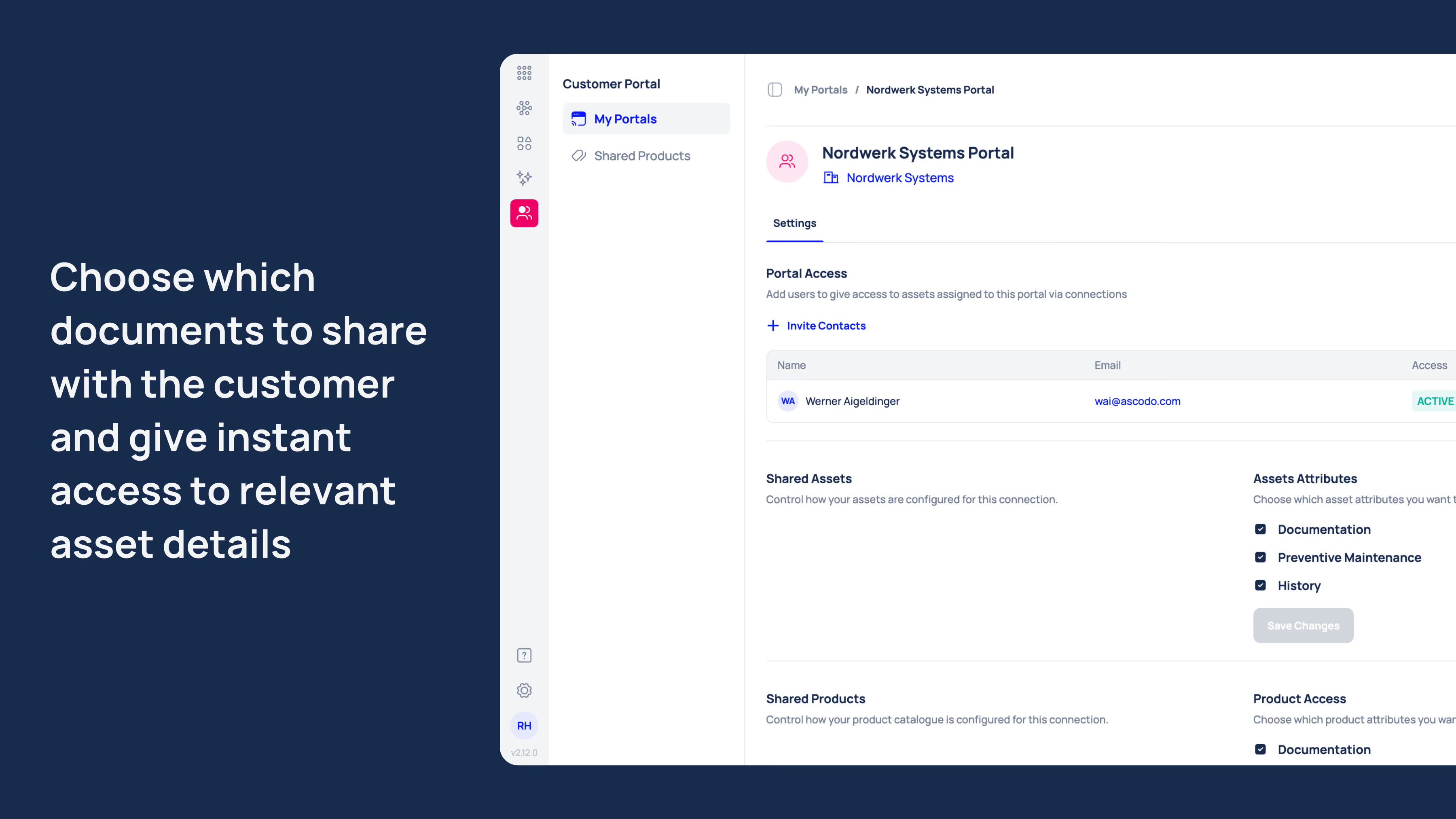
This transparency builds trust and empowers customers to resolve simple issues themselves, reducing calls and improving relationships.
From Reactive to Proactive
When documentation flows freely, organisations unlock a new level of intelligence.
Reports & Analytics reveal patterns:
- Repeated failures
- Common misdiagnoses
- Emerging part weaknesses
Documentation updates instantly reflect these insights: service shifts from reactive to proactive.
Instead of waiting for breakdowns, organisations can set preventive maintenance events using accurate asset history and field data, securing uptime, revenue, and customer loyalty.
Conclusion
Service documentation breaks down in the field when it is static, inaccessible, and disconnected from real workflows.
By shifting to dynamic service documentation management, organisations can:
- Eliminate technician knowledge gaps
- Ensure field service data accuracy
- Prevent tribal knowledge loss
- Improve first-time fix rates
- Enable proactive service
The tools exist.
Whether through digital service documentation, interactive work instructions, or AI-driven insights, the goal remains the same:
Put the right information in the hands of the person who needs it, exactly when they need it.
The question is no longer if service documentation must evolve, but how much longer organisations can afford to let it fail.