It’s Monday morning. A technician walks up to a conveyor belt that’s been idle for three weeks, checks the motor, lubricates the bearings, and signs off the preventive maintenance (PM) sheet. It feels productive. It looks diligent. But if that work was performed only because a date on a calendar arrived, you may be wasting labour, consumables, and technician time.
This scenario plays out in facilities across the United Kingdom and beyond. Many teams run rigid, date-driven PMs that were set long ago and never revised. The result is calendar PM inefficiency: time-based schedules that are technically correct but poorly optimised for how assets are actually used. The good news: time-based PMs don’t need to be abandoned; they need to be smarter.
The real problem: poorly planned time-based PMs (not time-based PM itself)
Time-based maintenance assumes wear follows the clock. That’s sometimes true, but not always. When you perform the same PM every 30 days on a machine that only runs occasionally, you’re likely over-maintaining the asset. Over-maintenance costs money and can even introduce new risks: every unnecessary intervention carries a small chance of human error (a loose screw, misaligned seal, or a disconnected wire).
Instead of blaming time-based PMs, focus on optimisation: right-sizing intervals, reducing unnecessary tasks, and using simple operational data and failure history to make schedules more accurate.
Quick comparison (why optimisation matters)
Practical steps to optimise time-based PMs
- Audit PM tasks and remove low-value work
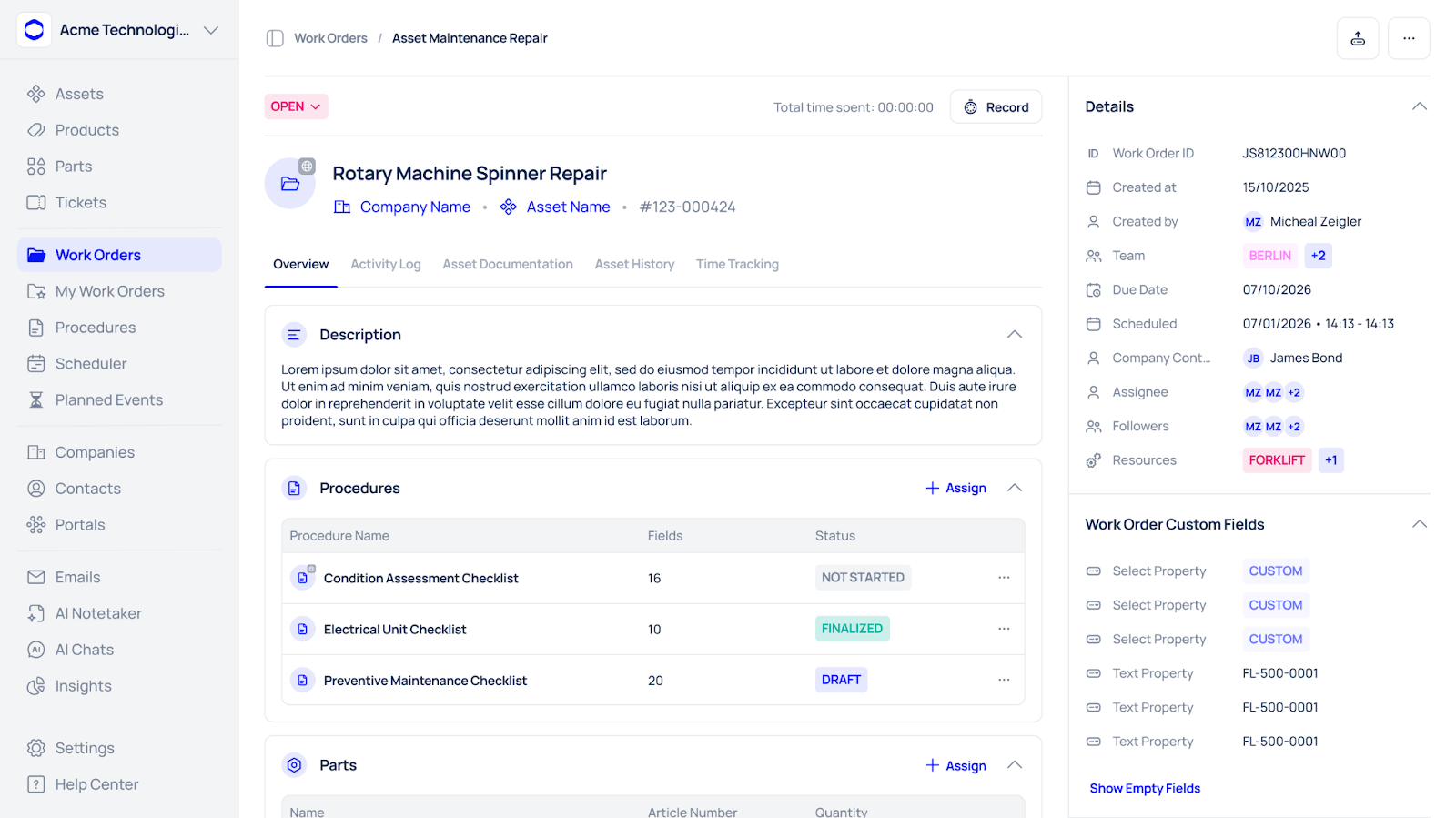
Review PM checklists and remove tasks that don’t prevent failure. Replace full-service routines on idle or low-risk assets with lighter inspection checks where appropriate. - Use failure and work-order history to adjust intervals.
Look at past failures and PM outcomes. If an asset rarely fails and PMs show minimal wear, increase the interval. If certain components wear faster, shorten the interval for those tasks only. - Create PM tiers and priorities.
Not all PMs are equal. Create tiers (e.g., critical, standard, inspection-only), so your team applies full servicing only where it delivers value. - Align PMs with production schedules.
Schedule PMs for times when the asset is offline or during planned downtime to avoid unnecessary servicing of idle machines and to reduce production disruption. - Batch and route work efficiently
Group PMs geographically or by machine family to cut travel time and increase technician productivity. - Introduce inspection-only tasks for rarely used equipment.
For assets that sit idle, use a short inspection checklist (visual check, lubrication point as-needed) rather than a full component replacement every cycle. - Standardise checklists to reduce human error
Clear, concise PM checklists and photos reduce the chance of maintenance-induced failures. Train technicians to follow the checklist and report conditions, not just tick boxes. - Pilot changes and measure outcomes
Test revised PM intervals on a small set of assets for 3–6 months. Track KPIs: PM compliance, backlog, mean time between failures (MTBF), and maintenance-induced incidents. If results are positive, roll changes out. - Use simple operational inputs when usage meters or IoT aren’t available.
If you don’t have runtime sensors (Makula is time-based), use production shift logs, operator reports, or PLC run-time exports to inform schedule changes; these manual signals will still let you align time-based PMs with actual use.
Measure what matters
Track a small set of KPIs after you optimise: PM completion rate, % of reactive work, PM-related failures (maintenance-induced), technician hours per PM, and overall maintenance cost per asset. These metrics prove whether schedule changes reduce waste.
The goal: reliability, not busyness
A PM program that keeps technicians busy but does not improve reliability is not succeeding. Make your time-based PMs intentional: remove unnecessary work, prioritise high-value tasks, and adapt intervals using historical data and operational insight.
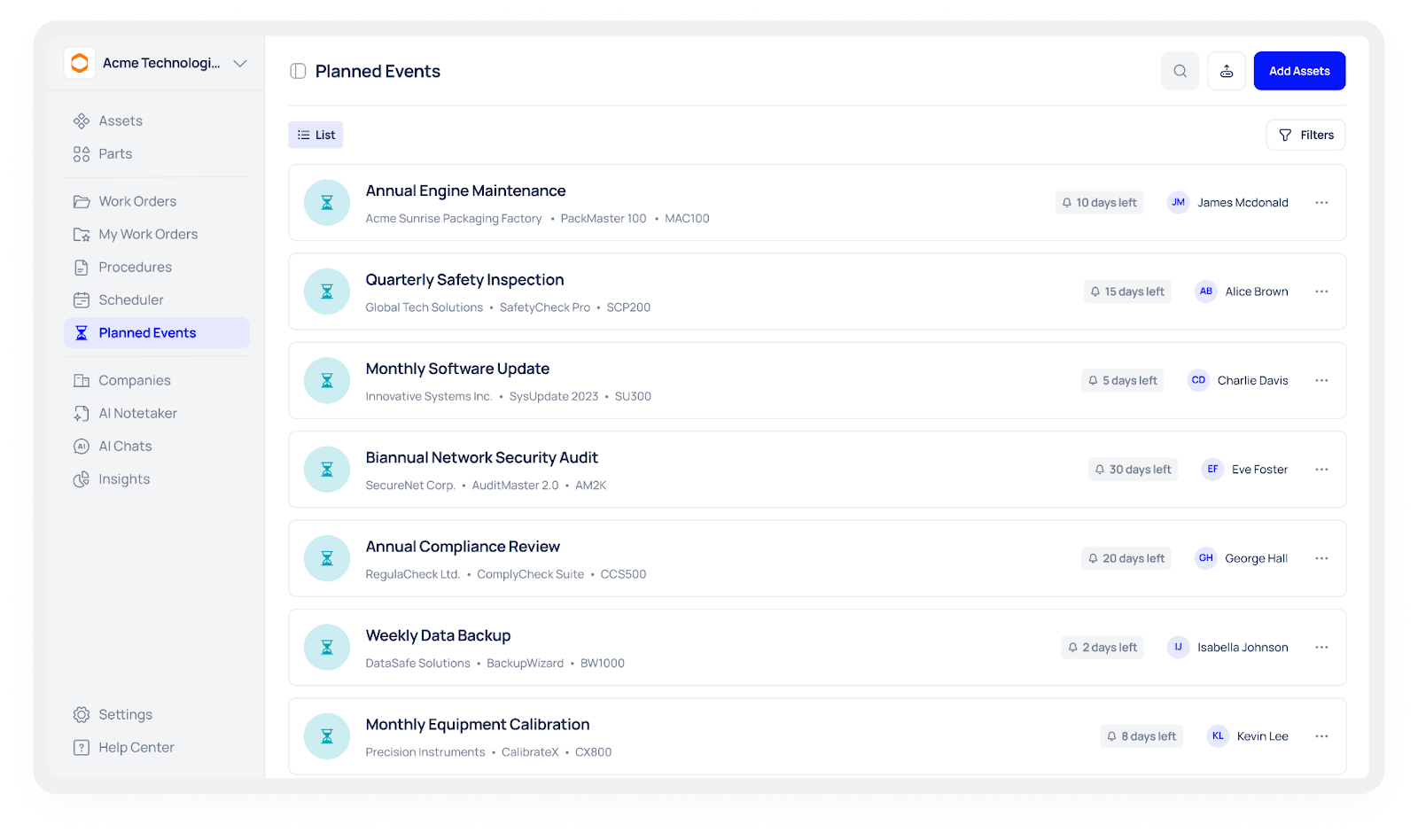
If your CMMS is running date-driven PMs, you don’t have to abandon time-based maintenance, just make it smarter.