Growing your industrial operations should feel like a massive victory. Expanding to new facilities, increasing your production capacity, and hiring more technicians are all clear signs of a thriving business. Yet, for many facility directors and maintenance managers, this growth quickly turns into an administrative nightmare. The root cause is almost always the same: the software that got you here cannot get you there.
When your operations grow, basic software systems inevitably break. What started as a simple, streamlined tool for a small team suddenly becomes a rigid bottleneck that slows down your entire maintenance department. If you find your technicians creating manual workarounds or managers relying on external spreadsheets to track daily tasks, your software is actively working against you.
See How Enterprise-Ready CMMS Software Scales with Your Operations
Discover how manufacturers overcome workflow bottlenecks, reporting limitations, and multi-site management challenges with Makula. See what scalable maintenance operations look like and how the right platform supports growth without adding complexity.

To protect your operational efficiency, you must understand why most work order management systems fail when pushed to their limits. This guide uncovers the critical scalability gaps that cause these breakdowns, specifically within workflows, data management, and multi-site limitations, and helps you identify exactly when it is time to make a switch.
The Tipping Point of Operational Growth
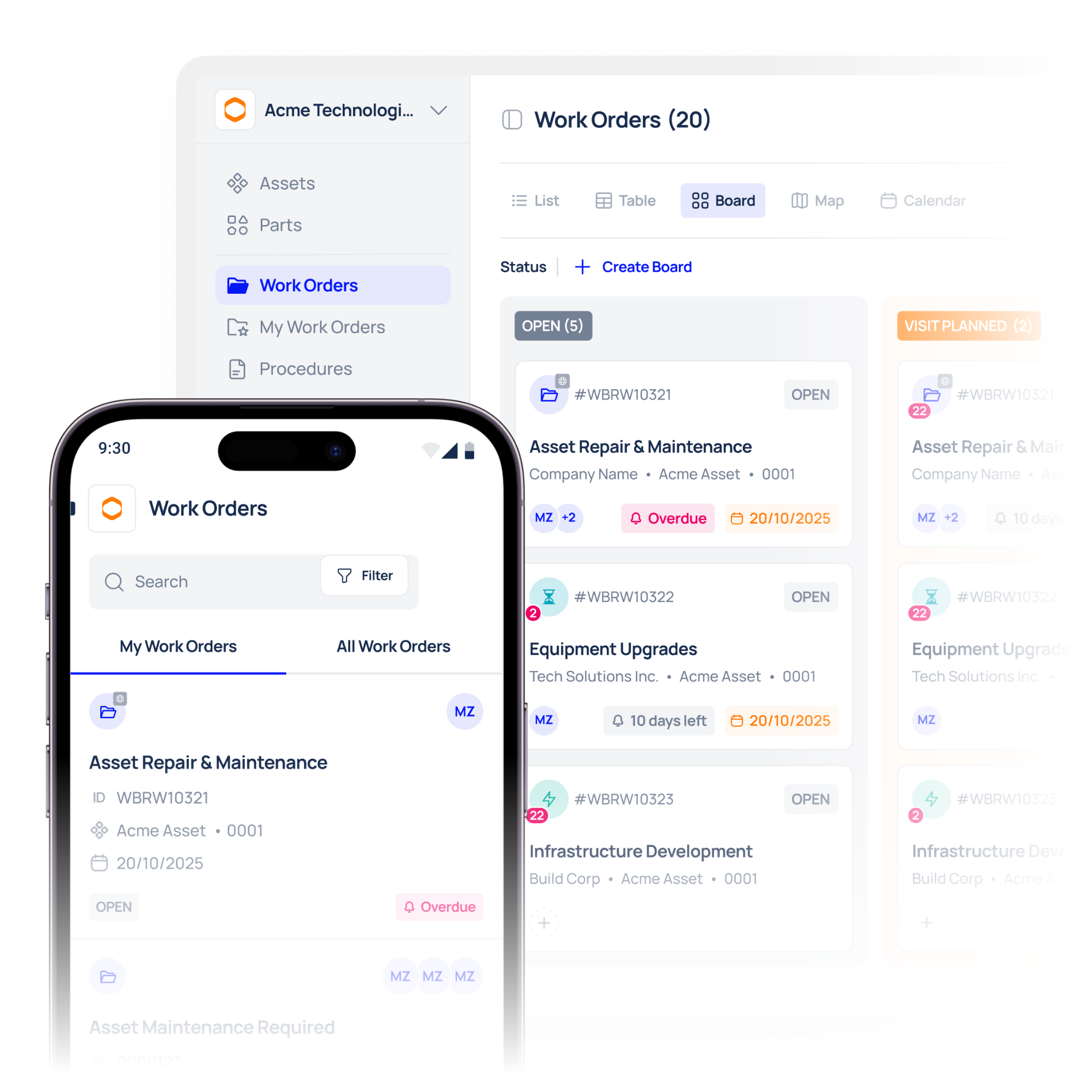
Every maintenance platform works well when you have one building, a handful of assets, and a small team of technicians. In these early stages, the software simply acts as a digital filing cabinet. You log a request, assign it, and close it out. It is a straightforward, linear process.
However, industrial growth brings exponential complexity. You do not just double your assets; you multiply the intricate relationships between spare parts, technician certifications, compliance regulations, and machine downtime. As your facility scales, you shift from reactive repairs to predictive maintenance. You begin dealing with external contractors, multi-tiered safety approvals, and strict compliance audits.
Basic platforms are simply not engineered for this level of stress. They lack the underlying architectural framework required to process hundreds of concurrent, complex tasks. When forced to handle enterprise-level demands, these tools suffer from extreme lag, lost data, and a complete inability to adapt to the reality of the factory floor.
Three Critical Scalability Gaps
If you want to understand why your software feels broken, you need to look at the three major scalability gaps that plague standard platforms. These are the specific failure points that force businesses to seek enterprise-ready alternatives.
1. The Breakdown of Linear Workflows
The most glaring gap in basic software is workflow rigidity. Standard systems are built on a simple "open to close" ticket model. This works perfectly for changing a lightbulb or completing a basic visual inspection.
When your operations scale, however, tasks rarely follow a straight line. An emergency machine breakdown might require a technician to branch the work order off into several parallel tasks. They might need to immediately order a £10,000 replacement part, trigger an automated approval request to the finance director, and schedule a specialised external contractor for the following morning.
Standard platforms cannot process these dynamic, conditional workflows. They force technicians to leave the original ticket open, send manual emails to managers, and create duplicate work orders to track the sub-tasks. This lack of workflow scalability leads to massive confusion, delayed repairs, and a severe drop in technician productivity.
2. Data Overload and Reporting Failures
Information is the lifeblood of industrial maintenance. As you add more assets, sensors, and personnel, your system generates an immense amount of daily data. Basic platforms use simple database structures that quickly become overwhelmed by this influx of information.
The first symptom of this scalability gap is performance lag. The software takes minutes to load a simple dashboard, and mobile apps constantly crash on the factory floor. The second, more dangerous symptom is fragmented reporting. When the system cannot process vast amounts of historical data, it limits your ability to generate accurate reports.
You lose visibility over crucial metrics like Mean Time Between Failures (MTBF) and predictive asset health. Instead of using data to prevent future breakdowns, your managers are forced to export information into basic spreadsheets, wasting hours trying to manually stitch together a clear picture of your maintenance costs.
3. Multi-Site Management Limitations
The final, and often most expensive, failure point occurs when you attempt to expand across multiple geographic locations. Basic systems are usually designed with a single-site architecture. They silo your data by location, essentially forcing you to run completely separate databases for every new facility you open.
This limitation creates massive operational blind spots. If your facility in London urgently needs a specialised motor, the software cannot tell you that your warehouse in Manchester has three of them sitting idle on a shelf. You end up over-ordering inventory, duplicating preventive maintenance checklists, and losing the ability to standardise safety procedures across your entire organisation. To scale efficiently, you need a unified system that provides top-down visibility across all sites while still allowing for local, site-specific configurations.
The True Cost of Delaying an Upgrade
Ignoring these scalability gaps comes with a steep price. When your work order management systems begin to fail, the financial impact ripples across your entire operation.
First, there is the cost of extended downtime. When rigid workflows delay critical approvals or cause miscommunications regarding spare parts, machines sit idle for longer. Second, you face terrible user adoption rates. Technicians are pragmatic problem solvers; if a software tool makes their job harder, they will simply stop using it. This leads to undocumented repairs and a complete breakdown of compliance tracking. Finally, sticking with a failing system halts your ability to grow. You cannot confidently bid on larger contracts or acquire new facilities if your underlying maintenance infrastructure is crumbling.
Standard Systems vs Enterprise Scalability
Understanding the difference between a system built for small teams and one engineered for enterprise growth is vital. Use this table to evaluate your current software constraints.
Prepare Your Operations for Limitless Growth
You cannot manage complex, multi-site industrial operations using tools built for basic repairs. When your software lacks the necessary workflow flexibility, data processing power, and multi-site visibility, it actively hinders your ability to succeed.
Do not wait for a catastrophic software failure to force your hand. The time to upgrade is when you first notice the cracks in your operational efficiency. You need a platform that flexes and adapts to your most complex demands, seamlessly transitioning from handling a small team's daily tasks to managing a massive, multi-national workforce.
Want to see exactly how your operations can evolve without breaking? Let us show you what scaling from small to enterprise workflows looks like in a live environment with Makula. Our platform is engineered from the ground up to support limitless industrial growth.
Stop letting your software dictate your limits. Book a demo today.