
Many maintenance teams do not realise how much risk is hidden inside their asset data until they need it.
At first glance, the information may look complete. There are spreadsheets, system exports, maintenance logs, and maybe even a CMMS in place. But once you try to build one reliable view of the site, the gaps become obvious.
Different teams keep different versions of the data. Naming conventions do not match. Some assets exist physically but are missing digitally. Others appear in systems even though they are no longer on-site.
The result is a fragmented view of reality.
And when the foundation is unclear, every maintenance decision built on top of it becomes less reliable.
The real issue is not just missing data.
In most organisations, the problem is not a total lack of data. It is the lack of structure, consistency, and trust in that data.
Over time, small issues grow into larger ones:
- asset lists evolve separately across departments
- equipment is renamed or duplicated
- new assets are added without standards
- old records remain in the system long after they should be removed
This creates uncertainty. Teams stop trusting the register and start relying on memory, experience, or manual workarounds.
That approach may work for a while, but it becomes a serious limitation as operations grow.
Why a 48–72 hour site snapshot helps
Trying to fix everything at once is overwhelming. Full data cleanup projects can take months and often stall before they create value.
A 48–72 hour site snapshot is a faster starting point.
Instead of aiming for perfection, the goal is to create a usable baseline. Within a short timeframe, scattered information is reviewed, structured, and turned into a clearer view of the site.
That gives teams three things they often lack at the beginning:
- visibility
- direction
- momentum
What you receive from the snapshot
The output is designed to be practical and easy to use.
These deliverables turn a messy register into something the team can actually work with.
What the snapshot usually uncovers
Even organisations with existing systems often discover the same problems during a site snapshot:
- duplicate assets recorded under different names
- equipment missing from central records
- incomplete or inconsistent asset hierarchies
- preventive maintenance schedules linked to the wrong assets
- no clear classification of critical versus non-critical assets
None of these issues may look major on their own. But together they create wasted time, poor planning, and avoidable maintenance risk.
Finding them early makes it much easier to fix the root cause instead of reacting to repeated symptoms.
Why speed matters
Many data cleanup projects fail because they take too long to show value.
A fast snapshot creates early clarity. When teams can see real findings in 48–72 hours, they are more likely to act on them. That immediate visibility helps build internal support for further cleanup or system improvement.
Instead of waiting for a perfect setup, the team starts with what is already there and improves from that baseline.
From visibility to better maintenance decisions
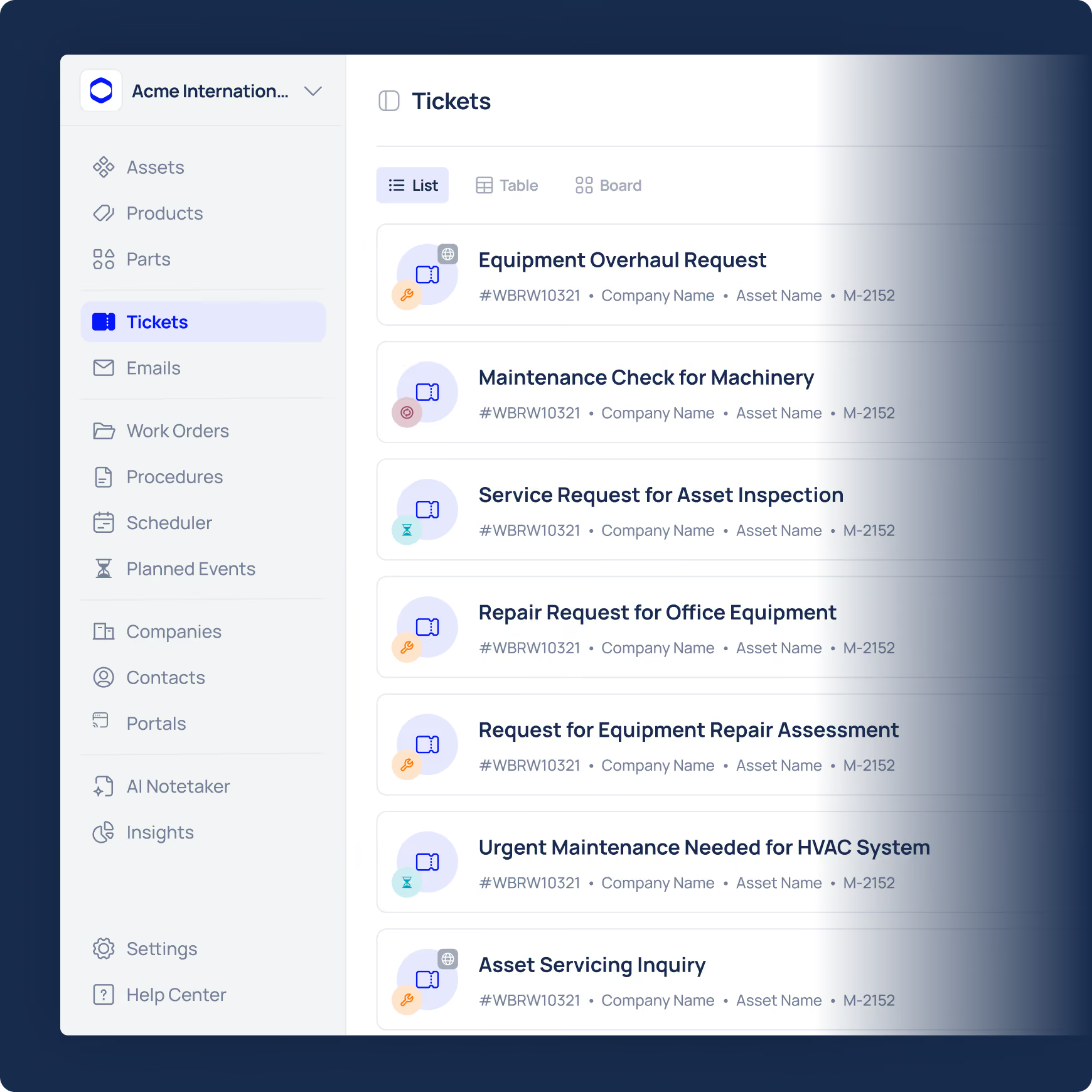
Once the asset register is clearer, the impact shows up across the maintenance workflow.
Preventive maintenance becomes more accurate. Spare parts planning becomes easier. Reporting becomes faster. Technicians spend less time searching for information and more time doing the work.
This is where a CMMS like Makula adds value. It helps teams take that first layer of clarity and turn it into a structured, scalable process that supports long-term maintenance performance.
When this makes the most sense
A 48–72 hour site snapshot is especially useful when:
- There is no single trusted asset register
- data is spread across multiple tools or teams
- maintenance relies heavily on individual knowledge
- the organisation is preparing for digitisation
- leadership wants quick, measurable improvements
It is not about replacing everything. It is about understanding the current state clearly enough to improve it.
Conclusion: From Asset Confusion to Clear Control
Most maintenance issues start with poor or incomplete asset data.
Without a clear view of assets, planning becomes reactive, reporting is inconsistent, and preventive maintenance loses accuracy. Technicians also waste time searching for basic information.
A 48–72 hour site snapshot quickly highlights duplicates, missing data, and inconsistencies. Instead of fixing everything at once, it gives teams a clear starting point.
From there, teams can clean and standardise their asset data and build a more reliable structure. Makula CMMS then helps maintain that structure over time.
The goal is simple: trust your asset data.
When teams trust their data, they make better decisions, reduce downtime, and work more efficiently.
If your asset data is unclear, start with visibility.