.avif)
The mere mention of an upcoming compliance audit is enough to send a shiver down the spine of most facility managers. Suddenly, your team is scrambling. Technicians are digging through dusty filing cabinets, managers are trying to decipher faded handwriting on old clipboards, and everyone is frantically updating spreadsheets that have not been touched in months.
If this chaotic scenario sounds familiar, you are facing a very common problem: "We don't know how inspection-ready we are for audits."
Hoping for a positive outcome is not a viable compliance strategy. When an auditor walks through your doors, they expect immediate, transparent, and accurate proof that your equipment is safe, maintained, and operating within regulatory standards. If you cannot provide that evidence instantly, you risk severe fines, operational downtime, and a damaged reputation.
It is time to replace guesswork with certainty. By taking a comprehensive inspection audit readiness quiz, you can accurately score your current processes, identify your weakest links, and build a robust defence before the auditor even arrives.
The hidden risks of poor audit preparation
Why do so many manufacturing and operations teams struggle to maintain continuous compliance? The root cause is usually a disconnected inspection process.
When your safety checks and routine inspections live on scattered pieces of paper, data goes missing. A technician might diligently inspect a pressure valve and note a minor fault, but if that piece of paper gets lost in a tray, the fault goes unresolved. Months later, an auditor spots the exact same fault, asks for the maintenance history, and you have nothing to show them.
Failing to understand your own audit readiness creates several massive operational risks:
- Failed compliance checks: Resulting in hefty financial penalties or even forced facility closures.
- Wasted administrative labour: Your management team spends days manually compiling reports that should take seconds to generate.
- Hidden safety hazards: When inspection data is not easily searchable, critical safety trends go completely unnoticed until someone gets hurt.
You must transition from a reactive scramble to a state of perpetual readiness.
What defines your inspection maturity?
Before you can fix your audit gaps, you need to understand where you currently stand. Inspection maturity is not a simple pass or fail metric. It exists on a sliding scale.
At the lowest level, teams rely entirely on memory and paper, fixing things only when they break and panicking when an auditor asks for proof of maintenance. At the highest level, teams use interconnected digital systems that automatically log every check, flag every anomaly, and generate compliance reports at the click of a button.
By evaluating your current workflows, an inspection audit readiness quiz helps you pinpoint exactly where your facility sits on this scale.
Summary of inspection maturity stages
To help you visualise your current operational standing, review the table below. It outlines the four core stages of inspection maturity and what they mean for your next audit.
How to upgrade your inspection processes
If your self-assessment revealed some uncomfortable truths, do not panic. Moving up the maturity scale is entirely achievable when you implement the right tools and standardise your workflows.
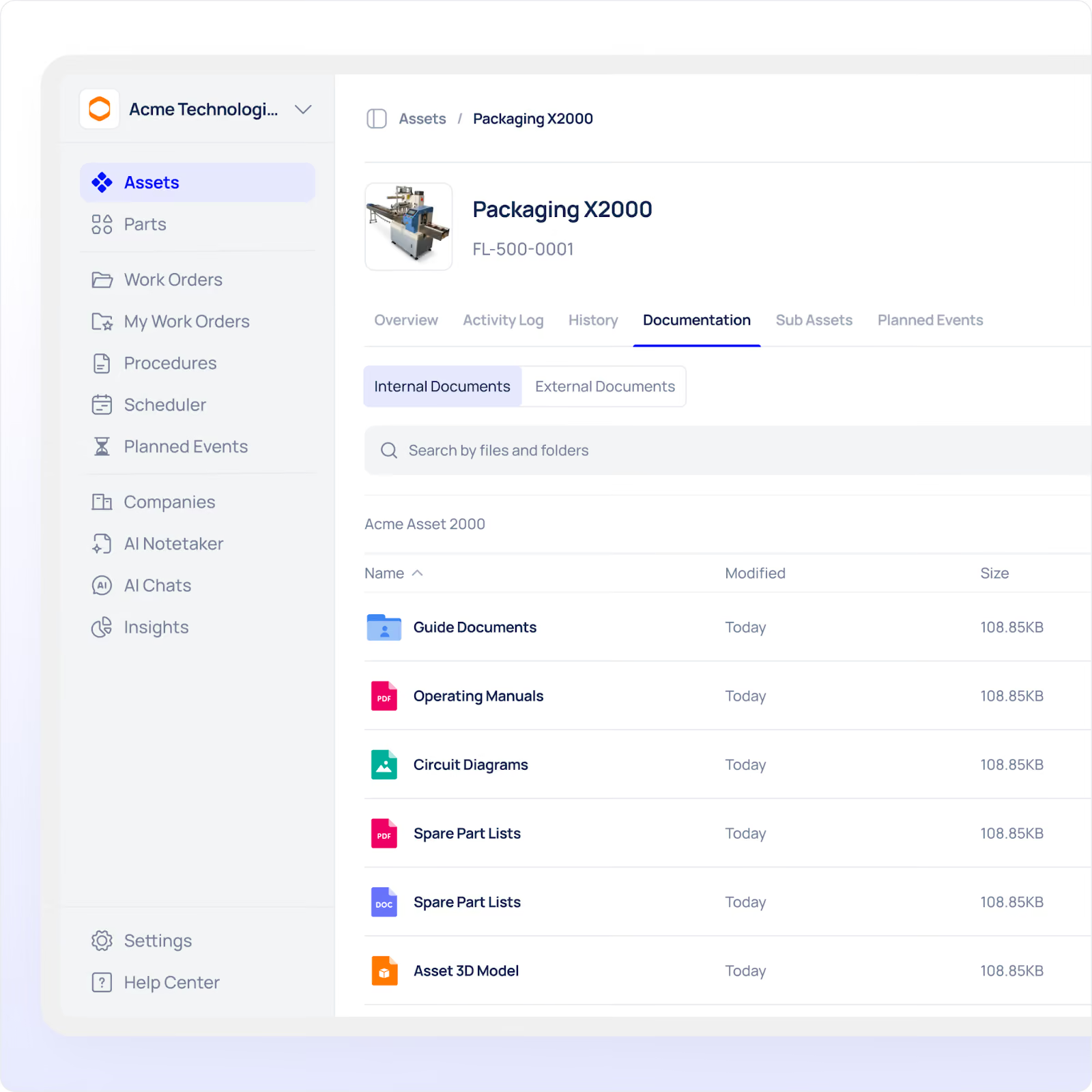
The most critical step is eliminating paper. Transitioning your checklists to a digital environment instantly solves your data accessibility problems. When you use a modern maintenance platform like Makula, your technicians can complete their compliance checks directly on a mobile device. Every inspection is time-stamped, every fault requires a photo, and every completed form is instantly uploaded to a secure, searchable cloud database.
When an auditor walks into a facility using a robust digital platform, the entire dynamic changes. Instead of asking for days of grace to find the right paperwork, you can simply hand them a tablet or export a pristine, error-free PDF report in a matter of seconds. This level of transparency builds immediate trust with regulatory bodies and practically guarantees a successful audit.
What auditors actually look for in inspection records
Auditors are not only checking whether inspections were completed. They are checking whether your records prove control, consistency, and follow-up. That means they want to see clear dates, who performed the inspection, what was checked, what failed, what action was taken, and whether the issue was closed out on time. Missing signatures, vague notes like “checked OK,” and unexplained gaps in history can all weaken your audit position. A mature inspection process gives auditors a complete trail from inspection to corrective action, so there is no confusion about what happened, when it happened, and who owned the next step.
Common red flags that weaken audit readiness
Many teams assume they are prepared because inspections are being done, but auditors often find the same weak points. Records are scattered across clipboards, spreadsheets, emails, and desk drawers. Actions raised during inspections are not linked back to the original finding. Some checklists are outdated, so teams are inspecting against the wrong standard. In other cases, technicians are completing forms after the fact instead of at the point of inspection, which makes the data less reliable. These are small process gaps on their own, but together they create the kind of inconsistency that auditors notice immediately.
What to do after the quiz
Once the team has identified its maturity level, the next step is to close the biggest gaps first. Start by standardising inspection checklists so every technician is collecting the same information in the same way. Then make sure failed checks automatically create a follow-up action, instead of relying on memory or a separate email thread. After that, centralise all inspection records in one system so they can be searched by asset, location, date, or failure type. When that foundation is in place, audit preparation stops being a fire drill and becomes a routine reporting task.
Why digital inspection records make audits easier
Digital inspection workflows reduce audit stress because they remove the weakest points in manual processes. Instead of relying on handwriting, scattered files, or delayed updates, technicians capture information at the source. Photos, timestamps, signatures, and mandatory fields help validate each inspection record before it is submitted. That means the final audit trail is cleaner, easier to trust, and much faster to retrieve. For teams managing multiple sites or large equipment fleets, this difference can save hours of preparation and reduce the risk of missing critical evidence.
FInal Thouhgsts
The easiest way to improve audit readiness is to make inspection evidence impossible to lose. When every checklist, fault, and follow-up task lives in one digital workflow, your team can prove compliance without panic. Instead of scrambling before the auditor arrives, you already have a live record of what was inspected, what failed, and what was fixed. That is the real value of inspection maturity: not just passing one audit, but building a process that stays ready all year round.