In the rapidly evolving landscape of modern businesses, the ability to efficiently manage assets plays a pivotal role in ensuring Standardised operations. However, many organisations face a common, but significant, challenge: "We don’t have one source of truth for our assets." The lack of a unified asset management system creates inefficiencies, increases risks, and makes decision-making more complex. Without a centralised and accurate source of asset data, teams are often left working with outdated, incomplete, or inconsistent information.
The good news is that there’s a solution to this issue. You can build a single source of truth for assets that eliminates confusion, enhances collaboration, and improves operational efficiency. In this detailed guide, we’ll walk you through a 6-step plan to help you create a centralised, accurate, and trustworthy system for managing your assets. By following these steps, you can ensure that your teams are always working with the most up-to-date and reliable data, reducing costly mistakes and boosting productivity.
Problem Statement: "We Don’t Have One Source of Truth for Our Assets"
As your business scales, the number of assets it manages grows exponentially. This can include anything from machinery, software tools, physical infrastructure, to intellectual property and human capital. Often, these assets are stored in multiple systems, departments, or even spreadsheets, making it difficult to track them in a consistent and organised way.
A major consequence of not building a single source of truth for assets is the fragmentation of information. Different teams might have different versions of the same asset data, leading to confusion, duplication of work, and missed opportunities. For example, your procurement team might use one system to track machinery, while your maintenance team uses another. The IT department might track software updates in yet another tool. As a result, these teams can end up working with conflicting or outdated data, undermining decision-making and reducing operational efficiency.
The key to solving this problem is to consolidate all asset-related data into a single source of truth, so everyone in the organisation can access the same reliable information at any time.
1. Identify All Relevant Assets
The first step in creating a single source of truth for assets is to begin by identifying which assets you need to track. Assets can vary greatly depending on your industry, but they generally fall into the following categories:
- Physical assets: These include machinery, vehicles, buildings, equipment, and other tangible items.
- Digital assets: Software, applications, servers, cloud infrastructure, and data that are essential to your business operations.
- People assets: Knowledge, skills, and expertise that your team brings to the organisation.
- Intellectual assets: Patents, trademarks, copyrights, proprietary algorithms, or methodologies.
Once you’ve established these categories, you need to create a comprehensive inventory of every asset your organisation owns, operates, or manages. This inventory will serve as the foundation for your single source of truth.
Key considerations when identifying assets:
- Asset Type: Clearly categorise your assets. For instance, machinery could be divided into production machines, forklifts, and other heavy equipment.
- Location: Where is each asset located? This will help when managing both physical and digital assets.
- Status: Are assets active, idle, in maintenance, or retired? Understanding the lifecycle of each asset is essential for accurate management.
- Ownership: Who is responsible for each asset? This is crucial for accountability and proper tracking.
When building this list, it's also vital to consider the relationships between assets. For instance, does one machine rely on another? Does a piece of software depend on a specific hardware setup? Mapping these connections can help ensure your asset data is comprehensive and interconnected.
2. Establish a Centralised Repository
Once you've identified all your assets, the next critical step is to create a centralised repository where all the relevant data can be stored. This repository is to build a single source of truth for assets and will allow stakeholders from various departments to access consistent, up-to-date information on all assets in your organisation.
The repository can take various forms, from custom-built internal systems to off-the-shelf software solutions. The key is that it centralises all asset-related information, which eliminates the need for multiple platforms or spreadsheets.
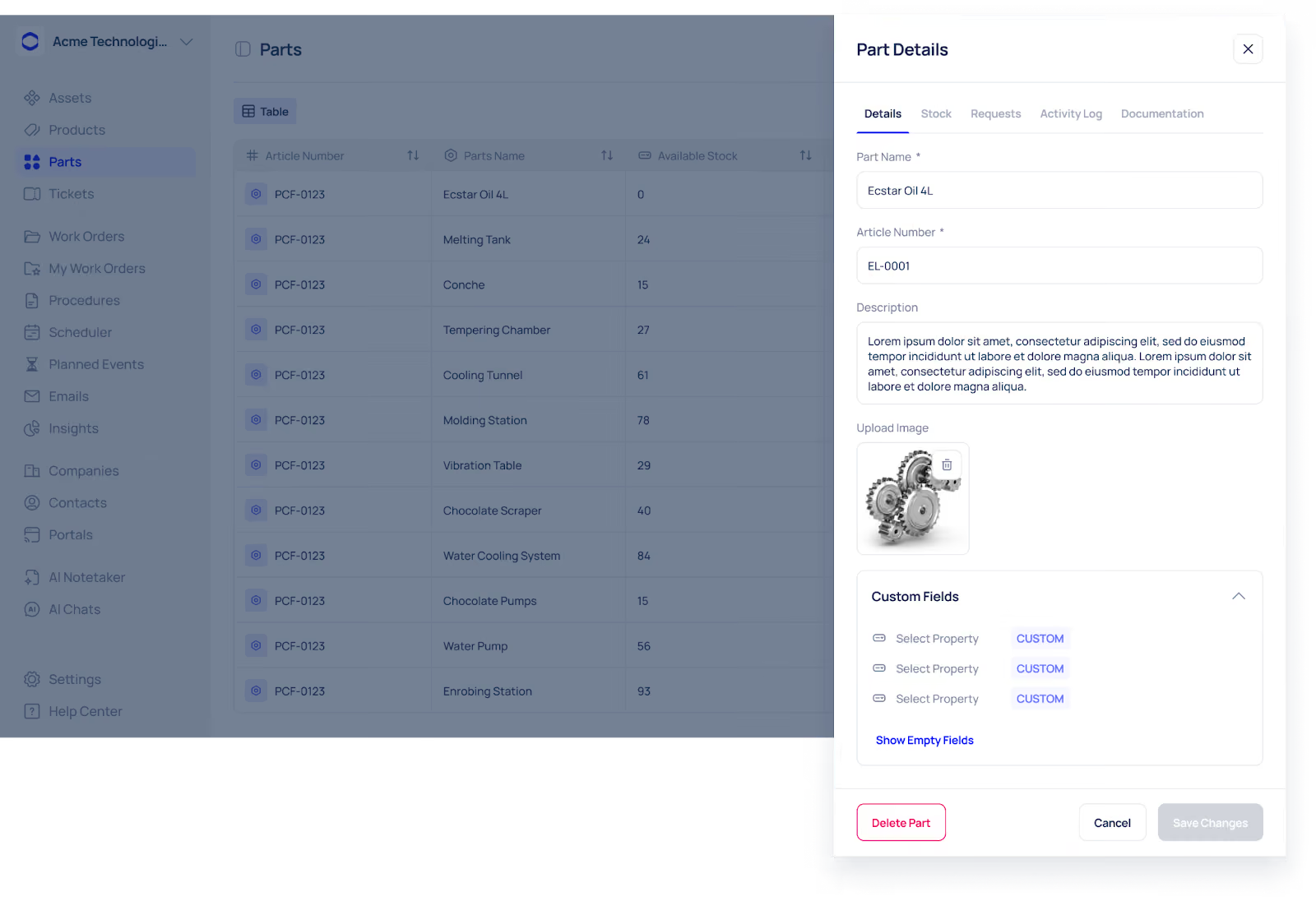
Platform considerations:
- Scalability: As your business grows, so too will your asset management needs. Choose a platform that can scale as your asset portfolio expands.
- Integration: The centralised repository must integrate with your other business systems (e.g., ERP, CRM, IoT systems) to ensure seamless data flow and reduce the need for manual data entry.
- Security: Since assets often contain sensitive data, make sure the repository is equipped with robust security features. This includes user authentication, access control, encryption, and regular backups.
A cloud-based solution is often ideal for asset management since it allows for easy remote access and automatic updates. Additionally, using a cloud solution ensures that you don't have to worry about hardware failures or capacity limits, and it can be accessed by all relevant stakeholders from anywhere in the world.
3. Standardise Data Formats and Classification
To build an effective single source of truth for assets, you must standardise the way asset data is recorded, formatted, and classified. Without standardisation, different departments might input data in inconsistent ways, leading to confusion and errors down the line. The goal is to create uniformity across all asset records so that all users can quickly understand and work with the data.
Standardisation steps:
- Data formats: Agree on standardised formats for common data points. For instance, dates should follow the same format across all records (e.g., day/month/year or year-month-day). Currency, measurements, and numerical values should also follow consistent formatting rules.
- Classification: Create a well-defined classification system for your assets. For example, machinery could be grouped into categories such as “Heavy Equipment,” “Production Machines,” “Support Tools,” and “Transportation Equipment.”
- Taxonomy and naming conventions: Establish clear naming conventions for assets. A consistent naming structure will make it easier to search and retrieve asset data. For instance, machines might be labelled as “Machine-001,” “Machine-002,” and so on, or according to their specific function and location.
By implementing standardised data formats and classification systems, you ensure that asset data is not only consistent but also scalable and flexible for future needs.
4. Implement Real-Time Data Tracking
Real-time data tracking is a critical aspect of maintaining an accurate single source of truth for assets. Asset data should always reflect the current status, location, and usage, so all stakeholders can make informed decisions based on the most up-to-date information.
Real-time tracking is especially crucial for businesses managing physical assets, as it allows you to monitor the status of machinery, equipment, and vehicles. For digital assets, it’s important to track software updates, licensing status, and usage.
Types of real-time tracking:
- IoT (Internet of Things) devices: These can be attached to physical assets like machinery, vehicles, and equipment to monitor their condition, location, and performance in real time. For example, sensors can track things like temperature, pressure, usage hours, and overall machine health.
- Software tools: Many digital assets, such as software applications and IT infrastructure, can be tracked using monitoring tools that provide real-time data on performance, uptime, and issues.
- Manual updates: In some cases, manual data entry might still be necessary, particularly for assets that don’t have automated tracking. Ensure your system allows for easy and quick manual updates, so data remains accurate.
Real-time tracking helps prevent costly breakdowns, ensures assets are being used efficiently, and allows businesses to address issues before they escalate.
5. Enable Cross-Departmental Access and Collaboration
A single source of truth for assets is only effective if it’s accessible to all departments that rely on asset data. It’s important to create a system where relevant stakeholders can access the asset repository and contribute to its maintenance. This promotes collaboration and ensures that everyone in the organisation is working with the same accurate and up-to-date information.
Collaboration tools:
- Dashboards: Customisable dashboards are a great way to ensure that teams can quickly access the asset data they need. Each department can have a dashboard tailored to its needs (e.g., a maintenance team dashboard showing asset health and downtime data).
- Permissions: Grant access based on roles. For example, while the operations team may need full access to asset data, the finance department might only need to view depreciation and asset value information. This helps maintain data security while promoting collaboration.
- Automated reports and alerts: Set up automated reporting features to send relevant stakeholders insights about asset performance, maintenance needs, and more. Alerts can notify teams about critical asset issues or updates.
By enabling cross-departmental access, you foster a collaborative environment where all teams can make data-driven decisions and contribute to optimising asset management processes.
6. Implement Regular Audits and Reviews
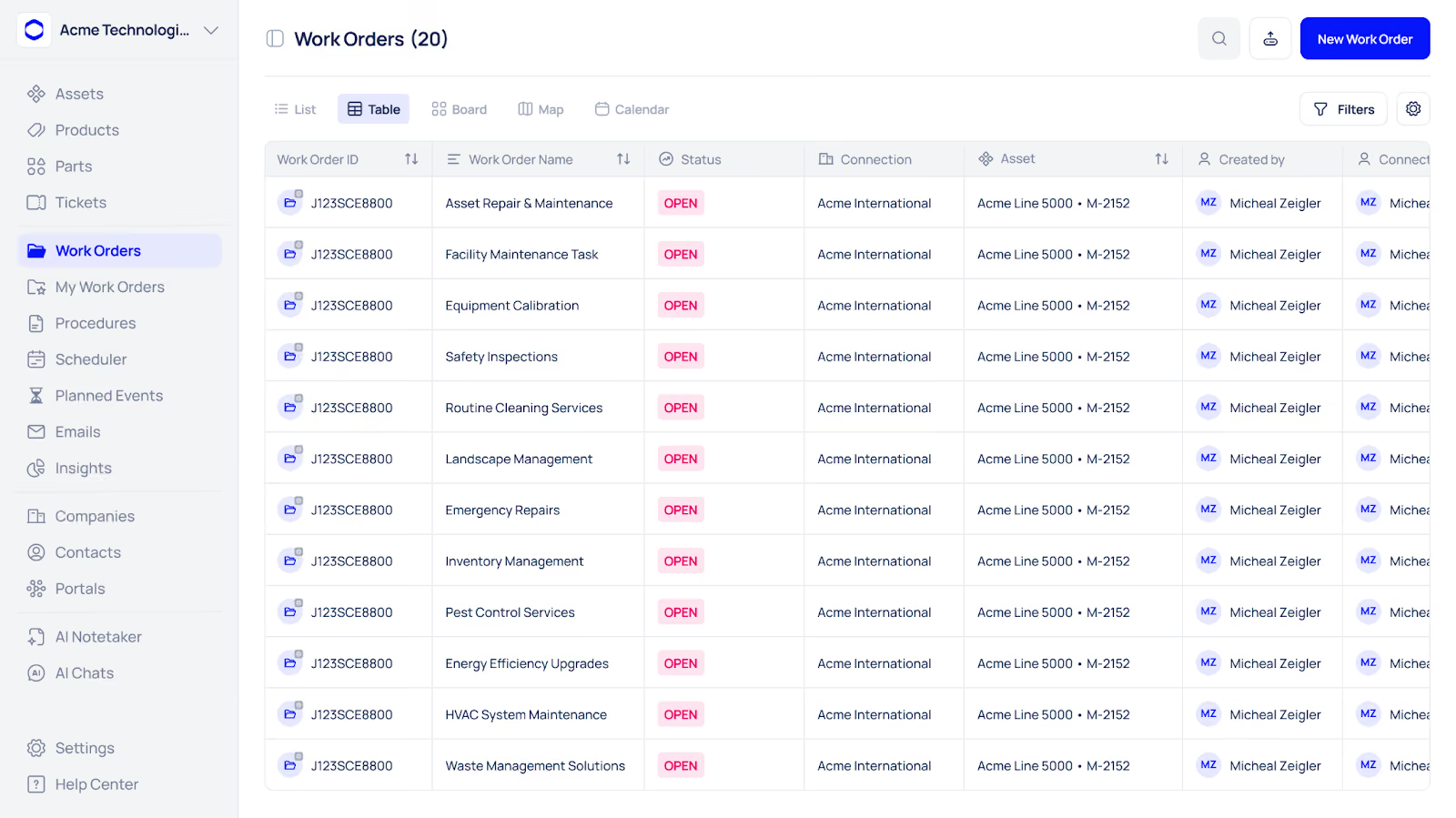
Creating a single source of truth for assets is not a one-time task but an ongoing process. To maintain the accuracy and integrity of your asset data, it’s crucial to implement a routine of regular audits and reviews. These audits will help identify any discrepancies or outdated information, ensuring your repository remains accurate.
Audit checklist:
- Data quality: Ensure that asset data is regularly reviewed for accuracy. This could involve validating asset details against physical checks or reviewing system logs for inconsistencies.
- System performance: Regularly assess the performance of the asset management system. Are there issues with data entry, retrieval times, or integration with other business systems?
- Process improvements: Continuously look for ways to standardise asset management processes. For instance, are there automated data entry solutions that could reduce human error? Could the system be improved to track assets more efficiently?
Regular audits ensure that your single source of truth for assets remains reliable and that any issues are addressed promptly, before they have a negative impact on business operations.
Table: Key Steps in Building a Single Source of Truth for Assets
Ready to take control of your assets and standardise your operations? Run our Asset Maturity Quiz and get a one-page plan tailored to your business needs. With the right strategy in place, you’ll be well on your way to building single-source of truth assets, driving greater efficiency and success.