You find a preventive maintenance software that looks affordable. The website says "starting from £X per month." You sign up, onboard your team, and then the invoice arrives and it's nothing like what you expected.
Sound familiar? You're not alone. Pricing surprises are one of the biggest frustrations for maintenance managers and operations leads shopping for software. This post breaks down exactly what preventive maintenance software costs, what drives that cost up, and critically what it costs your business not to have the right system in place.
By the end, you'll have a clear picture of the numbers, the hidden traps to avoid, and a smarter way to evaluate value.
Why Preventive Maintenance Software Pricing Is So Confusing
Most vendors don't publish straightforward pricing. Instead, they bundle features into tiers, gate the useful stuff behind "enterprise" plans, and charge per user meaning your costs scale steeply as your team grows.
Here's what typically drives the final number:
- Per-user or per-technician fees charged monthly, per seat
- Asset limits some platforms cap how many assets you can track
- Module add-ons work order management, IoT integrations, analytics, and reporting often cost extra
- Onboarding and implementation fees rarely advertised, frequently charged
- Annual contracts with exit penalties lock-in clauses that punish you for switching
- Support tiers basic help is free; actual support costs more
The result? A "£50/month" tool quietly becomes £800/month once you've added your full team and the features you actually need.
See the True Cost of Preventive Maintenance Software at Scale
Discover how maintenance software pricing changes as your team grows. Learn how to avoid hidden fees, compare per-user versus unlimited-user models, and understand the real financial impact of missed PMs, downtime, and compliance risks.

The Per-User Pricing Problem
Per-user pricing feels logical at first. Pay for what you use, right? But in maintenance environments, it creates a real problem.
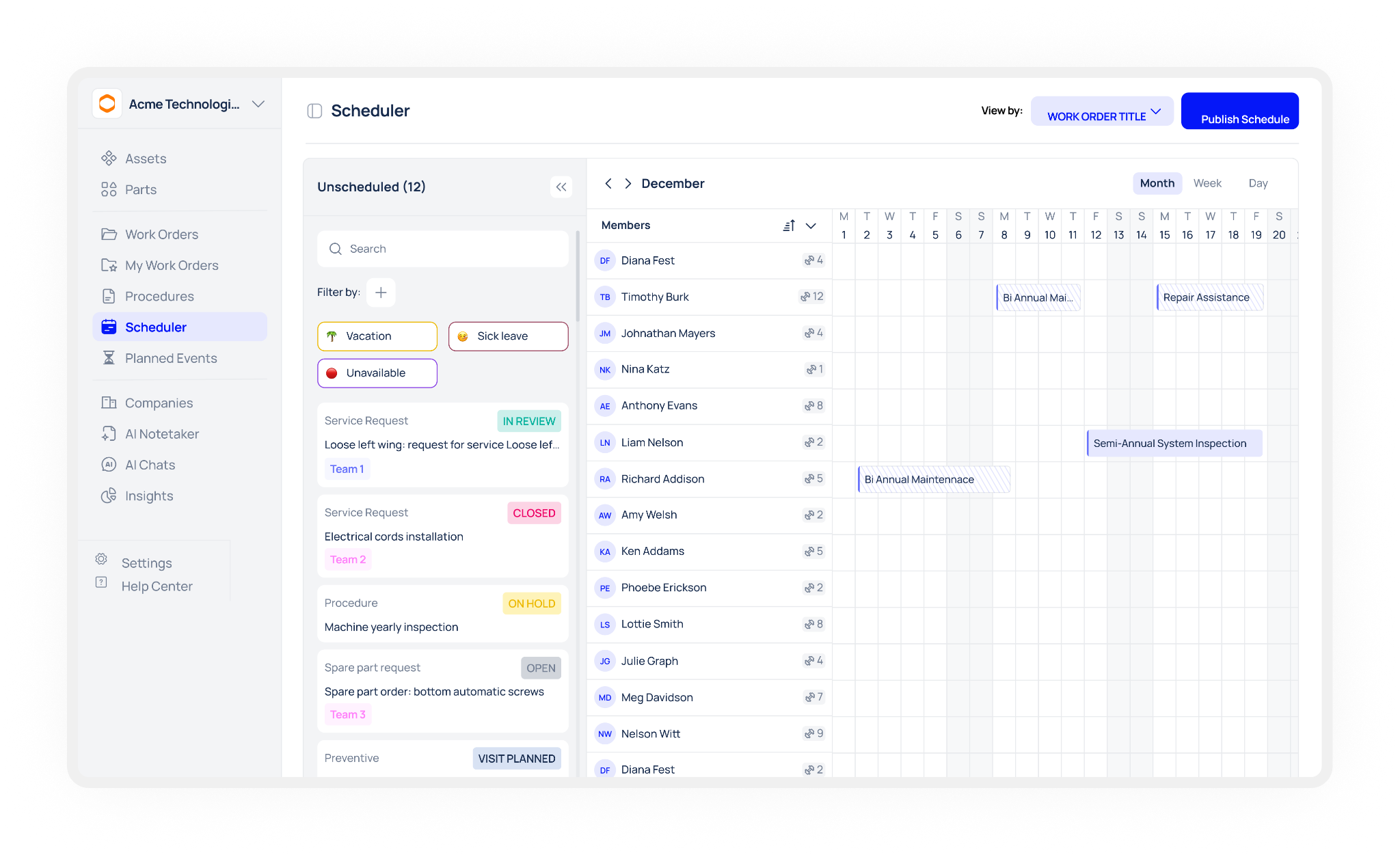
Effective preventive maintenance software needs to be accessible across your entire operation technicians on the floor, supervisors, planners, contractors, even read-only stakeholders reviewing compliance reports. When every additional user adds to your monthly bill, teams start cutting corners. People share logins. Managers get locked out of reports. Contractors work off paper because it's cheaper.
That's not a software saving that's a system failure.
What Per-User Pricing Looks Like at Scale
The crossover point is often smaller than businesses expect. Once you hit 15 to 20 users, unlimited-user pricing almost always wins and it only gets more dramatic from there.
The Real Cost: Missed PMs and Downtime

Here's the number most software pricing conversations completely ignore: the cost of not doing preventive maintenance properly.
Preventive maintenance software exists to stop reactive maintenance of the expensive, chaotic, unplanned kind. When PMs are missed because your system is too clunky, too expensive to scale, or too restrictive to use across your team, you're not saving money. You're accumulating risk.
The Cost of Reactive Maintenance vs. Preventive Maintenance
Studies consistently show that reactive (breakdown) maintenance costs two to five times more than planned preventive work. That's not just parts and labour it includes:
- Unplanned downtime: Industry estimates put equipment downtime at anywhere from £2,000 to £10,000+ per hour depending on your sector
- Emergency contractor call-outs: Premium rates, minimum charges, and delays
- Asset replacement acceleration: Equipment that isn't maintained degrades faster and fails sooner
- PM non-compliance penalties: In regulated industries, missed maintenance records can trigger fines, failed audits, and insurance complications
- Productivity loss: When a critical asset goes down, it doesn't just affect one team it ripples
If your team misses even two or three preventive maintenance jobs per month because your software is too expensive to roll out properly, the downstream cost dwarfs any saving on software spend.
PM Non-Compliance: The Hidden Liability
Non-compliance isn't just an operational headache, it's a financial and legal one. In sectors like food manufacturing, pharmaceuticals, facilities management, and heavy industry, PM schedules are often tied to regulatory requirements, insurance conditions, or ISO certifications.
Missed maintenance records create gaps. Gaps create risk. And in an audit, "we couldn't afford to give everyone access to the system" is not a defence.
Unlimited-user preventive maintenance software removes the incentive to cut corners on access. When everyone who needs visibility has it, compliance records stay complete and audit trails hold up.
What Should You Actually Pay?
There's no single answer but here's a realistic range for established preventive maintenance software platforms:
The sweet spot for most maintenance teams of 10 or more people is a flat-fee, unlimited-user platform. You get full team access, predictable billing, and no incentive to restrict who uses the system.
What to Ask Before You Sign Anything
Before you commit to a preventive maintenance software contract, get answers to these questions:
- Is pricing per user or per site? Know exactly how your bill scales.
- What's included in the base price? List every feature you need and verify it's not an add-on.
- Are there onboarding or implementation fees? Ask for a written quote.
- What's the contract length and exit clause? Month-to-month vs. annual know your flexibility.
- Is support included, and at what level? Phone, email, dedicated account manager?
- Can contractors and read-only users access the system for free? This matters more than you think.
- How does pricing change as we grow? Model it out 12 to 24 months ahead.
Why Unlimited-User Pricing Changes the Maths
Platforms like Makula are built around the idea that maintenance software should work for your entire team, not just the handful of people you can afford to seat. When pricing is flat and access is unlimited, adoption increases, PM completion rates improve, and compliance records stay clean.
The software stops being a bottleneck and starts being an enabler.
That shift in dynamic is what makes the cost conversation so important. You're not just paying for software. You're paying for the operational outcome: it delivers fewer breakdowns, better compliance, lower reactive spend, and a team that actually uses the tools you've invested in.
See the Cost-at-Scale Difference
Seeing is believing especially when it comes to pricing. Makula's demo walks you through an actual cost-at-scale comparison based on your team size, current asset volume, and maintenance workload.
You'll see exactly how the numbers stack up against per-user alternatives, and you'll get a clear picture of where your current approach might be leaving money on the table.
Book your demo today and get a personalized cost comparison for your operation.