
In the world of facilities management, missed priorities can quickly erode customer trust. When critical jobs are buried beneath a flood of low-priority requests, the result is not just delayed repairs, it's a loss of confidence in your service. Effective work order prioritisation is essential for ensuring the most important tasks are completed first, safeguarding both your reputation and your client relationships. Platforms like Makula help you simplify work order prioritisation and reliably meet your commitments.
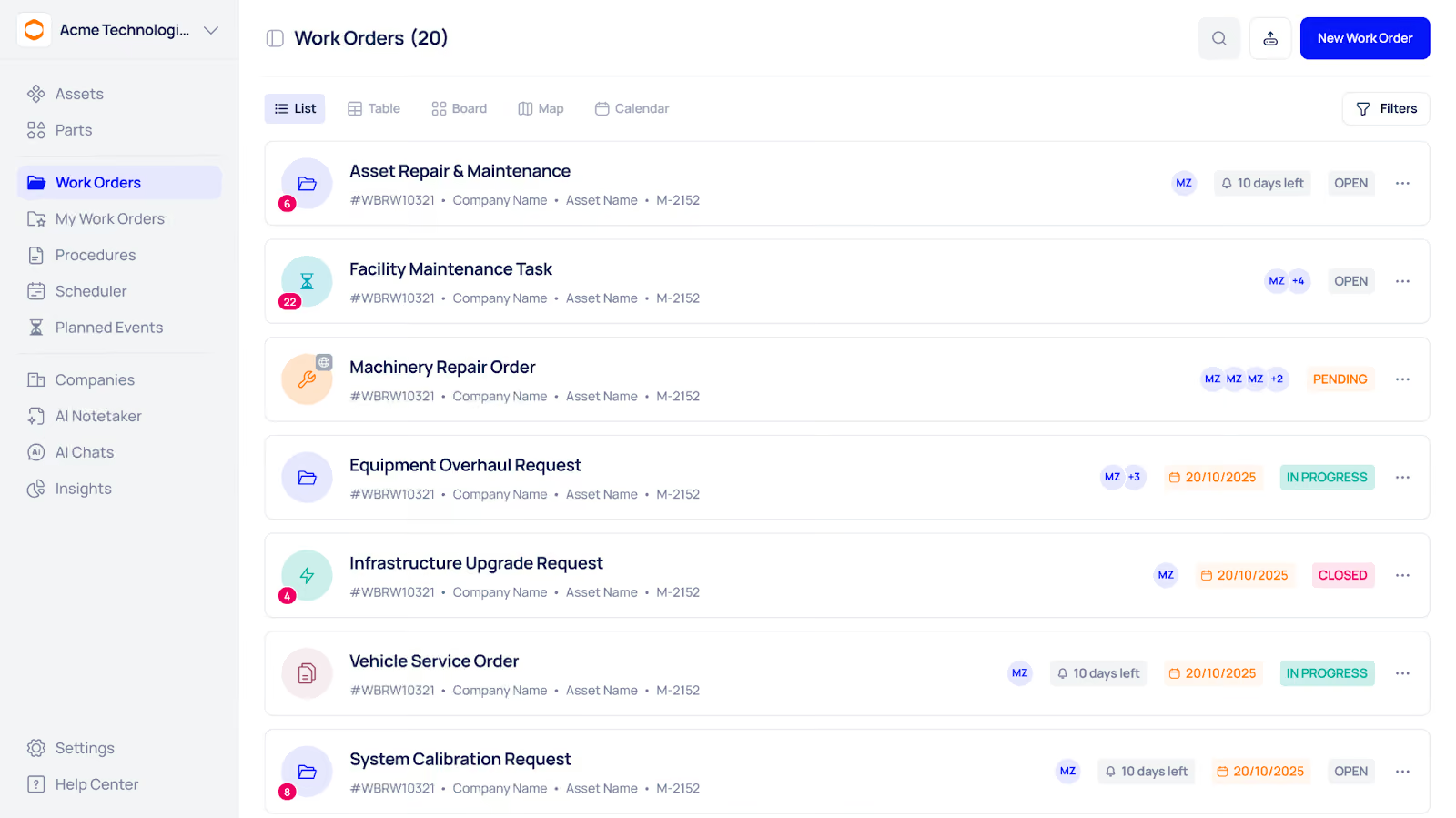
Categorising Your Work Orders: High vs. Low Priority
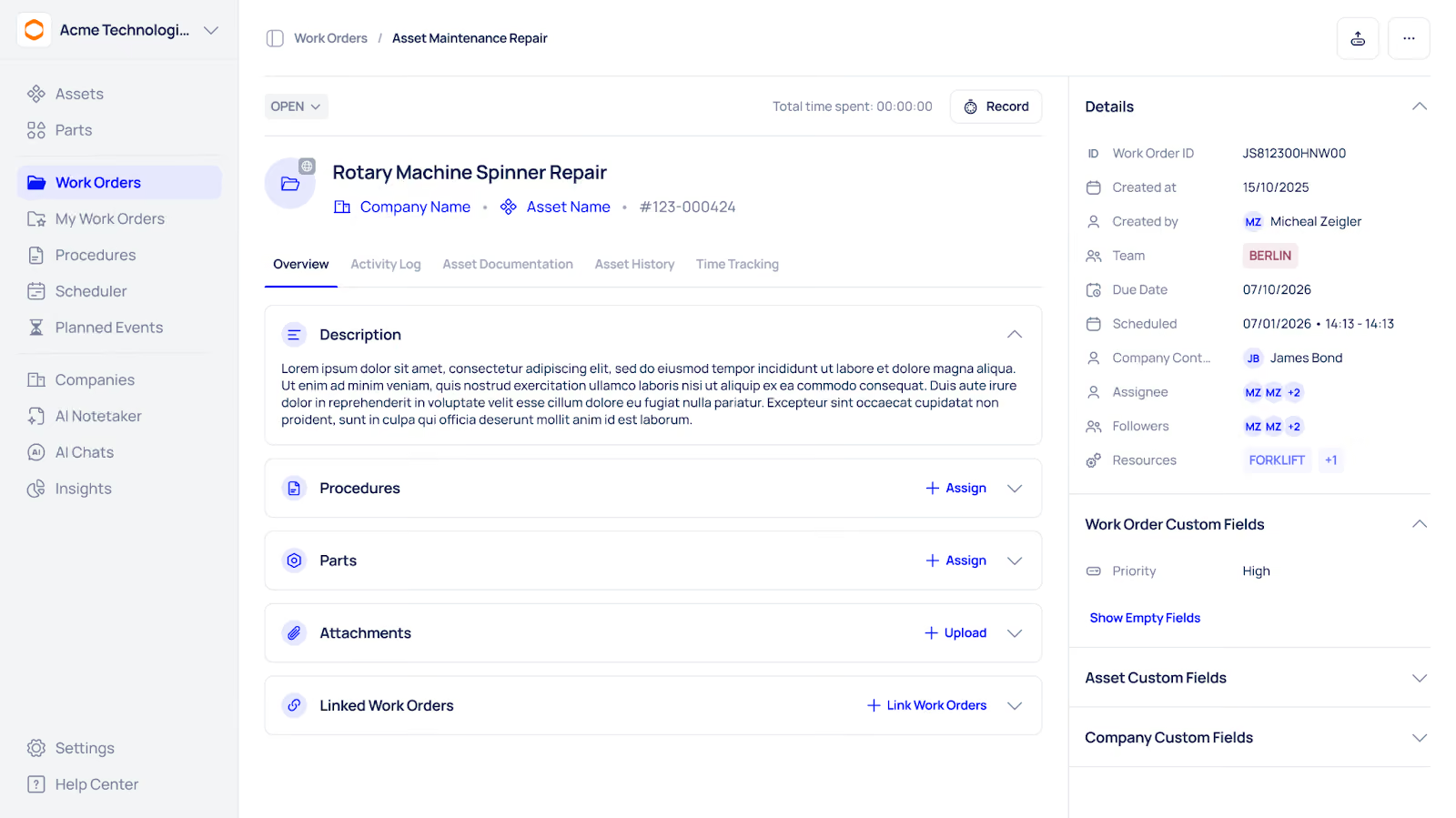
By clearly defining and categorising requests, you ensure critical issues are addressed first while routine fixes are scheduled appropriately. This approach, especially when supported by a solution such as Makula, forms the bedrock of effective work order prioritisation and keeps your operations running smoothly.
Why Everything Can’t Be a Priority
In facility management and maintenance, we live in a world of constant alerts. Every stakeholder thinks their request is the most important thing on your plate. If you don't have a system for work order prioritisation, you aren't managing a facility; you are fighting fires. And eventually, you get burned.
When critical jobs get lost among low-priority requests, the damage goes beyond just a delayed repair. It strikes at the heart of your reputation.
The Hidden Cost of "First In, First Out"
Many teams default to handling requests in the order they arrive. It feels fair. It feels logical. But it is a trap.
Imagine an emergency room operating on a "first-come, first-served" basis. Someone with a sprained ankle gets seen before a heart attack patient simply because they arrived ten minutes earlier. It sounds absurd in a hospital, yet businesses do this daily with their maintenance queues.
Without intelligent work order prioritisation, your team spends valuable energy on tasks that don't move the needle, while the tasks that protect asset value and safety slip through the cracks.
How Chaos Erodes Confidence
Trust is built on reliability. When a client hands you a job, they are handing you responsibility. If you drop the ball on a critical asset because you were busy fixing a coffee machine, you send a clear message: We don't understand your business needs.
The problem isn't usually a lack of effort; it's a lack of clarity. Your technicians want to do good work. But if their job list is a jumbled mess of 50 items with no clear hierarchy, they will naturally gravitate towards:
- The easiest jobs
- The jobs closest to their current location
- The jobs requested by the person shouting the loudest
None of these criteria ensures the most important work gets done first. Appropriate work order prioritisation, especially with tools like Makula, ensures that your team always tackles what matters most.
Moving From Reactive to Strategic
So, how do we stop the noise from drowning out the signal? It starts with a shift in mindset. You must stop viewing incoming requests as commands and start viewing them as data points to be triaged.
Effective work order prioritisation requires a framework. You need agreed-upon criteria for what constitutes an emergency versus what constitutes a "nice-to-have." This removes the emotion from the decision. It empowers your team to look a site manager in the eye and say, "We will get to that door handle next week, but right now, the HVAC system takes precedence."
This doesn't just save time; it saves relationships. It shows your clients that you are acting as a strategic partner who protects their critical operations, rather than just a pair of hands for hire. By embedding work order prioritisation into your workflows with Makula, you demonstrate professionalism and boost customer confidence.
Regaining Control
If you feel like you are constantly disappointing people despite working harder than ever, look at your queue. Are you prioritising based on business impact, or just urgency?
Don’t let the noise kill your customer trust. Adopt consistent work order prioritisation with the support of Makula and take control of the queue before it takes control of you.
Ready to fix your queue?
Stop letting critical jobs slip through the cracks. Makula has created a simple tool to help you categorise and rank incoming requests instantly, guiding your team’s work order prioritisation every step of the way.
FAQs
What is work order prioritisation?
Work order prioritisation is the process of ranking maintenance requests based on business impact, safety risk, and urgency to ensure critical issues are resolved first.
Why is prioritisation important in facilities management?
Without clear prioritisation, critical jobs can be delayed by low-impact requests, leading to downtime, safety risks, and loss of customer trust.
Why doesn’t first-come, first-served work for maintenance teams?
First-in, first-out ignores business impact. Low-priority tasks may be completed while urgent, high-risk issues remain unresolved.
How do you decide if a work order is high priority?
High-priority work orders typically involve safety risks, regulatory compliance, production downtime, or critical asset failure.