When a field service technician arrives on-site, every minute matters. Production may already be halted, customers are under pressure, and expectations for a fast resolution are high. Yet surprisingly often, the technician's first task is not fixing the machine, it is searching for information.
They might need to confirm the asset ID, locate maintenance records, check warranty status, or understand what repairs were done previously. If this information is buried in emails, spreadsheets, or disconnected systems, valuable time disappears before the actual work even begins.
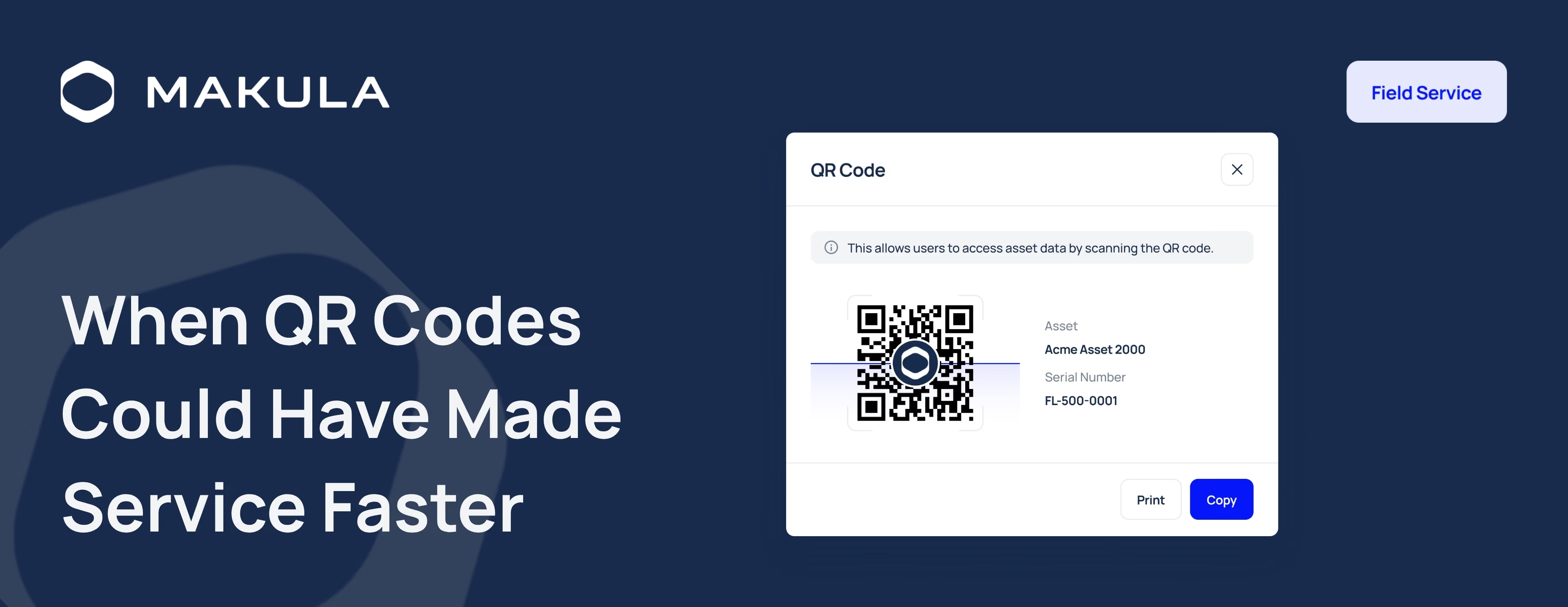
This is where a simple but powerful solution could transform the entire experience: QR code access for field service. With one scan, technicians can instantly retrieve the exact information they need, eliminating guesswork, delays, and frustration. The absence of this capability does not just slow service down; it quietly increases costs, repeat visits, and customer dissatisfaction.
Why Missing QR Code Access Creates Service Delays
Without instant access to equipment information, technicians face multiple operational bottlenecks. They end up searching for documentation manually, calling internal teams for asset details, guessing at maintenance history, performing unnecessary diagnostics, and sometimes repeating work that was already completed on a previous visit.
These delays compound quickly across service operations. Much like the broader challenge of why customers can't access the equipment information they need, the root cause is nearly always the same: critical data exists somewhere in the organisation, but it is not accessible at the right moment, in the right place, by the right person.
The absence of field service QR codes is not just an inconvenience, it is a measurable operational cost.
What QR Codes Actually Enable in Field Service
Modern service organisations are using field service QR codes to create a direct bridge between physical equipment and digital information. A simple scan can instantly provide technicians with service history, technical manuals, spare parts lists, warranty status, maintenance schedules, work instructions, and previous technician notes.
This transforms how quickly technicians can move from arrival to resolution. When paired with a capable mobile app, the entire service workflow, from scanning the asset to closing the job, can be completed from a single device in the field.
Traditional Service vs QR-Enabled Service
The time savings per visit may seem small, but across hundreds or thousands of service calls, the impact becomes enormous.
The Real Business Impact of No QR Code Access
When technicians lack immediate information, companies experience a ripple effect across their entire service operation.
Longer service times are the most visible symptom, technicians spend time searching instead of fixing. But the downstream effects are equally damaging. Higher labour costs accumulate as every extra minute on-site increases operational expense. More repeat visits occur because incorrect diagnosis leads to return trips.
First-time fix rates fall as missing context reduces repair accuracy. And customer confidence erodes, because today's customers expect modern, efficient service experiences.
This is why many OEMs are now adopting QR code asset management strategies to improve operational visibility and connect previously siloed data sources. The hidden cost of unstructured workflows between OEMs and customers, from missed service windows to misfiled documentation, is a problem that scales with every new asset in the field.
How QR Codes Transform Equipment Maintenance
When implemented properly, QR codes become a gateway to intelligent service operations. An equipment maintenance QR code placed on machinery can provide preventive maintenance schedules, inspection checklists, safety procedures, parts replacement history, and troubleshooting guides, all before the technician even opens a panel.
Technicians arrive prepared. That preparation directly increases first-time fix success and reduces the likelihood of a return visit.
The Technician Experience: Before vs After
The difference in day-to-day experience for a technician is striking.
Before QR Codes, a typical service call might start with: "Do you know when this was last serviced?" followed by a call to the office, and ultimately a deferred resolution: "I'll need to come back with the right parts."
After QR Codes, the workflow becomes:
Scan → Diagnose → Fix → Close job.
QR code access for field service creates a competitive advantage, not just operationally, but in how professional and responsive your service team appears to the customer. This is particularly relevant for OEMs who still rely on sharing physical manuals and documents with technicians, a process that introduces delays, version control issues, and gaps in the field.
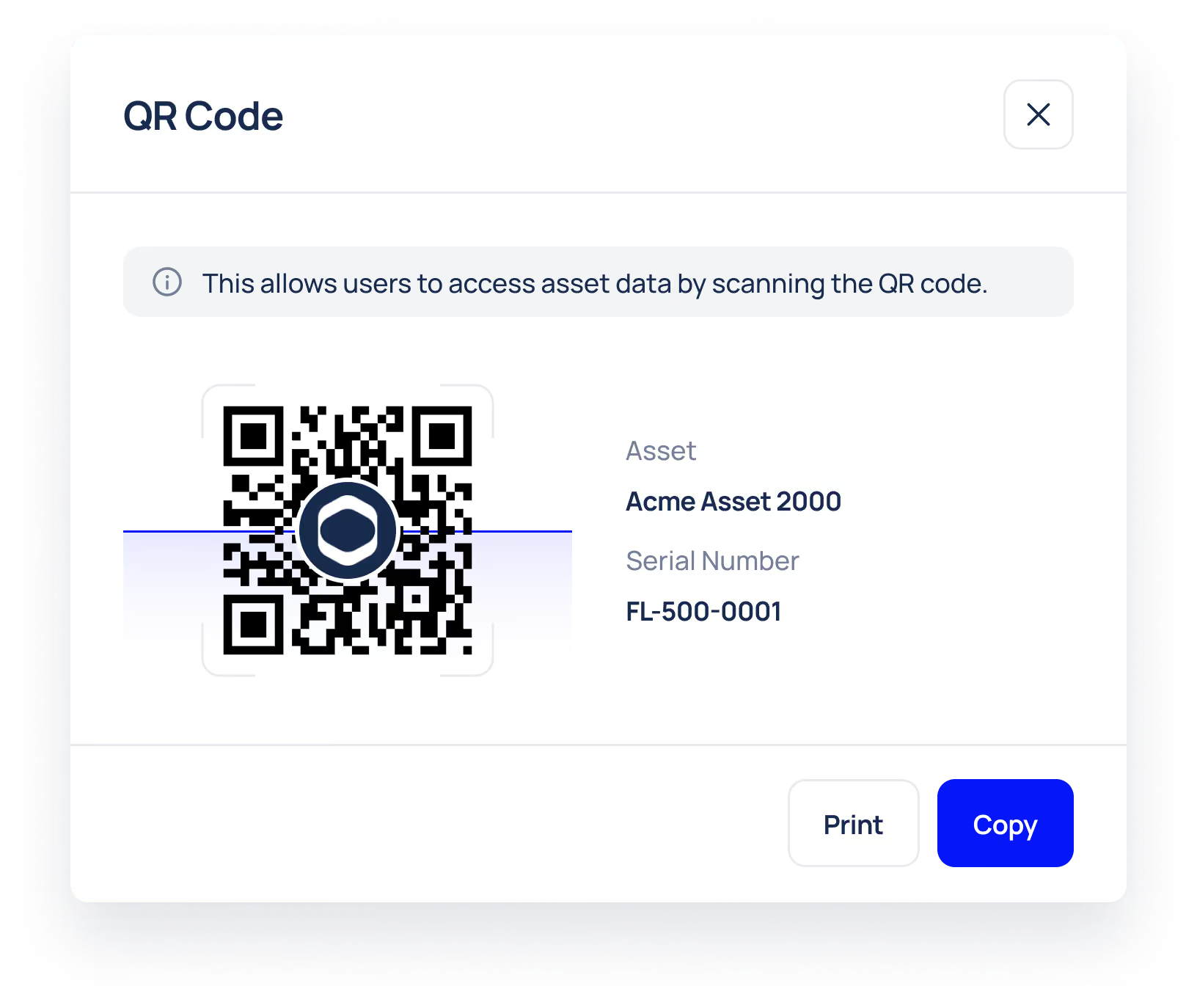
With technician mobile access enabled through QR scanning, technicians no longer depend on printed documentation or memory, they have verified, up-to-date information at their fingertips.
Implementation Is Easier Than Most Companies Think
Many organisations assume QR deployment requires complex IT projects. In reality, implementation can be straightforward with the right platform in place.
A practical step-by-step approach begins with identifying critical assets and assigning unique QR codes to each. These codes are then connected to a central system, technician mobile scanning is enabled, teams are trained, and usage is monitored to track improvements. Even small pilot programmes often produce immediate ROI.
ROI Example: Time Savings Per Technician
Across 1,000 service visits per year, this difference is transformative, both in labour cost and in customer-facing service quality.
Customer Experience Improvements
Customers notice when service becomes faster and more organised. Shorter downtime, faster technician confidence, transparent service records, and better communication all contribute to increased trust over time.
QR codes also empower customers directly. Through a customer portal, customers can report issues, view maintenance records, request support, and access documentation, without needing to contact the service team for every query. This kind of self-sufficiency addresses a common pain point for OEM customers who are unable to raise service requests themselves, reducing friction and improving satisfaction on both sides.
The customer self-service portal becomes significantly more powerful when it is connected to the same QR-linked asset data that technicians rely on, creating a single source of truth for everyone involved in the service lifecycle.
When Should OEMs Consider QR Code Deployment?
QR adoption is especially valuable if your organisation struggles with disconnected asset data, manual work orders, incomplete service history, multiple disconnected systems, frequent repeat visits, or knowledge loss from technician turnover. These are strong indicators that QR-enabled workflows could deliver immediate value.
The Future of Field Service Is Scan-First
Field service is moving toward instant information access. Technicians will increasingly expect mobile-first tools, real-time asset visibility, automated documentation, and intelligent workflows. QR code access for field service is not a futuristic ambition, it is an available, practical upgrade that many leading OEMs are already deploying.
Companies that adopt QR-enabled systems early will gain operational advantages in efficiency, cost control, and customer satisfaction that are difficult for slower-moving competitors to close.
Conclusion
Service delays rarely happen because technicians lack skill. They happen because technicians lack information at the right moment. QR codes solve this problem elegantly. A simple scan connects the physical world to digital intelligence, eliminating guesswork, delays, and frustration.
For OEMs looking to improve efficiency, reduce costs, and enhance customer experience, the question is no longer if QR code access for field service should be implemented, but how soon. Book a demo with Makula today and see how QR-enabled workflows can transform your field service operations from the ground up.