In the complex world of industrial machinery and asset management, downtime is the enemy. It halts production lines, delays critical medical diagnoses, and erodes profit margins. Yet, while most organisations obsess over the mechanical causes of downtime, part failures, wear and tear, or software glitches, they often overlook the operational friction that prolongs it: Field service communication gaps.
The bigger challenge isn’t just spotting a mechanical fault. Everyone knows downtime is expensive. The real issue is the invisible lag time created when information fails to flow between the back office, the technician in the field, and the customer waiting for a resolution.
In field service management (FSM), communication gaps are rarely human problems; they are data and visibility problems caused by disconnected service systems.
Most service teams are still stuck in a reactive loop: waiting for breakdowns, chasing technicians for updates via WhatsApp, and fielding angry calls from customers who feel left in the dark.
This disconnection forms a "communication gap" within the service triangle, the critical relationship between the office, the field, and the customer. When this triangle breaks, the cost of service skyrockets.
Related Article: Why Service Documentation Breaks Down in Field Service (And How to Fix It)
Research indicates that a failure to fix an issue on the first visit often leads to an average of 1.6 additional dispatches. With the operational cost of a single truck roll estimated between $200 and $300 (£150–£230), the financial penalty of miscommunication is severe.
This article explores why these gaps occur in asset-heavy industries, the hidden costs they incur, and how structured Field Service Management (FSM) software bridges the divide to create a seamless, profitable service operation.
What Field Service Communication Really Means
When we talk about "communication" in a field service context, we are not referring to the number of emails sent or phone calls made. In fact, a high volume of calls usually signals a broken process.
True field service communication is about shared context. It is the ability for all stakeholders to see the same truth about a machine or asset at the same time.
In asset-centric industries, such as packaging manufacturing, medical device maintenance, or waste processing, communication is synonymous with traceability. If a technician works on an industrial shredder, the office should not have to call to ask if the job is done.
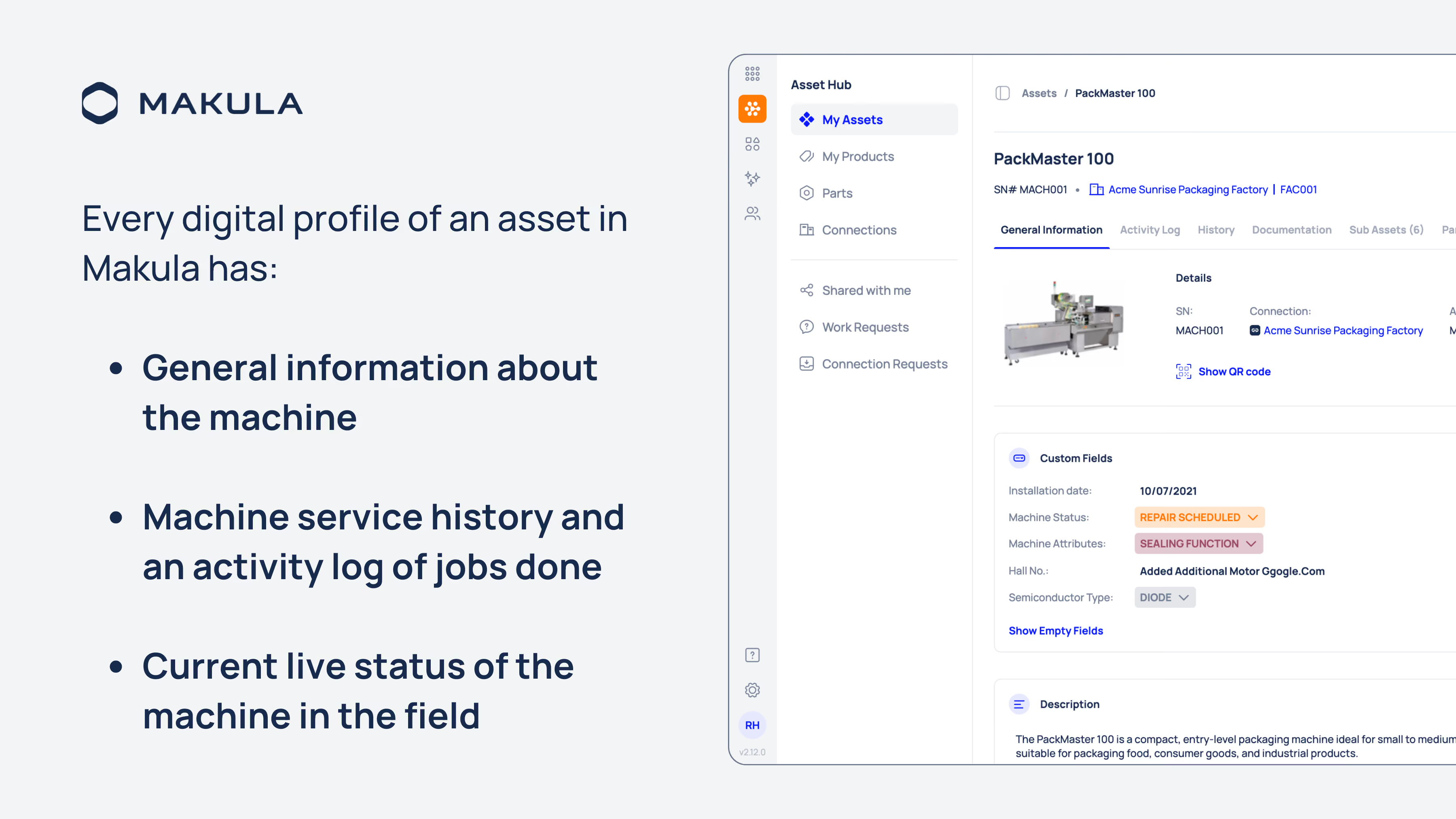
The machine’s digital history should update automatically, triggering a notification to the customer and logging the data for future preventive maintenance events.
However, many organisations rely on fragmented systems. The office uses an ERP or spreadsheets; the technician uses paper forms or a standalone app; the customer relies on phone calls. These silos create false alignment. Everyone thinks they are communicating, but they are looking at different versions of reality.
Related article: How to Integrate Field Service Software with ERP and Factory Systems
In modern FSM software, effective communication is defined by real-time access to asset data, service history, and job status, not by manual follow-ups.
It is crucial to provide shared context across the board to all stakeholders, instead of fragmented information.
Where Field Service Communication Gaps Commonly Appear
To fix the problem, you must first identify where the signal is being lost. In most machinery and equipment service operations, the breakdown occurs in three distinct areas:
- Between office and technicians: This is the "black hole" of field service. Once a technician leaves the depot, the office often loses visibility.
- Between technicians and customers: The technician is the face of your company. If they are uncommunicative, your brand appears incompetent.
- Between office and customers: This gap is where trust is lost most rapidly.
Closing these communication gaps with real-time visibility and shared context ensures faster fixes, fewer repeat visits, and a seamless service experience for both your technicians and customers.
The Hidden Cost of Poor Field Service Communication
The financial impact of these communication gaps is rarely a single line item on a balance sheet. Instead, it bleeds into various operational metrics, quietly eroding profitability.
These costs typically surface as lower first-time fix rates (FTFR), longer mean time to repair (MTTR), and rising operational service costs.
1. Repeat Site Visits
The "First-Time Fix Rate" (FTFR) is the gold standard metric for service efficiency. Communication is the primary driver of this metric.
If the office fails to communicate the exact machine configuration to the technician, they may arrive without the correct spare part. This necessitates a second visit. As noted earlier, repeat visits multiply operational costs and double machine downtime.
2. Longer Resolution Times
When information is trapped in silos, finding the answer takes longer than fixing the problem. Technicians spend hours calling senior engineers for advice or searching for PDF manuals on their phones.
If an AI Copilot or centralised knowledge base were available, that information would be instant, drastically reducing the Mean Time to Repair (MTTR).
3. Increased Technician Admin
Highly skilled engineers are often paid to fix complex machinery, not to be data entry clerks. Yet, poor communication systems force them to spend hours writing up notes, scanning paper forms, and emailing photos. This administrative burden reduces their "wrench time", the time spent actually generating revenue.
4. Customer Frustration and Trust Erosion
In competitive markets, service experience is a differentiator. If a medical clinic cannot get a clear answer on when their MRI machine will be fixed, they will look for a new supplier. Communication gaps create anxiety; anxiety erodes trust. Conversely, proactive communication builds confidence, even when the news (e.g., a delayed part) is negative.
To sum up:
Why Communication Fails in Asset-Heavy Field Service
Why is this problem so prevalent in industries dealing with heavy machinery? The answer lies in asset complexity.
Unlike HVAC or residential services, where assets are relatively standard, industrial machinery is complex and highly configured.
Asset-heavy industries depend on accurate installed base data, yet many service teams lack a single system to manage it across the asset lifecycle:
- Disconnected Service Data: A machine might have a mechanical history, an electrical history, and a software log. Often, these live in three different places.
- Manual Handovers: Critical information is passed verbally or via text message during shift changes or handovers, leaving no digital trace.
- No Single Source of Truth: The sales team knows what was sold, but the service team doesn't know what was installed or modified post-installation.
- Over-reliance on People: Processes rely on "Dave knowing how to fix that machine" rather than a documented system. If Dave is unavailable or leaves, the communication chain breaks.
What Good Field Service Communication Looks Like
To close these gaps, organisations must shift from ad-hoc communication to structured communication. "Good" looks like a quiet, efficient operation where data flows automatically.
This level of clarity is difficult to achieve without software purpose-built for machinery service, where assets (not tickets) are the core unit of work.
Makula's Installed Base Management is asset-centric in nature, built with the machine at the centre of all workflows:
How does an ideal software like this work? These features allow for good field service communication:
1. Shared Visibility Across Teams
The office and the field team view the same dashboard. When a technician updates a job status to "In Progress," the office sees it instantly. When a part is used, inventory is updated immediately.
2. Machine-Centric Information Flow
Communication shouldn't just be attached to a "ticket"; it should be attached to the asset. Every conversation, photo, and service report is tagged to the specific machine's digital twin. This means any technician attending that machine in the future has the full context of previous communications.
3. Real-Time Updates from Field to Office
Technicians use mobile apps that work offline and sync automatically. They capture photos, signatures, and detailed notes that are immediately accessible to the back office for invoicing and reporting.
4. Consistent Customer Messaging
The customer has access to a portal where they can see the status of their equipment, view upcoming maintenance, and access service reports. They don't need to call to ask "where is the technician?" because the system has already notified them.
How Structured FSM Closes Communication Gaps
This level of alignment is impossible to achieve with spreadsheets and email.
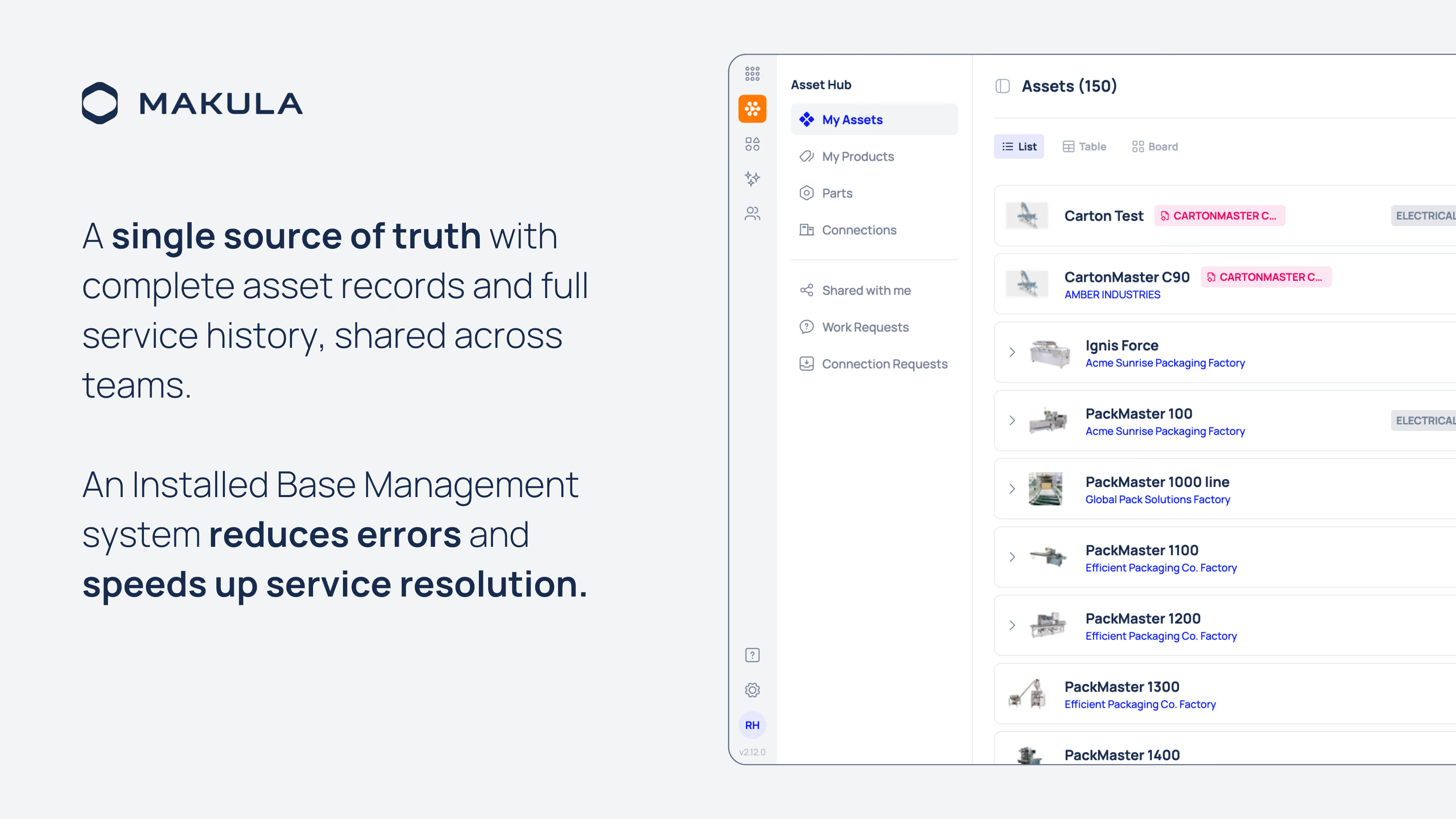
Field service management platforms act as a single source of truth for assets, workflows, technicians, and customers.
1. Centralised Asset & Service Data
Platforms like Makula center the entire operation around Installed Base Management. By creating a digital profile for every asset, all communication flows into a single reservoir. This ensures that whether a stakeholder is in sales, support, or the field, they are looking at the same machine history.
2. Standardised Workflows
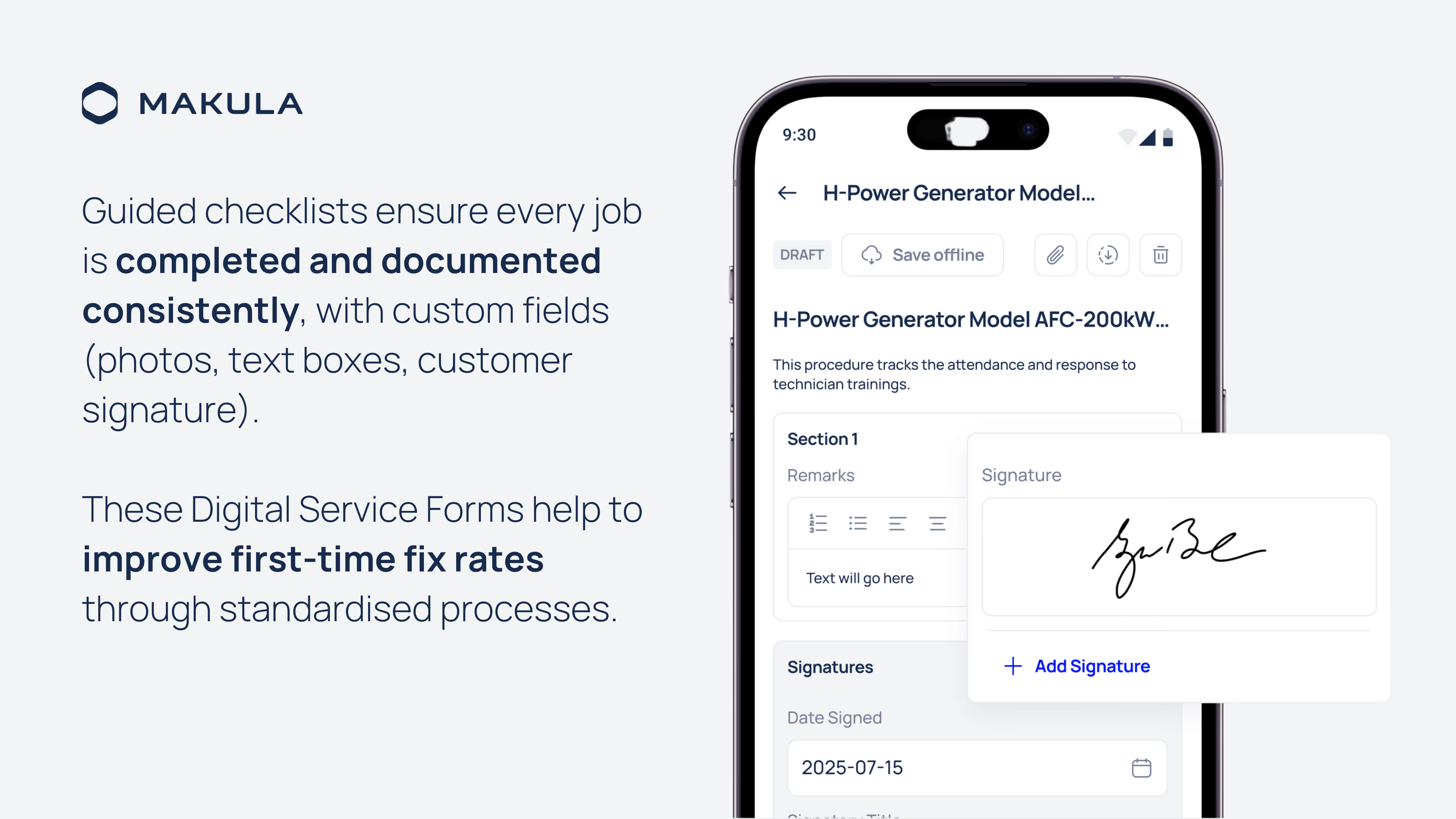
FSM software enforces standardised checklists. A technician cannot close a job without completing specific communication steps (e.g., capturing a photo of the fix, getting a customer signature). This ensures that the "story" of the repair is complete and consistent every time.
3. Mobile-First Technician Tools
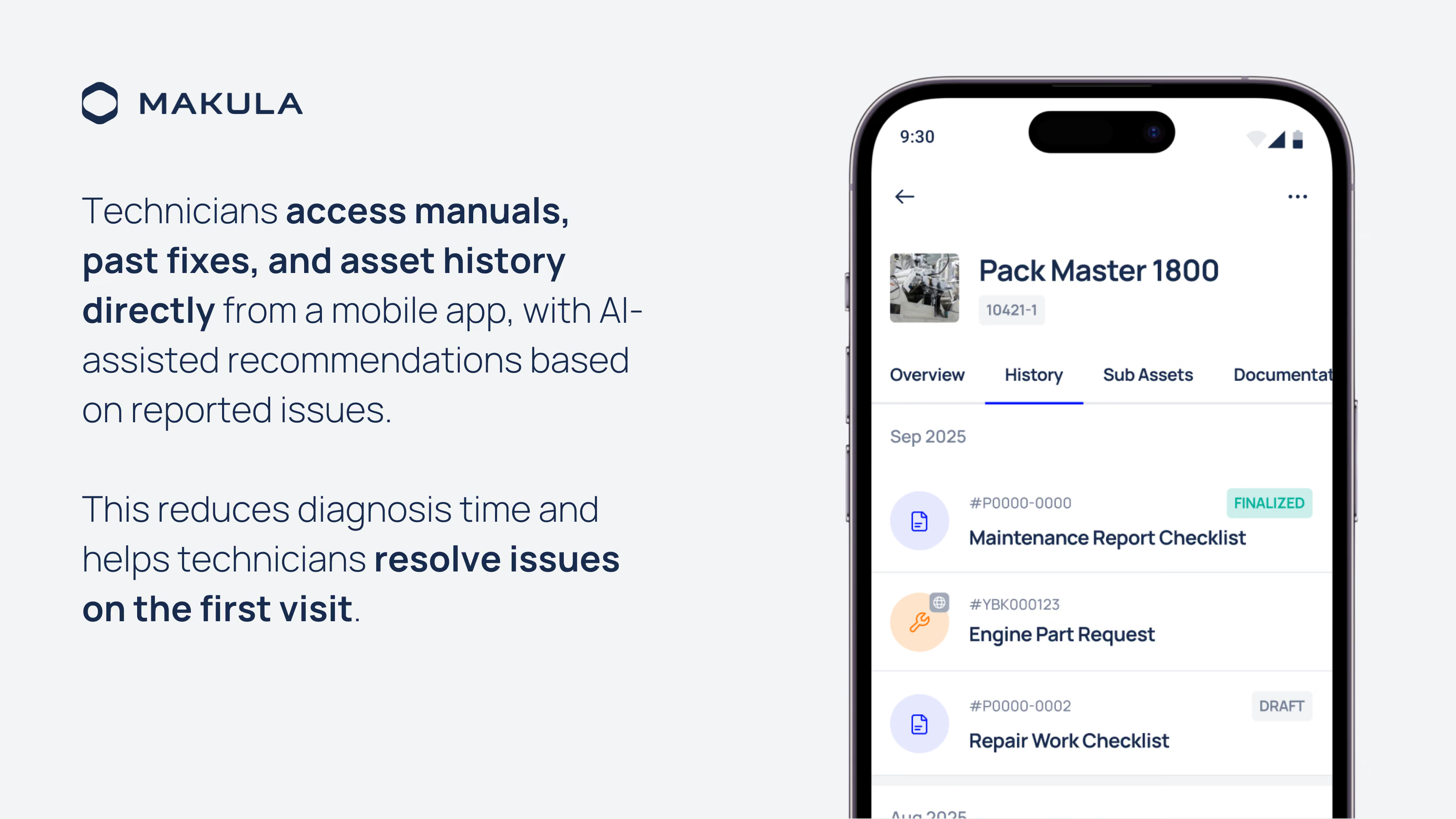
Equipping technicians with a robust mobile app gives them the office in their pocket. Features like an AI Copilot can actively surface relevant manuals or past solution notes based on the error code reported. This acts as a silent communication partner, bridging the knowledge gap without needing a phone call.
4. Customer-Facing Transparency
A white-labeled Customer Portal fundamentally changes the relationship. Instead of a black box, the service process becomes a glass house. Customers can request service, track progress, and view historical reports on demand. This reduces inbound call volume to the help desk and empowers the customer.
Explore what this branded customer portal looks like and how its functionality builds long-term customer trust:
Conclusion
Ultimately, communication improves when visibility improves.
For asset-heavy service organisations, improving communication is less about sending more updates and more about structuring service data around the machine itself.
This is exactly where asset-centric platforms like Makula are designed to operate. Book a free demo with Makula today to get a live walkthrough of our product.