If you are running MaintainX, or about to sign, and you are a European industrial business, you have probably hit the same wall a lot of DACH manufacturers do: a genuinely great mobile app wrapped around US data hosting, dollar pricing, and English-only support. And as of May 2026, MaintainX is being acquired by Autodesk in a deal worth roughly $3.6 billion, which makes this a sensible moment to ask whether it is still the right home for your maintenance data.
This is a focused shortlist of the 8 best MaintainX alternatives for European teams. Each one is judged on the exact points MaintainX asks you to compromise on, EU data residency, German-language support, euro pricing, and industrial depth, and compared directly against MaintainX so you can see what you actually gain by switching. (If you are still at the broader discovery stage, see our companion guide to the best European CMMS software for the full category overview.)
Quick answer: What is the best MaintainX alternative?
For European industrial teams, the best MaintainX alternative is Makula CMMS, a Berlin-based platform that pairs CMMS, field service, and industrial AI with German-language support and EU data residency (GDPR), the things a US-hosted tool cannot natively offer. The strongest alternatives in 2026 are Makula, remberg, osapiens HUB, MaintMaster, Timly, Festo Smartenance, Fracttal One, and Limble.
Why European teams switch away from MaintainX
First, fair credit: MaintainX is rated around 4.8 out of 5 on both G2 and Capterra, its mobile app is excellent, and teams moving off paper or spreadsheets can be live in days. If a clean mobile work-order app is all you need and US hosting is fine, it is a strong product.
The reasons European teams leave tend to cluster around six switching triggers:
- Data residency and the CLOUD Act. MaintainX hosts on AWS, US-based by default, with no publicly advertised EU or Germany hosting option. It documents SOC 2, ISO 27001, and GDPR compliance and offers a data-processing agreement, but as a US-incorporated company it remains exposed to the US CLOUD Act, which is a hard blocker for data-sovereignty-sensitive buyers.
- Pricing in US dollars. Every paid tier (Essential, Premium, Enterprise) is quoted in USD, not euros, which complicates budgeting, invoicing, and procurement for European finance teams.
- No German-language support team. The app interface offers German via AI-assisted translation, but there is no German marketing presence and no confirmed German-speaking support; help runs on North American time zones.
- A flat asset hierarchy. MaintainX's asset structure is relatively shallow, which gets limiting in complex, multi-line manufacturing environments, and report customisation is constrained.
- AI behind higher tiers. Its smarter features are gated to the more expensive plans.
- The Autodesk acquisition. Announced on 28 May 2026 and expected to close as early as August 2026, the deal folds MaintainX into Autodesk's operations division. New ownership often means roadmap and pricing changes, reason enough to re-run your options now rather than after the dust settles.
See How European Manufacturers Are Replacing MaintainX
Discover what European maintenance teams look for beyond mobile work orders. Learn how Makula combines EU data residency, German-language support, field service management, and CMMS capabilities in one platform built for manufacturers, OEMs, and industrial distributors.

MaintainX vs the alternatives at a glance
The table below uses MaintainX as the baseline (top row) so you can see how each alternative compares on the criteria that drive European switching decisions.
The 8 best MaintainX alternatives in 2026
1. Makula CMMS: Best overall MaintainX alternative for European teams
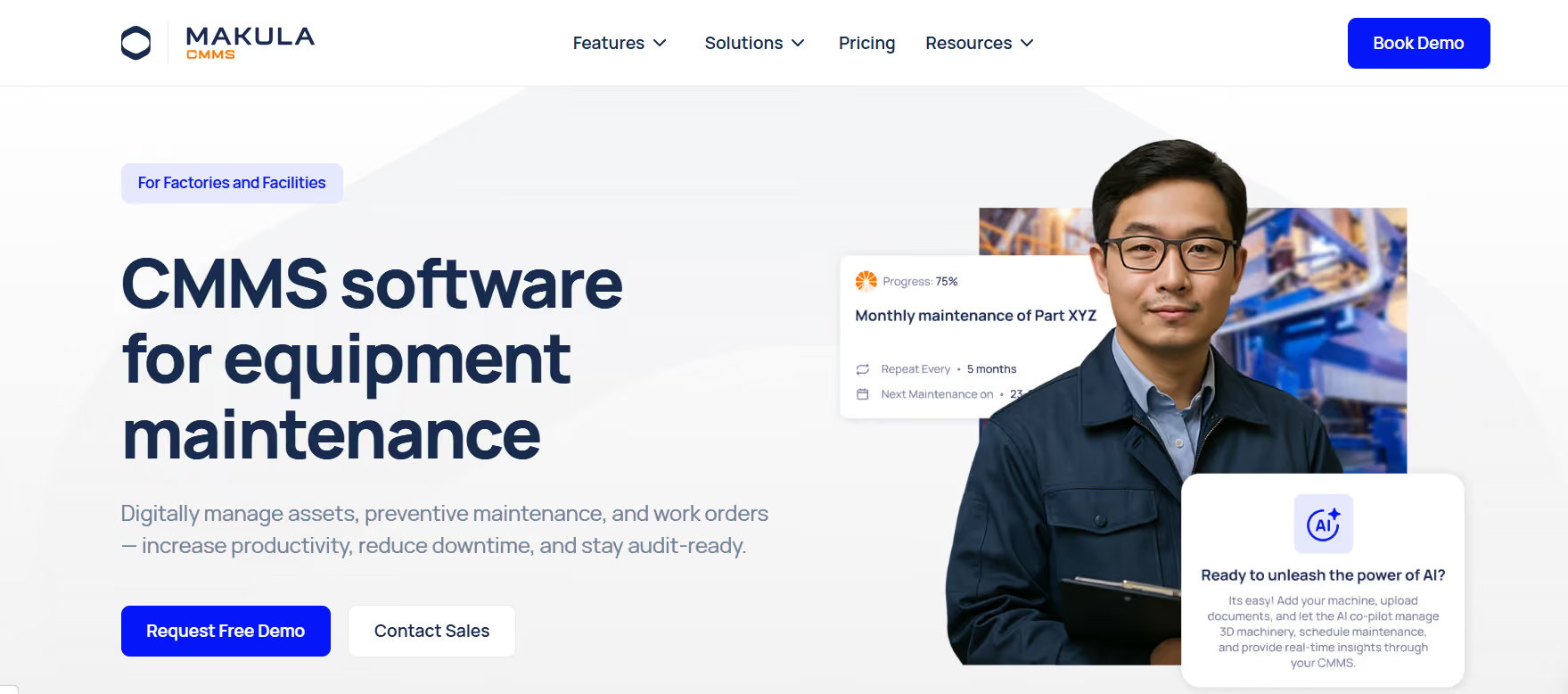
Makula is a Berlin-based industrial SaaS platform (founded 2021) built for asset-heavy manufacturers, machinery OEMs, and industrial distributors. It is modular, CMMS, field service, and industrial AI, rather than a single work-order app.
Best for: European manufacturers, OEMs, and distributors that need GDPR-compliant, German-speaking maintenance with real industry depth.
What you gain vs MaintainX: EU data residency and an EU-incorporated vendor (no CLOUD Act exposure), a German-language support team, and a genuine field-service module for after-sales work, plus vertical depth in chemical, food & beverage, pharma, and packaging. Where MaintainX gives you a flat asset structure, Makula offers a structured hierarchy and audit-ready documentation for regulated environments.
Watch-outs: Makula focuses on doing time-based preventive maintenance well, calendar-, runtime-, and cycle-count-based. It does not offer predictive or condition-based (sensor-driven) maintenance, so if IoT condition monitoring is essential, look at Fracttal or MaintMaster. Pricing is on request.
2. remberg: Best for German mid-market manufacturers on SAP
remberg is a Munich-based maintenance platform (founded 2018), well established across the German Mittelstand with customers including Schunk and Liqui Moly/Meguin.
Best for: German mid-market production and machine-building companies, especially those running SAP.
What you gain vs MaintainX: a native German-language product and support team, German data hosting, bidirectional SAP integration that MaintainX does not match, and an AI copilot with QR-code fault reporting tuned to German production workflows.
Watch-outs: heavily focused on in-house industrial maintenance; lighter on field-service and after-sales use cases.
3. osapiens HUB for Maintenance: Best for SAP-driven enterprises
osapiens is a Mannheim-based platform with 2,000+ customers worldwide, including reference names like Coca-Cola and Nordex. Its maintenance module is built around a SAP-certified, real-time bidirectional integration.
Best for: larger and enterprise customers with an SAP landscape adding mobile maintenance.
What you gain vs MaintainX: the strongest SAP integration in this list (certified PM/MM/QM connectivity), German data hosting, and a free tier up to five users that scales to enterprise, versus MaintainX's lighter ERP story and US hosting.
Watch-outs: you get the most value when SAP is already core to your stack.
4. MaintMaster: Best for manufacturing that needs OEE
MaintMaster is a Swedish CMMS with a German subsidiary, used by 500+ customers across 39 countries, and pre-aligned with the European maintenance standard EN 13306:2017.
Best for: ambitious manufacturers (for example automotive suppliers) that want CMMS plus OEE.
What you gain vs MaintainX: built-in OEE, alignment with EN 13306, and IoT sensor connectivity for condition monitoring, manufacturing capabilities MaintainX does not natively cover, together with EU hosting and German-language support.
Watch-outs: the interface can feel less modern than newer entrants, and it is focused on in-house maintenance rather than field service.
5. Timly: Best for combined asset tracking and maintenance
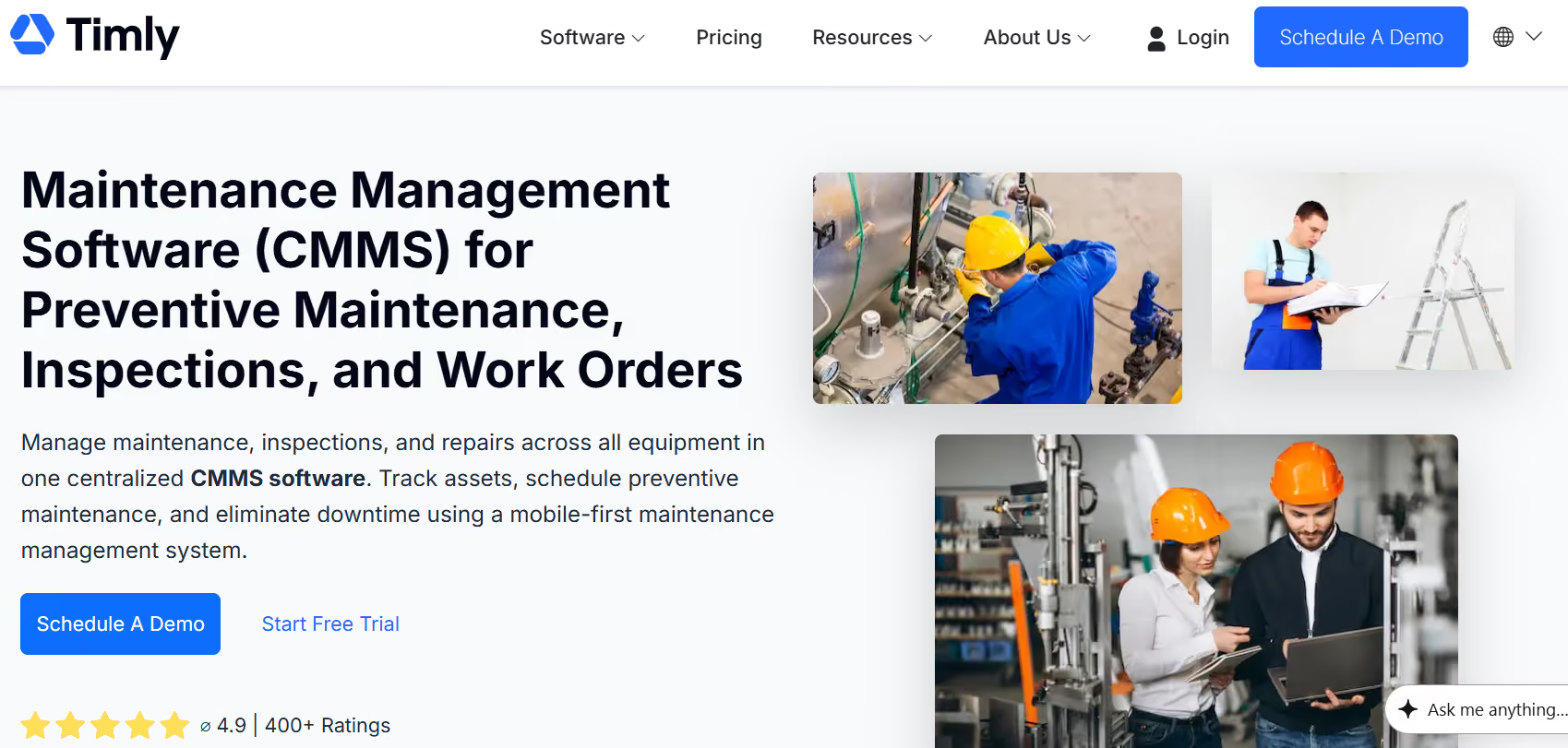
Timly is a Zurich-based cloud platform for inventory and asset management with a built-in maintenance module, used by organisations including Siemens and Panasonic. It is QR-code-driven and mobile-first.
Best for: organisations with a large, mixed asset base that want inventory tracking and maintenance in one tool.
What you gain vs MaintainX: German data hosting and far broader asset/inventory coverage (GPS tracking, warehouse management, certification tracking), useful if your "maintenance" problem is really an asset-fleet problem MaintainX is too narrow for.
Watch-outs: it leans toward asset and inventory tracking rather than deep production maintenance.
6. Festo Smartenance: Best low-cost, transparent entry
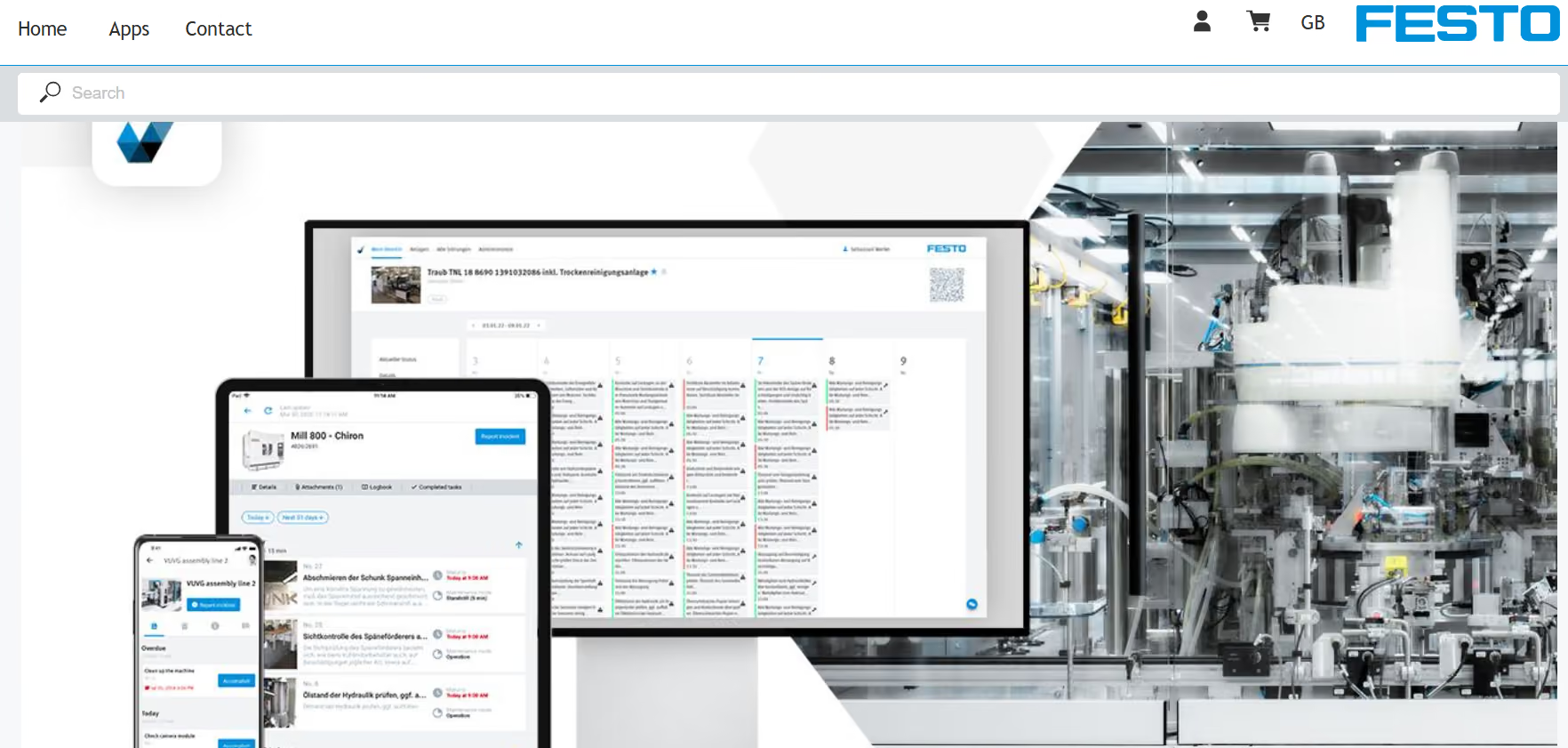
Smartenance is a vendor-neutral digital maintenance manager from Festo, the German automation company in Esslingen. It pairs a desktop web app with a mobile app for operators.
Best for: SMEs and machine builders that want a simple, affordable start without an ERP project.
What you gain vs MaintainX: transparent euro pricing from around €12.50 per month, a trusted German industrial brand, and German-language support, the opposite of MaintainX's USD pricing and US support footprint.
Watch-outs: intentionally lean, with less depth for complex asset and spare-parts management.
7. Fracttal One: Best if you need IoT and predictive maintenance
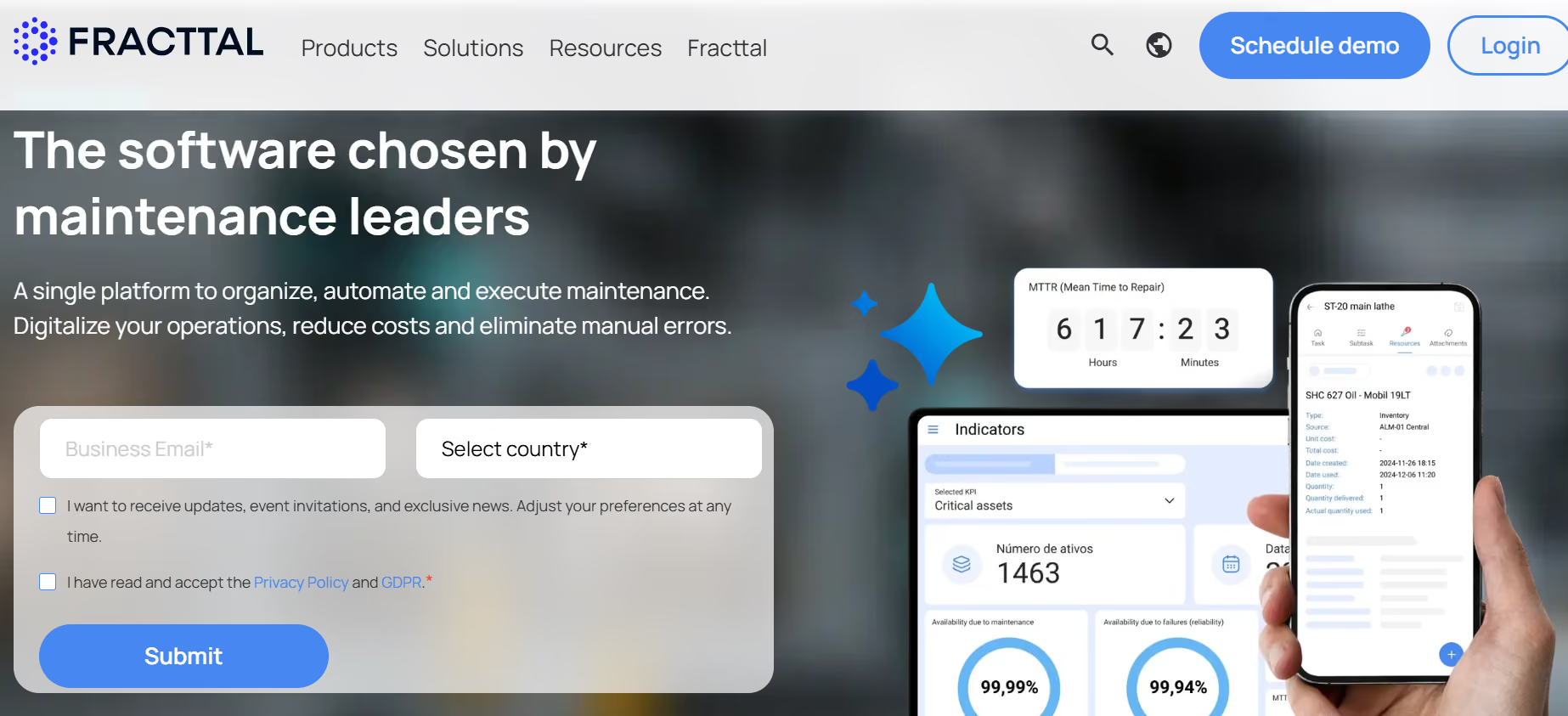
Fracttal One is a cloud CMMS/EAM headquartered in Madrid (originally founded in Chile in 2015), built around AI, IoT, and condition-based maintenance.
Best for: data-driven teams that genuinely need IoT monitoring and predictive maintenance and are comfortable in English or Spanish.
What you gain vs MaintainX: real IoT and condition-based maintenance plus strong analytics, with an EU headquarters, the clear upgrade if the predictive capability MaintainX gates (or lacks for your use case) is the whole reason you are switching.
Watch-outs: pricing transparency is weak, there is a learning curve, and German language and support are not a focus.
8. Limble CMMS: The honest US-to-US comparison
Limble is a US-based CMMS (founded 2015, Utah) used by tens of thousands of maintenance professionals at companies like Nike and Sony. It is the tool most often cited as a like-for-like MaintainX alternative.
Best for: teams that are happy to stay with a US vendor and simply want a better-supported, more customizable work-order app.
What you gain vs MaintainX: in usability and customer support terms, Limble is a credible step up, with high G2 ratings and fast support response. But it does not solve the European concerns: as a US company, it carries the same US data residency and CLOUD Act exposure, has no German-language support, and prices in USD. Include it on your shortlist only if the European angle is not a requirement, otherwise the tools above are the better fit.
Should you switch from MaintainX?
A simple way to decide:
- Switch if EU data residency, German-language support, or euro pricing are hard requirements; if you need a field-service module or deep SAP/OEE capability; or if the Autodesk acquisition makes you want a vendor whose roadmap you can predict.
- You can stay if you are happy on MaintainX, US hosting is acceptable, and you only need the best mobile work-order experience.
If you are switching, match the tool to the trigger: SAP landscape → osapiens or remberg; OEE and manufacturing depth → MaintMaster; IoT/predictive → Fracttal One; a cheap, simple start → Festo Smartenance; field service plus regulated-industry fit → Makula.
How to migrate from MaintainX
Switching CMMS is mostly a data and process exercise, not a rip-and-replace. A practical sequence:
- Export your data. Pull assets, work-order history, preventive-maintenance schedules, and your parts/inventory list out of MaintainX. Most platforms import via CSV/Excel.
- Re-map the asset hierarchy. Because MaintainX uses a flatter structure, plan how your assets and sub-assets will sit in a deeper hierarchy in the new tool, this is the step most worth doing carefully.
- Rebuild PM triggers. Recreate calendar-, runtime-, and cycle-count-based schedules, and migrate attached manuals, photos, and procedures.
- Run in parallel. Keep both systems live for one maintenance cycle so technicians can adjust before you cut over.
Ask each vendor whether they offer guided migration or import support, the European vendors above typically do, with German-language onboarding.