.avif)
When a production line goes down unexpectedly, the cost is rarely just the repair bill. It's the missed shifts, the batch failures, the compliance gaps, and the audit trail you can't produce. For plant managers and maintenance leaders in food and beverage, pharma, packaging, and discrete manufacturing, the stakes of getting maintenance planning wrong are simply too high.
That's why choosing the right industrial preventive maintenance software matters so much and why so many facilities end up frustrated with tools that weren't built for them. Generic platforms look capable on a demo screen. In practice, they don't understand shift rotations, production hierarchies, runtime triggers, or the level of compliance documentation your sector demands.
This guide gives you a clear, practical framework for evaluating preventive maintenance software for manufacturing plants. By the end, you'll know exactly which criteria separate plant-grade platforms from generic task managers dressed up with maintenance features.
Why Generic Maintenance Tools Fail on the Plant Floor
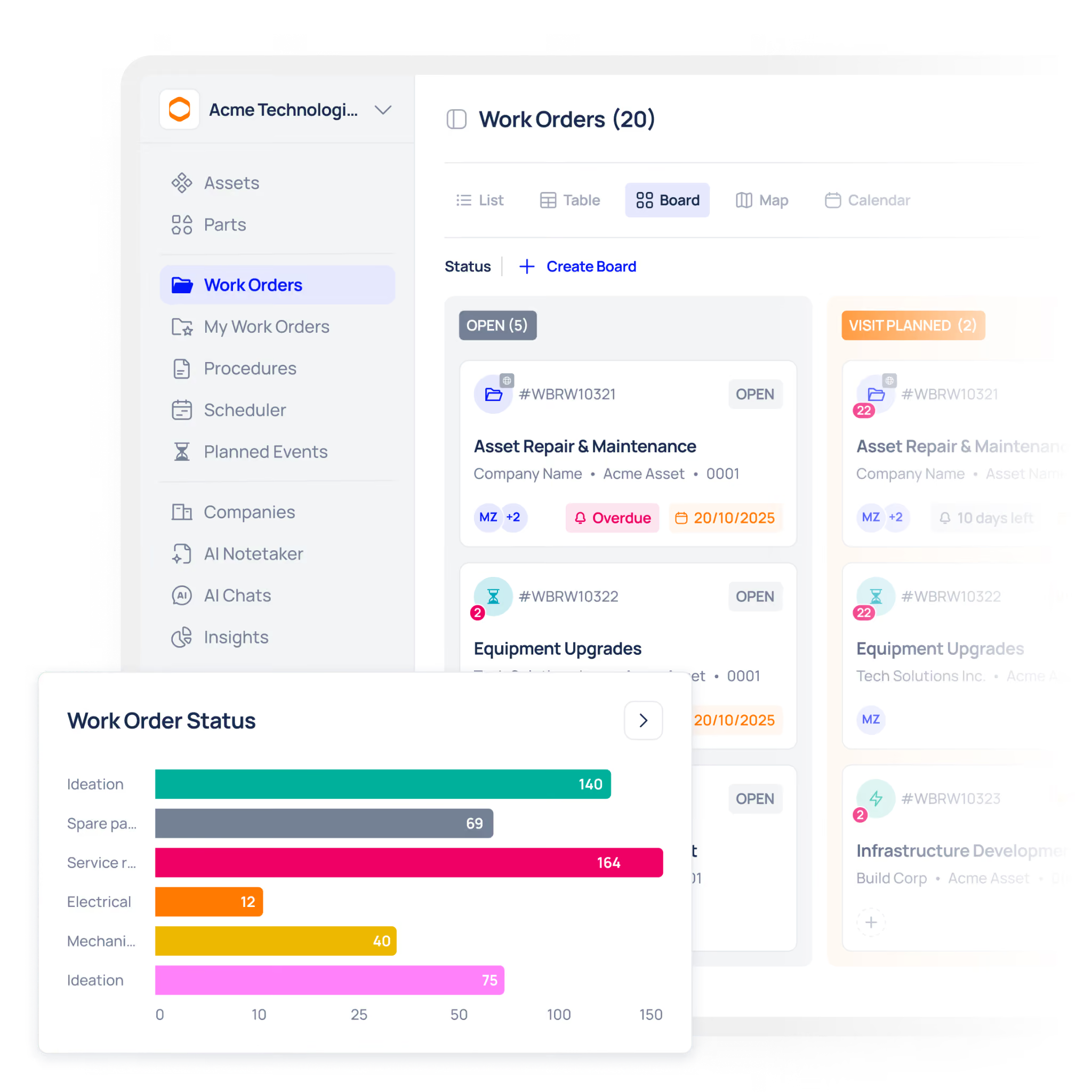
Most mainstream CMMS and maintenance platforms were designed for facilities management buildings, facilities teams, and basic scheduling. They work on calendar time. Your plant doesn't.
A packaging line doesn't need a PM because Tuesday arrived. It needs one because it's completed 50,000 cycles since the last service, or because it's accumulated 300 runtime hours across three shifts. A pharma filling line needs its PM to trigger automatically based on batch counts, not a date someone set six months ago and forgot to update.
Runtime-based and cycle-triggered preventive maintenance is the foundation of effective plant maintenance planning. Generic tools either lack this capability entirely or bolt it on awkwardly, leaving your team manually tracking hours in spreadsheets alongside a system that's supposed to replace them.
Beyond triggers, there's the question of asset structure. Plants operate in hierarchies: site, building, line, machine, component. A tool that treats every asset as a flat list of equipment entries cannot give you line-level visibility, cannot roll up compliance status by production area, and cannot support meaningful audit preparation.
The Real Cost of Misaligned Software
Choosing the wrong platform doesn't just create admin headaches. It actively undermines your uptime strategy and your regulatory standing.
Consider what happens in a food and beverage environment using a time-based-only system. A critical CIP (clean-in-place) unit is scheduled for quarterly maintenance regardless of how many production cycles it has run. During a heavy-demand period, it runs three times harder than usual, but no additional PM is triggered. The result is either an unplanned failure or a compliance incident, neither of which is acceptable.
In pharma, the stakes are even higher. Regulatory bodies expect complete, traceable maintenance records tied to specific assets, production batches, and sign-off chains. A generic system that logs work orders without linking them to GMP-compliant maintenance records or equipment qualification histories creates an audit liability, not an audit trail.
The right plant maintenance software removes these risks by design, not by workaround.
What Plant-Grade Buying Criteria Actually Look Like
When evaluating preventive maintenance software for factories, there are six capability areas that genuinely separate plant-ready platforms from everything else.
1. Runtime and Cycle-Based PM Triggers
Your PM schedule should be driven by actual production activity. Look for platforms that can:
- Trigger PMs based on runtime hours, production cycles, or batch counts
- Pull data from machines, sensors, or production systems to update trigger values automatically
- Allow different trigger types on the same asset (e.g., a calendar-based annual inspection alongside a cycle-based quarterly check)
If a vendor can only offer calendar scheduling with manual hour overrides, that's not plant-grade.
2. Structured Asset Hierarchies
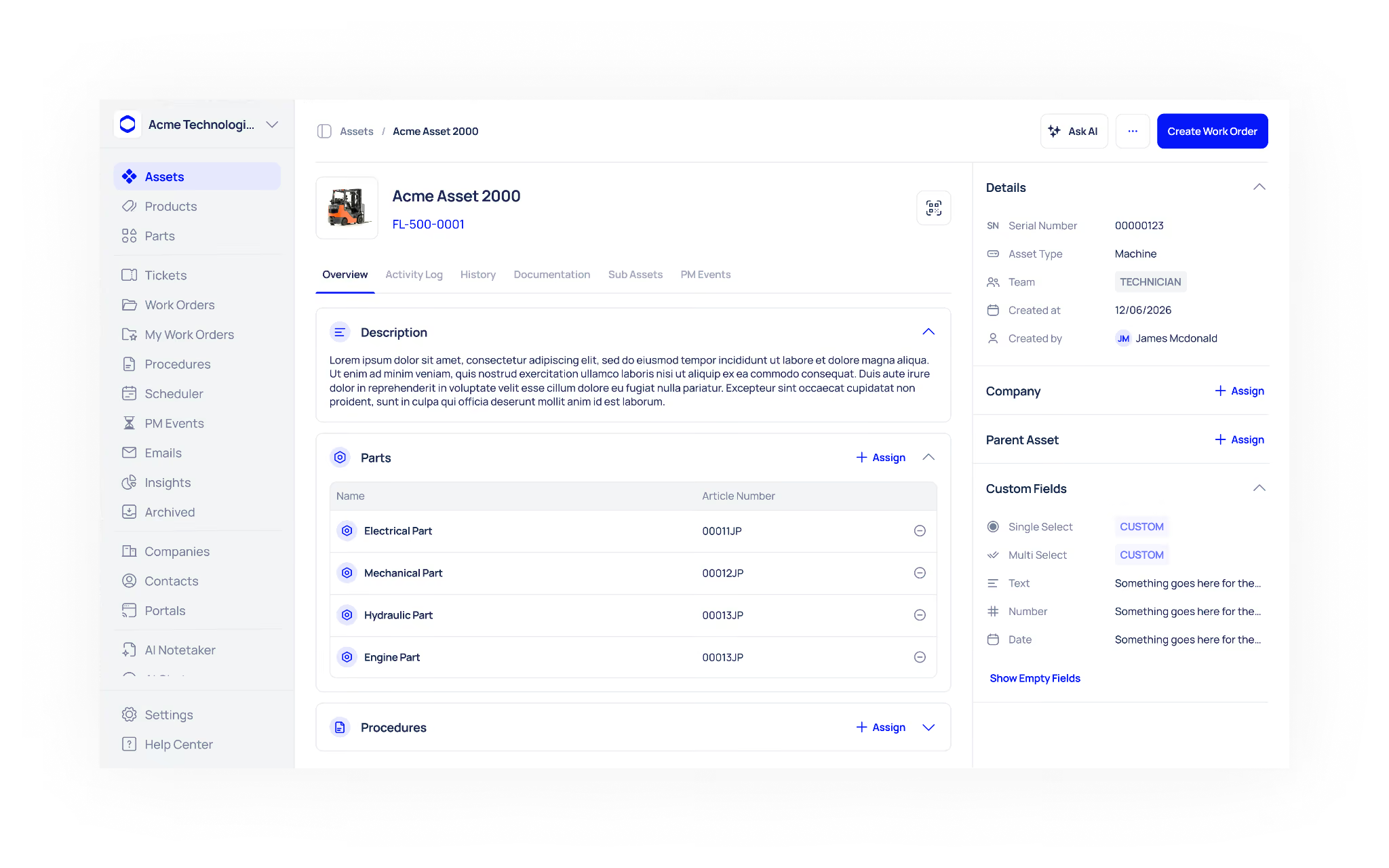
A proper industrial asset management structure should reflect how your plant actually operates. You need:
- Site → Line → Machine → Component hierarchy that matches your physical layout
- The ability to assign PMs at any level of that hierarchy
- Rollup views that show PM compliance status by line or production area
This is critical for multi-site operations and for quickly identifying which areas of the plant are at risk before a scheduled audit.
3. Line-Level PM Planning and Scheduling
Maintenance doesn't happen in isolation from production. The software needs to understand that Line 3 runs two shifts Monday to Friday and one shift on Saturday, and that PM windows need to be scheduled around changeovers, not over them.
Look for:
- Shift-aware scheduling that respects your production calendar
- The ability to group related PMs across a line so technicians can complete them efficiently in a single window
- Drag-and-drop or capacity-aware planning boards that maintenance planners can actually use
4. Compliance Documentation and Audit Readiness
This is non-negotiable for regulated industries. Your compliance maintenance records need to be complete, traceable, and accessible without a data export exercise every time an auditor arrives.
Specifically, look for:
- Digital sign-off workflows with timestamps and user identification
- Automatic record retention linked to specific asset and work order histories
- Pre-built or configurable audit-ready maintenance reports that can be produced in minutes
- Support for GMP, HACCP, ISO 9001, or industry-specific compliance frameworks
5. Integration With Production and ERP Systems
A maintenance platform that sits in isolation from your production data is always working with yesterday's information. Integrations with your ERP, SCADA, or MES system allow runtime data to flow directly into PM triggers and close the gap between planned and actual maintenance activity.
Ask vendors directly: does the integration push live runtime data, or is it a periodic sync?
6. Mobile-First Technician Experience
Your maintenance technicians are on the floor, not at a desk. The mobile experience matters enormously for task completion rates, data quality, and adoption. Look for:
- Offline capability for areas with poor connectivity
- Checklist-driven task completion with photo capture
- Clear escalation paths built into the mobile workflow
Preventive Maintenance Software Buying Criteria: At a Glance
Use this table when comparing vendors side by side.
Compliance and Uptime: The Two Decision Drivers That Override Everything Else
In regulated manufacturing, every other capability feeds into two outcomes: equipment uptime and compliance standing. When evaluating platforms, it helps to pressure-test every feature against these two questions:
- Does this capability help me prevent unplanned downtime?
- Does this capability help me demonstrate compliance when it matters?
A beautiful interface that can't produce a complete GMP maintenance audit trail is not a pharma-grade tool. An integration-rich platform with no runtime trigger capability cannot support a proper condition-based PM strategy for discrete manufacturing.
The best industrial preventive maintenance solutions earn their place in both categories simultaneously. Runtime triggers reduce reactive maintenance. Structured compliance records turn audit preparation from a week-long exercise into an afternoon task.
When a platform genuinely delivers on both, it stops feeling like a maintenance tool and starts functioning as a core part of your production reliability strategy.
Questions to Ask During a Vendor Demo
Demos are easy to impress with. To move past the surface, bring these questions:
- Show me a live asset tree. How does it reflect a multi-line factory layout?
- Trigger a PM from a runtime counter. How does the system behave when a threshold is crossed mid-shift?
- Pull up an audit report for a single asset. How long does that take, and what does the record contain?
- Show me the mobile technician view. What happens when the device goes offline?
- Walk me through a compliance sign-off. What's the chain of custody for a completed PM task?
If a vendor hesitates on any of these, that hesitation is an answer.
Conclusion
Choosing industrial preventive maintenance software for a plant or factory isn't about finding the most feature-rich platform on the market. It's about finding the one that understands how your plant actually operates in shifts, in production hierarchies, in runtime hours, and in regulatory obligations.
The criteria that matter most are the ones that directly protect uptime and compliance: runtime-based PM triggers, structured asset hierarchies, shift-aware scheduling, and audit-ready maintenance records that hold up under scrutiny.
Generic tools can handle simple schedules. Plant-grade platforms handle the complexity that keeps your lines running and your audits clean.
If you're ready to see what that looks like in practice, book a demo and see a factory asset tree with runtime-based PMs in Makula built around the way manufacturing plants actually work.