
"We have no way to see the backlog; it's all in people’s heads."
If this statement resonates with your daily operations, you are not alone. Many maintenance teams operate on a foundation of spoken requests, scribbled sticky notes, and the encyclopaedic memory of a few veteran technicians. While this might keep the lights on in the short term, relying on human memory to manage complex facility maintenance is a ticking time bomb.
When your maintenance backlog is invisible, you cannot prioritise tasks, allocate resources effectively, or predict equipment failures. This lack of visibility is a clear indicator of low work order maturity. In this post, we will explore what it means to mature your maintenance processes, the hidden costs of relying on memory, and how you can evaluate your current operations to reclaim lost time and budget.
The Danger of the Invisible Backlog
Imagine walking into a factory where every machine looks fine on the outside, but underneath the casing, parts are wearing down. Now imagine that the only person who knows which parts need replacing is currently on annual leave.
This is the reality for organisations that lack a formalised system for tracking work orders. When requests are communicated verbally or jotted down on whiteboards that get wiped clean at the end of the week, critical data vanishes. An invisible backlog creates severe operational bottlenecks. You cannot measure what you cannot see.

Technicians end up bouncing from one emergency to the next, entirely trapped in a reactive cycle. You lose the ability to plan preventive maintenance, and minor issues quietly evolve into catastrophic, expensive breakdowns. Improving your work order maturity is the only sustainable way to bring this hidden backlog into the light.
What is Work Order Maturity?
Work order maturity refers to how developed, structured, and efficient your maintenance tracking processes are. It is a spectrum that ranges from entirely chaotic, reactive environments to highly optimised, predictive operations powered by real-time data.
Understanding where you sit on this spectrum is the first step toward meaningful improvement.
At the lowest levels of work order maturity, a team is simply surviving. Data is unstructured, and processes depend entirely on specific individuals. As maturity increases, organisations begin to standardise their data capture. They introduce digital tools to track requests, assign labour, and log the parts used for every job.
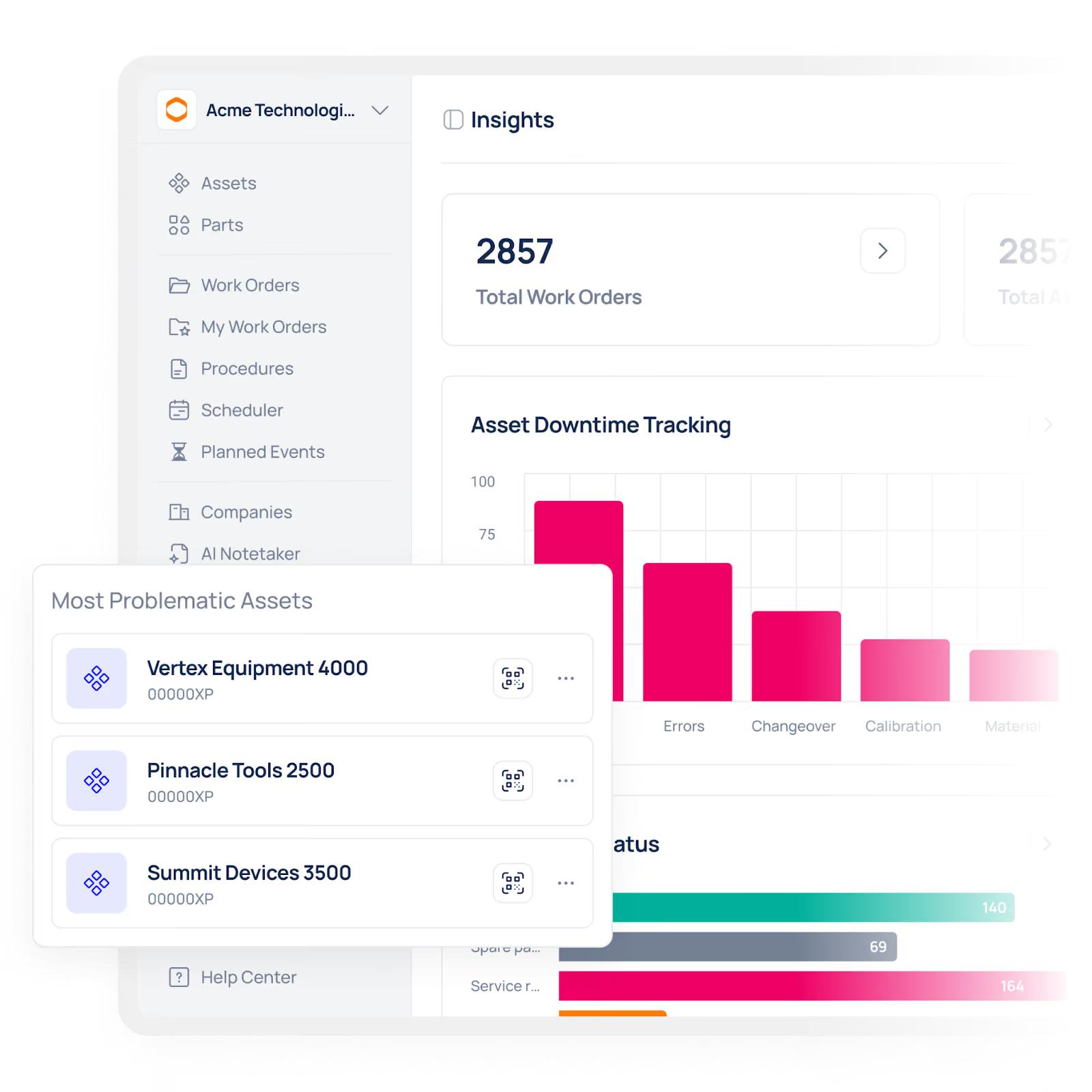
At the highest levels of work order maturity, a facility operates like a well-oiled machine. Systems like Makula capture data effortlessly, allowing managers to identify trends, forecast required maintenance, and allocate budgets with pinpoint accuracy. The backlog is not just visible; it is strategically managed.
The True Cost of Process Inefficiency
Operating with immature processes drains resources in ways you might not immediately notice. Let us break down the costs associated with poor work order management:
- Wasted Labour Hours: Technicians spend significant portions of their shifts simply trying to figure out what they need to do next, locating the right tools, or chasing down spare parts.
- Increased Equipment Downtime: Because preventive maintenance is easily forgotten when it lives only in someone's head, machines run until they fail. Reactive repairs take longer and cost more than scheduled upkeep.
- Compliance and Safety Risks: During an audit, you must prove that critical safety checks occurred. If your records are incomplete or non-existent, you face hefty fines and put your workforce at risk.
- Poor Inventory Management: Without a clear view of upcoming work, you either overstock expensive spare parts "just in case" or face crippling delays because a crucial component is out of stock.
Elevating your work order maturity directly combats these financial drains, transforming your maintenance department from a cost centre into a driver of operational efficiency.
Evaluating Your Current Stage
To help you visualise where your organisation currently stands, review the following matrix. Moving from one stage to the next requires a deliberate shift in strategy, technology, and team culture.
Taking the Next Step
Recognising that your current process is flawed is a positive breakthrough. It means you are ready to stop relying on guesswork and start building a resilient, data-driven maintenance culture. You do not have to jump from Stage 1 to Stage 4 overnight. The transition is a step-by-step journey that begins with standardising how you request and record work.
By assessing your work order maturity, you can identify the specific bottlenecks holding your team back and implement targeted solutions to fix them.