
Every minute a critical machine sits idle on the factory floor, your business loses money. You hire skilled technicians, you stock the right spare parts, and you have protocols in place. Yet, despite your best efforts, maintenance tasks constantly fall behind schedule.
The root cause of these bottlenecks rarely lies with your maintenance team. The real problem is how information travels. When your operations rely on manual routing, physical paperwork, and endless email chains for approvals, human error and administrative lag become inevitable. A technician cannot fix a machine if they are waiting two hours for a supervisor to authorise a simple part replacement.
You need a systematic approach to eliminate these operational pains. This guide explores exactly why work orders get delayed and demonstrates how implementing the right software automation can completely transform your routing, escalation, and SLA tracking processes.
See How Maintenance Workflow Automation Eliminates Delays and Downtime
Discover how manufacturers use automated work order routing, digital approval workflows, and SLA tracking to reduce maintenance delays, accelerate repairs, and keep critical assets running. See a real maintenance workflow transformation in action.

The Real Cost of Delayed Maintenance
When a machine breaks down, the repair itself is only a small fraction of the total downtime. The majority of wasted time occurs before a spanner even touches the equipment.
Operational pain stems from administrative friction. A machine operator notices a fault and writes it on a whiteboard. A supervisor eventually sees the note, writes up a physical ticket, and hands it to a technician. The technician inspects the machine, realises they need a high-cost part, and emails the finance manager for approval. Hours pass while the machine sits entirely out of action.
These delays compound over time. They lead to massive production backlogs, missed shipping deadlines, and incredibly frustrated staff. To fix this, you must attack the problem at its source: the manual processes that govern your daily maintenance requests.
Why Manual Routing is a Recipe for Disaster
The journey of a repair request is often unnecessarily complicated. Understanding where the breakdown occurs is the first step toward fixing it.
The Problem with Paper and Emails
If you manually distribute work orders, you are actively inviting delays. Supervisors must manually assess every incoming request, check the schedule to see who is available, determine who has the right skills, and then physically hand the ticket to a technician. If that technician is on a break or working on another critical machine, the new request simply sits in their queue, entirely ignored.
The Automation Fix: Intelligent Routing
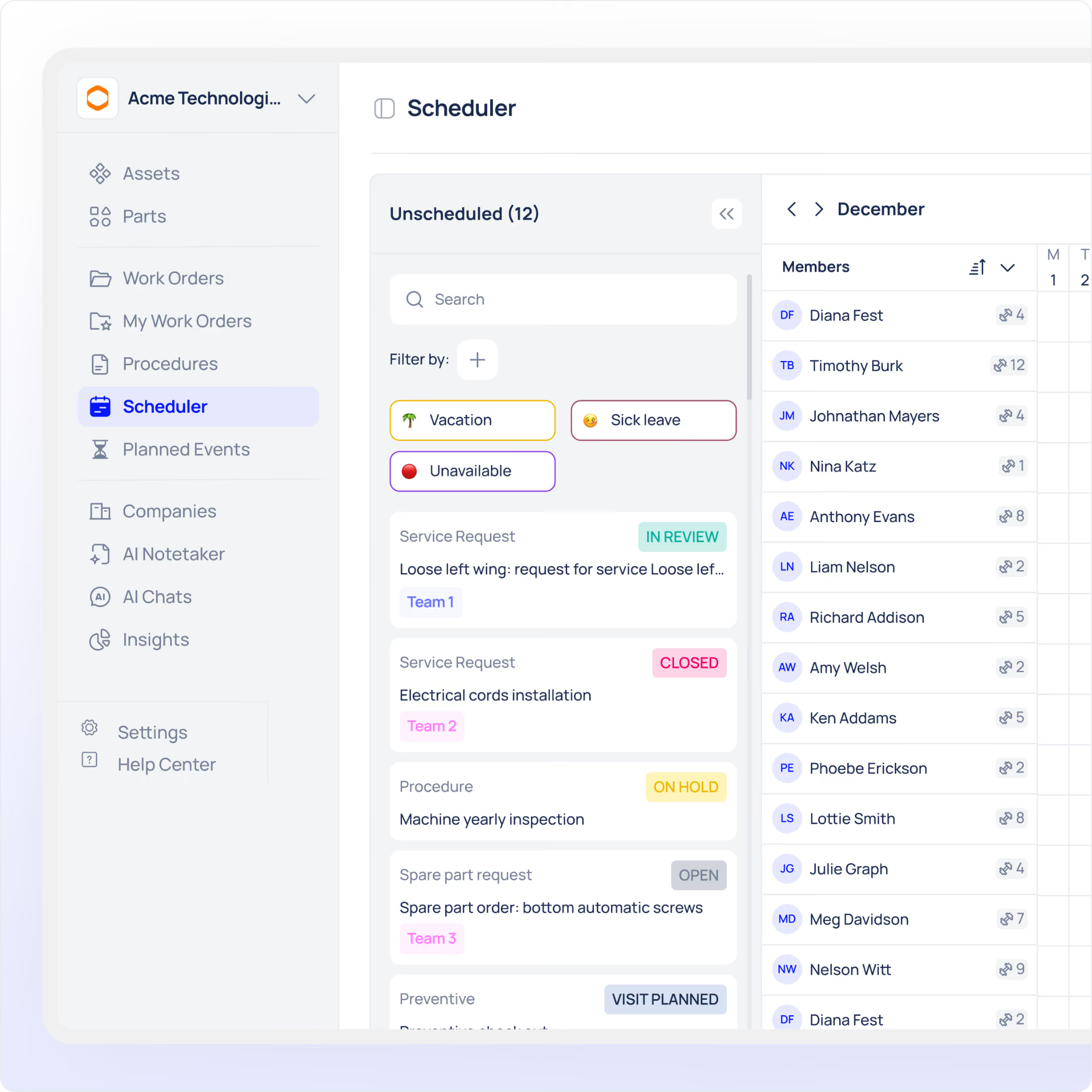
Software eliminates this manual guessing game. Advanced automation reads the context of incoming work orders instantly. The system looks at the fault code, identifies the specific machine, and cross-references this data with your technicians' current locations, skill sets, and workloads.
Within a fraction of a second, the software automatically routes the task directly to the mobile device of the nearest available, fully qualified technician. The supervisor does not have to lift a finger, and the technician can begin the repair immediately.
The Approval Bottleneck
Even if a technician reaches a broken machine quickly, bureaucratic red tape can easily halt their progress.
Waiting on Manual Sign-offs
Industrial maintenance often involves expensive parts and hazardous conditions. These factors naturally require managerial oversight and safety authorisations. However, when approvals rely on phone calls, text messages, or emails, delays are guaranteed. A critical repair might stall for an entire afternoon simply because the plant manager is sitting in a meeting and cannot check their email to authorise a £500 component.
The Automation Fix: Digital Approval Chains
By digitising your work orders, you can implement instant, conditional approval workflows. If a task requires a costly spare part, the technician requests it via their mobile app. The software instantly triggers a push notification to the manager's phone.
The manager can review the cost, check the inventory, and tap "Approve" from anywhere in the facility. The technician receives the green light instantly. For extremely high costs, the software can automatically route the request through a multi-tier chain, securing signatures from the supervisor, finance director, and operations head in minutes rather than days.
Losing Track of Time and SLAs
Service Level Agreements (SLAs) exist to keep your operations strictly on track. Unfortunately, manual tracking makes SLA enforcement almost impossible.
Forgotten Deadlines
When a facility processes hundreds of maintenance requests every week, standard priority tasks often fall through the cracks. A minor oil leak might be reported on a Tuesday, but because it is not an immediate emergency, it gets pushed down the pile. By Friday, that minor leak has caused a catastrophic motor failure. When supervisors manually monitor deadlines, human oversight will always lead to massive operational failures.
The Automation Fix: Dynamic SLA Tracking and Escalation
Modern software acts as an active watchdog over your entire maintenance schedule. As soon as a request enters the system, the software attaches a strict SLA timer based on the asset's criticality.
If a technician does not acknowledge high-priority work orders within fifteen minutes, the software does not just sit silently. It triggers an automated escalation protocol. The system instantly alerts the shift supervisor, flashes a warning on the main dashboard, and can even re-route the task to another available technician. This proactive tracking ensures minor issues never escalate into costly downtime.
Delay vs. Automation: A Workflow Comparison
Understanding the tangible difference between manual struggles and automated efficiency helps clarify exactly why software is necessary. Use this table to compare the two approaches.
Fix Your Workflow and Stop the Delays
You cannot afford to let administrative friction dictate your production schedule. When you rely on paper tickets, email approvals, and manual tracking, you are choosing to accept delays, extended downtime, and lost revenue.
Transitioning to a digital workflow eliminates these bottlenecks entirely. By introducing intelligent routing, instant approval chains, and automated escalation, you guarantee that your maintenance team operates at maximum efficiency.
Want to see exactly how this transformation looks in practice? We can show you the journey from a delayed manual request to a seamless automation fix in a live workflow. See how Makula dynamically handles complex routing and strict SLA tracking to keep your operations running perfectly.
Stop waiting around for repairs to start. Book a demo today.