Walk into any maintenance storeroom, and you'll likely find shelves stacked with spare parts. Bearings, seals, filters, and belts are all carefully labelled and organised. But ask a technician which specific part fits which piece of equipment, and you might get a shrug or a prolonged search through outdated spreadsheets.
This scenario plays out across industries every day. Maintenance teams struggle with a fundamental challenge: knowing which spare part matches which asset. It's a problem that costs time, money, and productivity. When a critical machine breaks down, the last thing you need is uncertainty about whether you've got the right replacement part in stock.
Spare-to-asset mapping is the solution to this challenge. It's the process of creating clear, accessible records that link every spare part to the specific equipment it serves. When implemented properly, it transforms maintenance operations from reactive scrambling to proactive planning.
This article explores why spare-to-asset mapping matters, the problems it solves, and how to get started with a practical approach that works for your organisation.
Why Spare-to-Asset Mapping Matters
Without proper spare-to-asset mapping, maintenance teams face a series of cascading problems. The most immediate issue is downtime. When equipment fails, and technicians can't quickly identify the correct replacement part, machines sit idle. Production stops. Deadlines slip. Costs mount.
But the consequences extend beyond just downtime. Poor mapping leads to inventory bloat. Teams order duplicate parts "just in case" because they're unsure what's already in stock or what actually fits their equipment. Storage costs increase whilst capital sits locked up in unnecessary inventory.
There's also the risk of using incorrect parts. When technicians make assumptions about compatibility, they may install components that appear correct but are not. This can lead to premature failure, safety hazards, or damage to expensive equipment.
Organisations that implement robust spare-to-asset mapping see measurable improvements:
- Reduced mean time to repair (MTTR)
- Lower inventory carrying costs
- Fewer emergency orders and expedited shipping fees
- Improved first-time fix rates
- Better planning for preventive maintenance
Common Challenges in Spare Parts Management
Disconnected Systems
Many organisations manage assets in one system and spare parts in another. Equipment records live in a CMMS (computerised maintenance management system), whilst inventory sits in an ERP (enterprise resource planning) system. The two rarely communicate effectively, leaving technicians to cross-reference information manually.
Inconsistent Naming Conventions
One person's "bearing" is another's "roller bearing" or "ball bearing assembly." Without standardised part descriptions and numbering systems, searching for the right component becomes a frustrating guessing game.
Outdated Documentation
Equipment manuals get misplaced. Manufacturers update part numbers. Machines undergo modifications. Over time, the gap between what's documented and what's actually installed grows wider.
Multiple Suppliers
The same functional part might be available from different manufacturers with different part numbers. Tracking cross-references and approved alternatives adds another layer of complexity.
Knowledge Locked in People's Heads
Experienced technicians often know intuitively which parts fit which machines. But when they retire or move on, that knowledge disappears. Organisations find themselves starting from scratch.
The Business Impact of Poor Spare-to-Asset Mapping
Let's put some numbers to the problem. Consider a manufacturing facility with 500 pieces of equipment and an average unplanned downtime cost of £2,000 per hour.
These figures represent just one facility. Scale this across multiple sites, and the business case for proper spare-to-asset mapping becomes compelling.
Building an Effective Spare-to-Asset Mapping System
Creating a reliable spare-to-asset mapping system doesn't require a massive IT project. Start with these foundational steps:
1. Audit Your Critical Equipment
Begin with your most critical assets, those whose failure has the biggest impact on production or safety. Create a complete list with:
- Equipment ID numbers
- Make and model
- Serial numbers
- Location
- Criticality rating
2. Identify Essential Spares
For each critical asset, list the spare parts most likely to fail or require replacement during routine maintenance. Focus on:
- Items with known wear patterns
- Components with manufacturers' recommended replacement intervals
- Parts that have failed in the past
- Long lead-time items
3. Standardise Part Information
Establish consistent fields for every spare part record:
- Manufacturer part number
- Internal part number
- Description (following a standard format)
- Cross-reference numbers for alternative suppliers
- Unit of measure
- Current stock level
- Reorder point
4. Create the Links
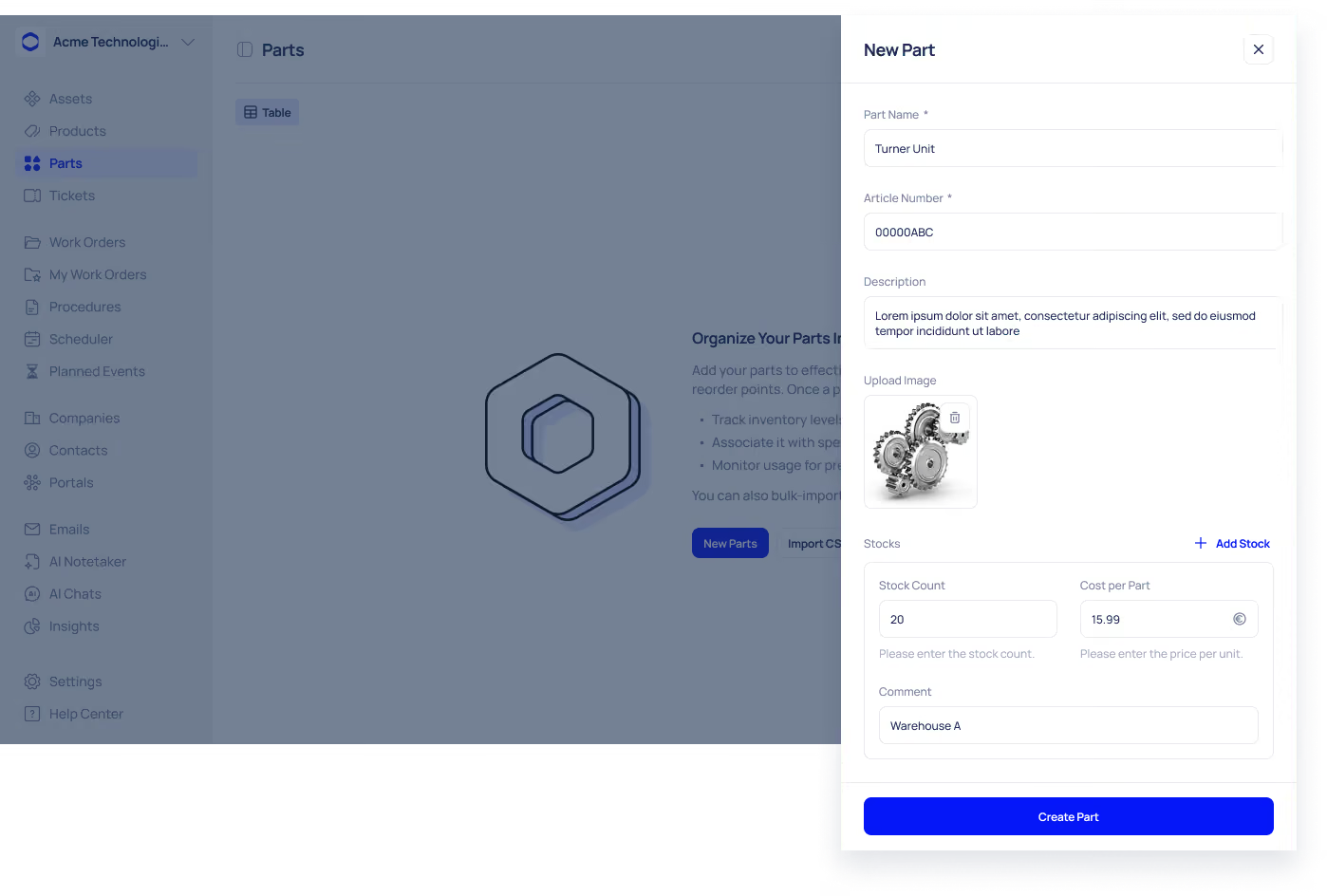
This is where spare-to-asset mapping happens. In your maintenance or inventory system, create explicit relationships between parts and equipment. Each spare should link to every asset where it's used, and each asset should link to all its associated spares.
5. Verify in the Field
Theory meets reality on the workshop floor. Have technicians physically verify that parts match equipment. Take photos. Note any discrepancies. Update records based on actual conditions, not just what the manual says.
6. Implement Access and Workflow
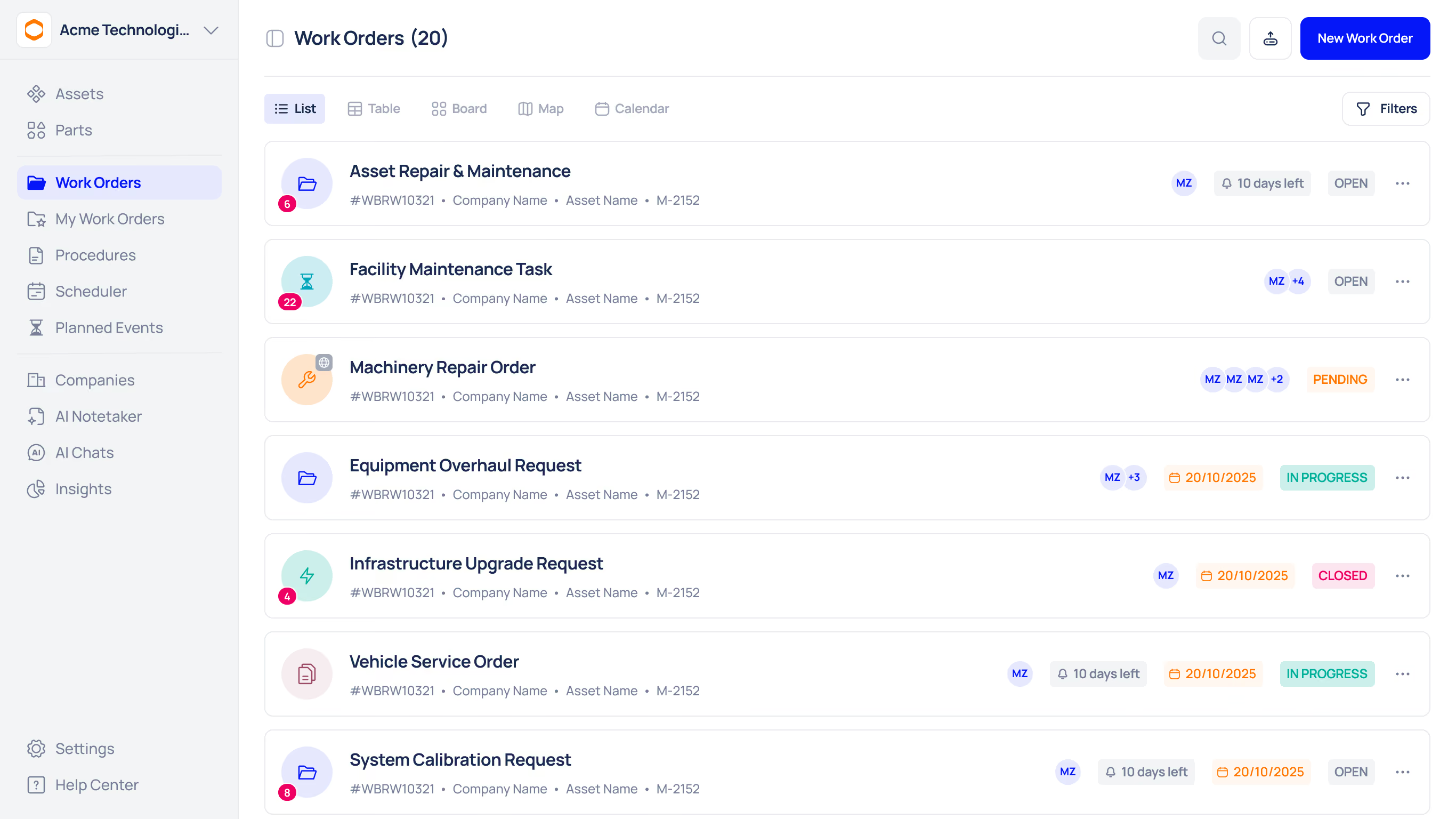
Make the mapping information easily accessible. Technicians shouldn't need to navigate through five different screens to find what they need. Ideally, they should be able to scan an asset tag and instantly see all associated parts and their stock levels.
Technology Solutions for Spare-to-Asset Mapping
Modern CMMS and EAM (enterprise asset management) platforms include features specifically designed for spare-to-asset mapping. Look for systems that offer:
- Bill of materials (BOM) functionality: Allows you to create hierarchical structures showing how parts relate to assemblies and equipment
- QR code or barcode integration: Enables quick scanning to pull up asset information and associated parts lists
- Mobile access: Let technicians access mapping information from the workshop floor or remote sites
- Automated inventory triggers: Generates purchase orders when stock levels for critical spares fall below defined thresholds
- Cross-reference tables: Manages alternative part numbers and supplier equivalents
For smaller operations or those just beginning their mapping journey, even a well-structured spreadsheet can provide significant improvements over scattered documentation.
How a CMMS makes mapping practical
A time-based CMMS centralises asset records, BOMs and stock levels so spare-to-asset links are live and searchable. Require key part fields, attach photos, and enable QR/barcode scans at the asset, technicians scan and see the authorised spare list, stock on hand, and reorder points immediately. Run a 30–60 day pilot (10–20 critical assets) to enforce scanning, measure time-to-part and first-time fix rates, then scale the process across the plant. Makula CMMS
Maintaining Your Spare-to-Asset Mapping System
Creating the initial mapping is just the beginning. Keeping it accurate requires ongoing effort:
Regular audits: Schedule quarterly or annual reviews of critical equipment and associated spares.
Change management: Update mapping whenever equipment is modified, replaced, or decommissioned.
Feedback loops: Encourage technicians to report discrepancies immediately when they find that documented parts don't match actual equipment.
Supplier updates: Monitor manufacturer communications about part number changes or product discontinuations.
Performance metrics: Track KPIs like first-time fix rate and time spent searching for parts to measure the impact of your mapping efforts.
Transform Your Maintenance Operations
The question "which spare goes with which machine?" shouldn't require detective work. With proper spare-to-asset mapping, your maintenance team gains the clarity and confidence needed to respond quickly to breakdowns, plan effectively for preventive maintenance, and manage inventory efficiently.
The organisations that excel at maintenance aren't necessarily those with the newest equipment or the biggest budgets. They're the ones with robust systems that connect information to action. Spare-to-asset mapping provides that connection.
Don't let another breakdown turn into an extended search for the right part. Download our comprehensive part-to-asset starter checklist and begin building a mapping system that works for your organisation. Your technicians and your bottom line will thank you.
Conclusion
Spare-to-asset mapping is one of the highest-leverage fixes a maintenance team can make: it shortens MTTR, improves first-time fix rates, reduces emergency orders and inventory carrying costs, and turns time wasted hunting parts into productive repair time. Start small, audit your most critical assets, standardise part records, link spares to asset BOMs, verify in the field, then enforce scanning and updates, and you’ll see measurable gains quickly.
Make the change repeatable by using a CMMS to hold the links and evidence. A time-based CMMS centralises BOMs, stock levels and asset history so technicians can scan an asset and immediately find the right part, photos and reorder info. Makula CMMS is built for that workflow (asset tags, mobile access, mandatory fields), making the mapping practical and auditable.
Run a 30–60 day pilot on 10–20 critical assets, track a few KPIs (time-to-find-part, first-time-fix rate, stockout incidents) and report the wins. Small, consistent steps, backed by clean data and the right tooling, turn spare-part chaos into a competitive advantage.\