Imagine the challenge: you are in the middle of a critical audit, and you are asked for the installation date of a specific piece of machinery. You know it was replaced a few years ago, but the exact date, the service history, and the previous asset's details are lost in a jumble of spreadsheets and paper records. This scenario is a common headache for plant managers. The inability to accurately track asset lifecycles not only complicates audits but also hinders maintenance planning and financial forecasting. This exact problem was what led the team at Plant X to seek a new solution.
This asset consolidation case study details how Plant X went from disjointed, unreliable data to a fully unified and transparent asset register. They successfully consolidated over 1,200 assets in just 48 hours, transforming their operational efficiency and audit readiness. We will explore the challenges they faced, the process they undertook, and the remarkable results they achieved.
The Problem: A Tangled Web of Asset Data
Plant X, a significant manufacturing facility, was struggling with a widespread issue: a lack of visibility into their asset history. The core problem was their reliance on outdated and fragmented tracking methods. Critical information was scattered across various platforms, including:
- Multiple, often conflicting, spreadsheets.
- Paper-based logs stored in different departments.
- Legacy software that no longer receives support.
- Institutional knowledge held by long-serving employees was at risk of being lost.
This decentralised approach meant they couldn't confidently answer simple questions like, "When was this machine installed?" or "What was its maintenance history before the last major service?" The consequences were significant, leading to audit anxieties, inaccurate depreciation calculations, and inefficient maintenance scheduling. The team knew they needed a drastic change to regain control.
The Solution: A Rapid and Strategic Consolidation
The plant management decided to implement a centralised asset management system. Their goal was to create a single source of truth for all 1,200+ critical assets on site. The key to their success was a meticulously planned, two-day consolidation event powered by a modern CMMS platform.
The process involved a dedicated team equipped with mobile devices. They systematically moved through the facility, capturing data for every single asset. The platform allowed them to tag each piece of equipment with a unique identifier and log crucial information directly into the new system. Using a tool like Makula, they were able to streamline data entry with pre-defined fields, ensuring consistency and accuracy from the very beginning.
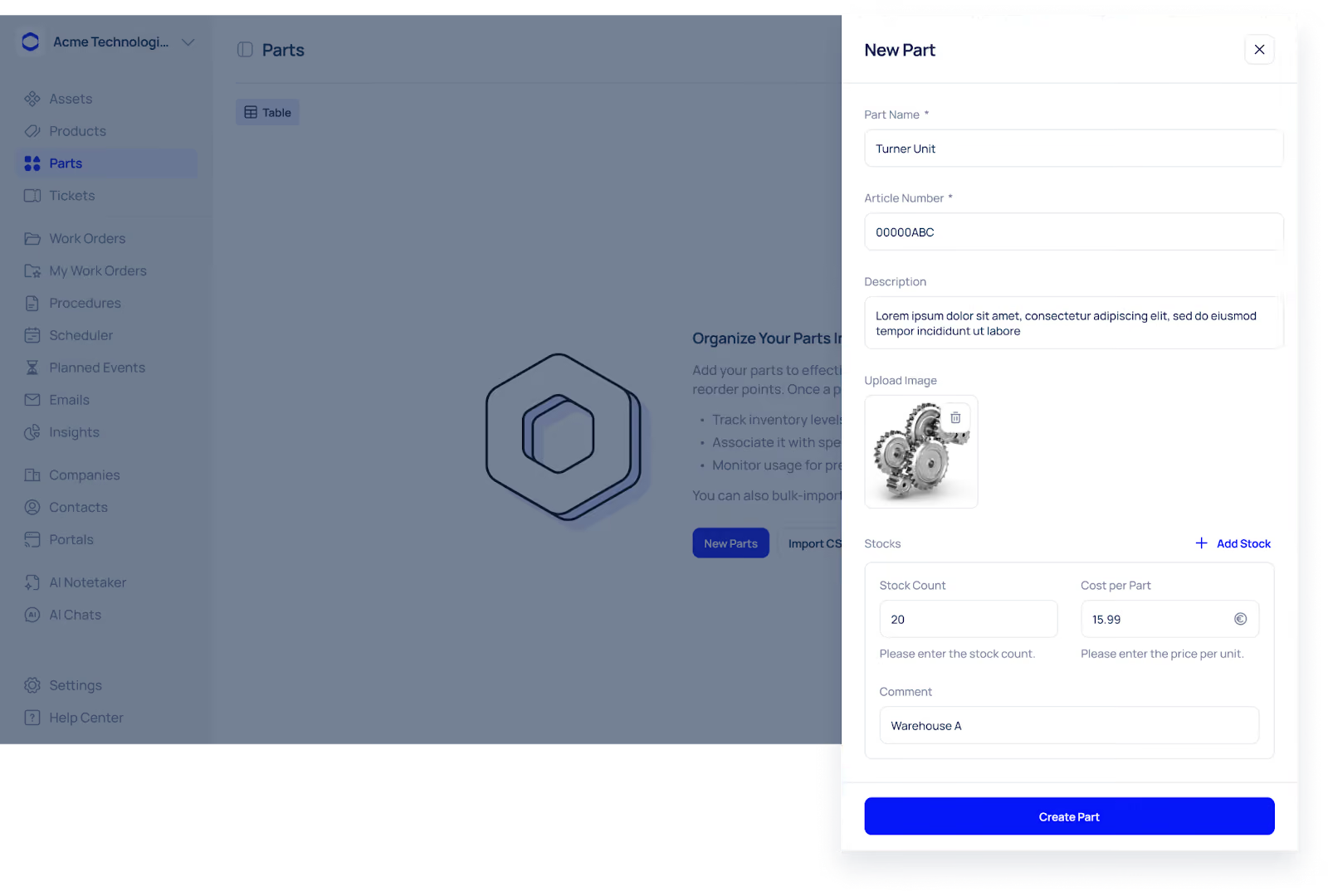
This intensive, focused effort was the cornerstone of this asset consolidation case study. By dedicating 48 hours entirely to this task, they avoided the prolonged disruption of a piecemeal approach.
Key Project Data Summary
To understand the scope and impact of the project, here is a summary of the key metrics before and after the consolidation.
The Results: Clarity, Control, and Confidence
The outcome of this rapid consolidation project was transformative. Within 48 hours, Plant X had a complete, accurate, and easily accessible digital record of all its assets.
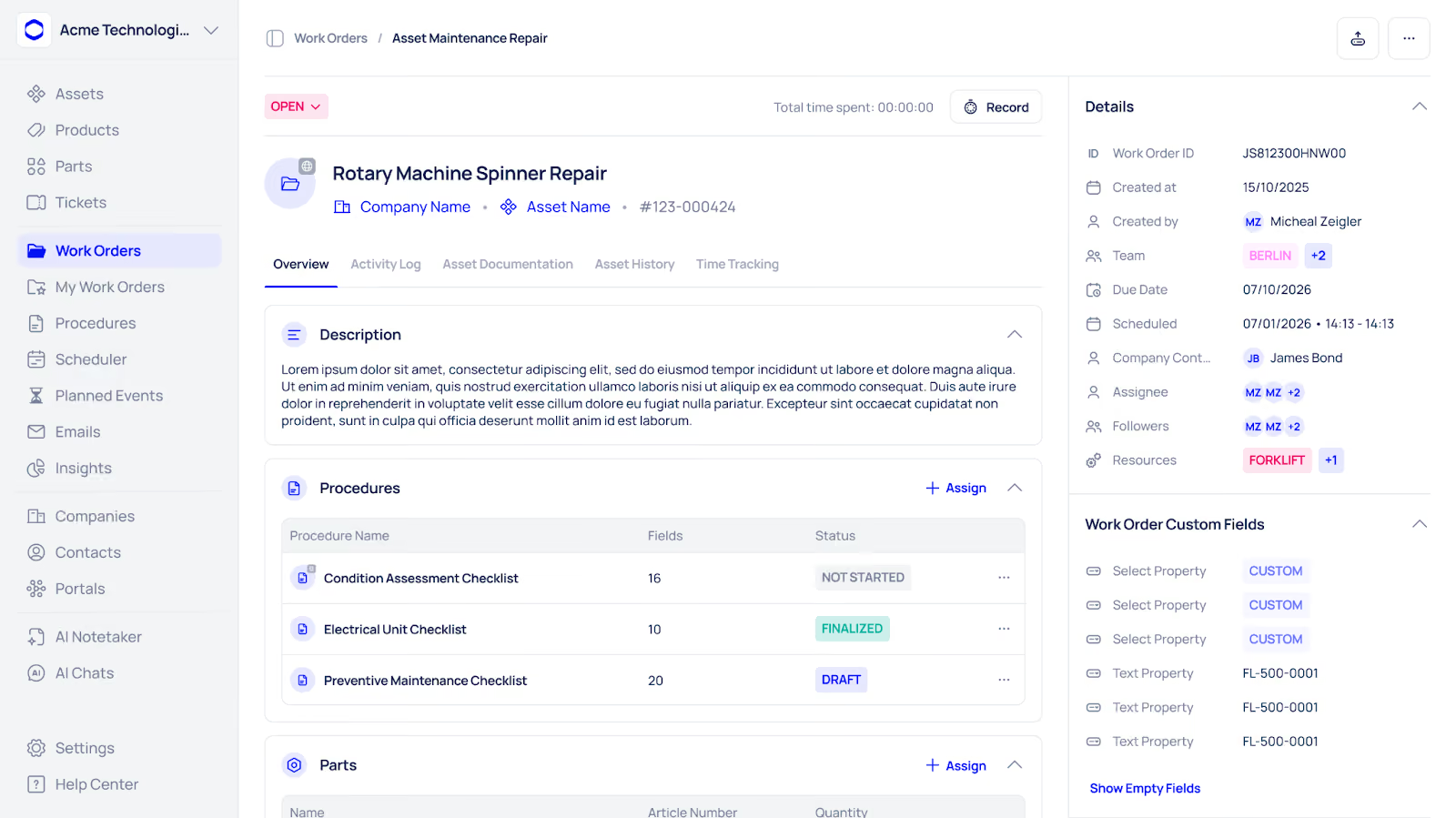
The most immediate benefit was the newfound ability to track the entire lifecycle of any machine. When a machine was installed, replaced, or serviced, the information was updated in real-time. This provided an unambiguous answer to the question, "When was this machine installed or replaced?"
This successful asset consolidation case study demonstrates that overcoming data chaos is achievable. The long-term benefits included:
- Smooth Audits: Auditors could now be provided with comprehensive asset histories instantly, eliminating stress and potential penalties.
- Improved Maintenance: With clear installation dates and service records, the maintenance team could implement proactive and predictive maintenance strategies, reducing downtime.
- Accurate Financials: The finance department gained precise data for depreciation and capital expenditure planning.
- Empowered Teams: All stakeholders, from the plant floor to the executive offices, could now access the same reliable information, fostering better decision-making. The Makula system provided a user-friendly interface that made the data understandable for everyone.
This project proved that with the right strategy and tools, even a large-scale asset consolidation can be completed quickly and effectively.