It sounds ridiculous when you say it out loud. A business, perhaps turning over millions, with dozens of staff members and a busy shop floor, yet nobody can quite put their finger on exactly what equipment is sitting in the factory.
“We don’t even have a single list of everything we own.”
It is a confession we hear surprisingly often. It usually comes with a sheepish grin or a shake of the head. It feels like a small administrative oversight, a bit of paperwork that just hasn’t been done. But in reality, this is one of the most expensive invisible problems a manufacturing or industrial business can face.
When you don’t know what you have, you cannot maintain it, insure it, or replace it efficiently. These asset register problems go far deeper than just a messy spreadsheet. They eat into your bottom line every single day.
Here is what that missing list is actually costing you.
The Phantom Maintenance Costs
.avif)
If you do not have a master list of assets, how do you schedule maintenance? The short answer is: you don’t. Or at least, not effectively.
Without a central register, maintenance becomes reactive. You fix things when they break because you have no record of when they were last serviced. You rely on the memory of your longest-serving engineer, Dave, who “just knows” that the compressor needs looking at every six months.
But what happens when Dave is off sick? Or worse, when he retires?
The cost here is twofold. First, reactive maintenance is significantly more expensive than planned preventative maintenance. Emergency call-outs, rushed parts delivery, and overtime pay for engineers all add up. Second, machinery that isn’t regularly serviced runs inefficiently. It uses more energy, produces more waste, and runs slower.
These are classic asset register problems. A simple list, tied to a maintenance schedule, eliminates the guesswork. Without it, you are essentially burning money to keep the lights on.
Duplicate Purchases and Ghost Assets
"I’m sure we have a spare motor for that somewhere."
How many times have you heard that on the shop floor? A machine goes down, and the team needs a spare part or a specific tool. They spend two hours looking for it. They can’t find it. So, in a panic to get production moving again, a purchase order is raised for a new one.
Two weeks later, someone finds the original spare sitting on a shelf in the wrong storeroom.
This is a direct result of poor visibility. You end up buying things you already own simply because you don’t know you own them.
Conversely, you might be paying for things you don't own. We call these "ghost assets." These are machines that have been scrapped, sold, or broken down years ago, yet they still sit on your financial books. You might be paying insurance premiums on them. You might be paying taxes based on a capital asset value that is inflated by equipment that hasn’t existed for five years.
Addressing asset register problems allows you to clean up your books. It stops you from buying duplicates and ensures you stop paying to insure thin air.
The Compliance Nightmare
Meeting statutory inspection and compliance requirements is essential for manufacturing businesses across Germany and Europe. Regular checks for equipment such as lifting gear, pressure systems, and ventilation are mandatory and help ensure safe and lawful operations.
If you don’t have a comprehensive list of every machine, how can you guarantee every single statutory inspection has been carried out?
Missing an inspection date isn’t just a paperwork error; it is a legal liability. If an accident occurs on a machine that hasn’t been inspected because it wasn’t on the "official" list, the consequences for directors and the business are severe. Fines, legal action, and reputational damage can destroy a company overnight.
A robust asset register is your safety net. It triggers alerts when inspections are due. It proves compliance. It shows that you are in control of your environment. Without it, you are rolling the dice with regulatory bodies every day.
Valuation and Borrowing Power
At some point, you might want to secure finance to expand the business, buy new premises, or invest in new technology. Lenders will look at your balance sheet. They will want to know the value of your assets.
If your asset register is a mess full of ghost assets or missing half the new equipment you bought last year, your business valuation is wrong.
Underestimating your assets means you might not get the credit limit you deserve. Overestimating them (because of those ghost assets) could lead to awkward questions during a financial audit.
Banks and investors like clarity. They like precision. Asset register problems signal a lack of control. They suggest a business that doesn’t have a grip on its own operations. Getting this list right gives you a solid foundation for financial growth and negotiation.
Knowledge Silos and Staff Frustration
We mentioned Dave the engineer earlier. The reliance on tribal knowledge is a huge risk for modern manufacturers.
When there is no central source of truth, knowledge gets siloed. The production manager has a list of machines on a whiteboard. The finance team has a different list in an Excel sheet from 2019. The maintenance team has a pile of manuals in a cupboard.
None of these match.
This causes friction. Staff waste hours arguing over which machine is "Line 3 Conveyor B" and whether it’s the same one finance calls "Fixed Asset 4002". It creates a culture of frustration where simple tasks take three times longer than they should.
New staff struggle to get up to speed because there is no documentation to guide them. Experienced staff get annoyed because they are constantly answering basic questions.
A clean, accessible asset register acts as a common language for the whole business. It bridges the gap between the shop floor and the finance office. It reduces stress and lets your team focus on their actual jobs, rather than administrative detective work.
How to Fix It (It’s Easier Than You Think)
The reason most companies avoid fixing their asset register problems is that the task feels overwhelming. The idea of walking around the factory and cataloguing every single item feels like a mountain to climb.
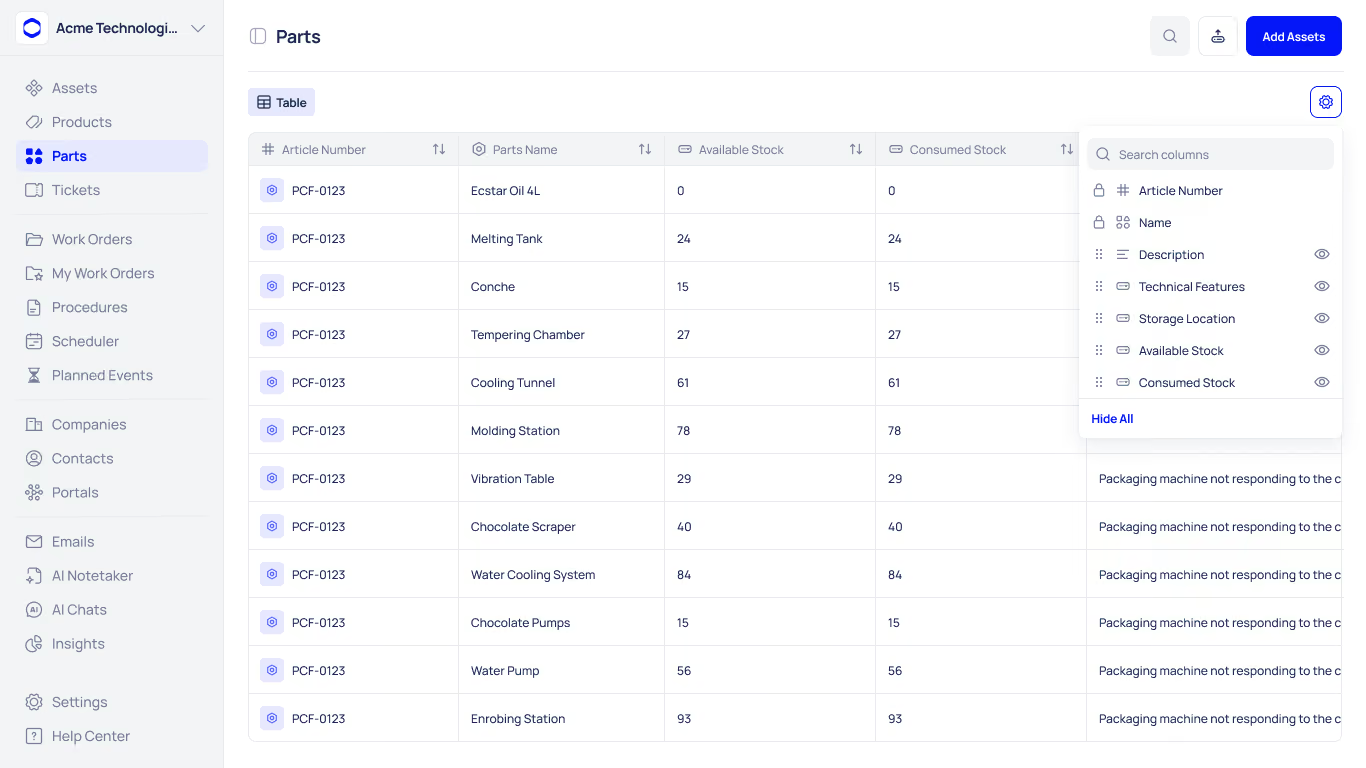
But you don’t have to climb the whole mountain in a day.
- Start with the critical assets. What are the machines that, if they stopped, would kill your production? List those first.
- Walk the floor. Don’t rely on old spreadsheets. Go and physically look at what is there.
- Standardise your naming. Agree on what to call things. Is it a "pump" or a "fluid transfer unit"? Pick one and stick to it.
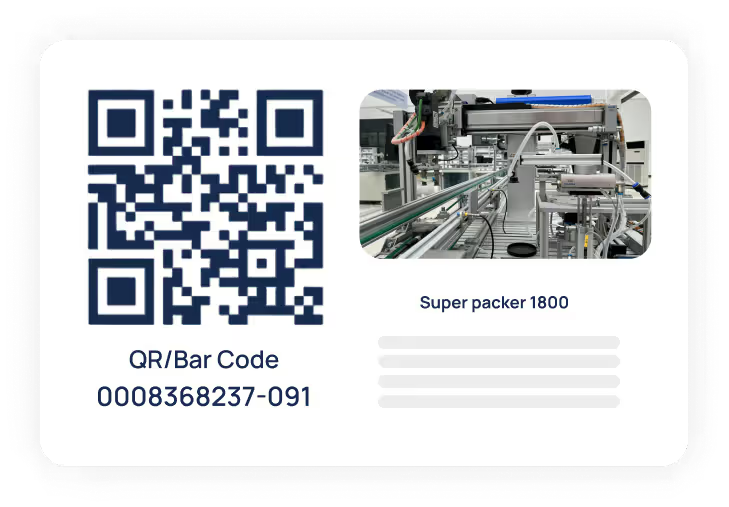
- Tag everything. Use QR codes or simple ID tags so there is no ambiguity about which machine is which.
- Use the right tool. Excel is great, but it breaks easily when multiple people try to use it. A dedicated digital system (like Makula) makes keeping this list up to date effortless.
Taking Control of Your Factory
Admitting "we don’t even have a single list of everything we own" is the first step. It is not a shameful admission; it is an opportunity.
By building that list, you stop the financial bleed of reactive maintenance. You stop buying spare parts you already have. You ensure you are legally compliant. You empower your staff and boost your business's value.
The cost of not having a list is high. The cost of fixing it is just a bit of time and focus. The return on investment is immediate.
Ready to stop guessing and start knowing what you own?