.avif)
Maintenance teams run on information. When that information is clear, structured, and complete, operations hum along without a hitch. However, many maintenance managers face a daily barrage of vague requests. A technician arrives at a job only to find the problem description says "machine broken", with no asset tag, no priority level, and no indication of the required tools. Work orders are unstandardised and missing required fields, leading to wasted time, frustrated staff, and delayed repairs.
This lack of structure creates a ripple effect across your entire facility. Without reliable data, you cannot accurately track maintenance costs, measure equipment downtime, or predict future failures. Your team spends hours chasing down the person who submitted the request just to figure out what needs fixing. It is a chaotic cycle that drains resources and prevents your maintenance department from shifting from a reactive panic to a proactive strategy.
The solution lies in implementing strict work order standardisation. By creating a uniform process where every maintenance request captures the exact same high-quality data, you eliminate the guesswork. This guide will walk you through a proven six-step methodology to structure your requests, define mandatory fields, and bring total clarity to your maintenance operations.
The High Cost of Unstructured Maintenance Requests
Poor data input guarantees poor operational output. When engineers receive incomplete work orders, they are forced to play detective. They must walk across the factory floor to locate the malfunctioning asset, return to the stores to fetch the right parts, and often consult manuals they should have had with them from the start.
This administrative friction heavily impacts your wrench time and the actual time technicians spend fixing equipment. Every minute spent deciphering a vague request is a minute lost to administrative bloat. Furthermore, unstandardised records corrupt your maintenance database. If one engineer logs a repair under "HVAC fan" and another logs the same issue under "Air con unit 3", generating accurate historical reports becomes impossible.
Adopting proper work order standardisation acts as a protective shield for your maintenance database. It ensures that every piece of information logged is actionable, searchable, and valuable for long-term strategic planning.
The 6-Step Work Order Standardisation Playbook
Transitioning from a chaotic system to a highly organised one requires a methodical approach. Follow these six steps to completely overhaul your maintenance requests.
Step 1: Audit Your Current Work Order Process
You cannot fix a system until you understand exactly where it fails. Begin by gathering a random sample of 50 to 100 past work orders from the last six months. Review these documents carefully to identify recurring gaps and errors.
Look for patterns in the missing information. Are requestors frequently forgetting to include the asset location? Are the problem descriptions consistently too brief? Speak directly to your maintenance technicians and ask them what pieces of information they most often have to hunt down. Documenting these pain points gives you a baseline metric to measure your future improvements against.
Step 2: Define Your Required Fields
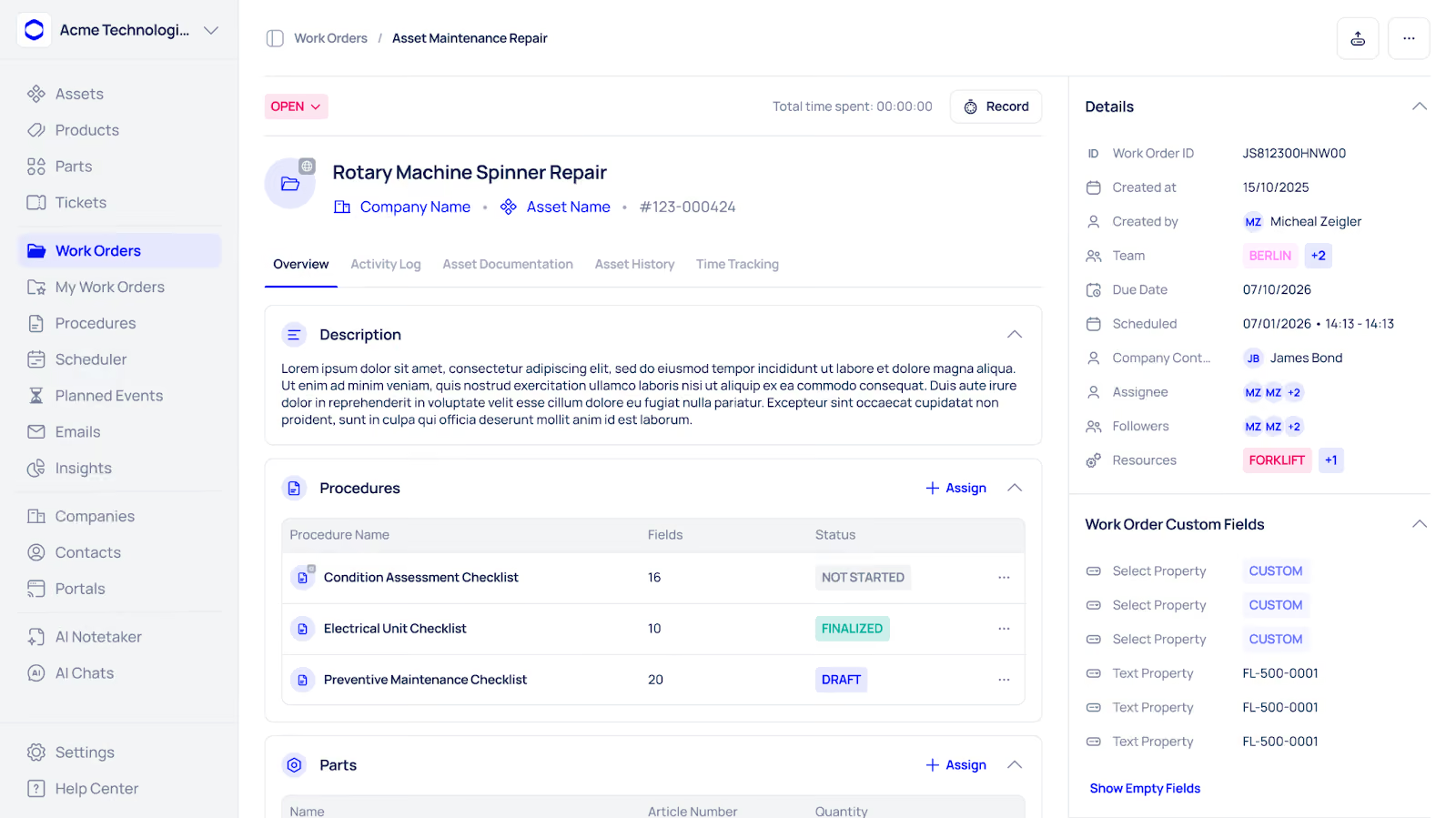
Once you know what information is routinely missing, you can establish your mandatory criteria. A work order should tell a complete story: who, what, where, when, and why. If a requester tries to submit a ticket without these essential details, your system should reject it until the gaps are filled.
To achieve robust work order standardisation, you need a firm policy on required data. This prevents the "machine broken" descriptions and forces the submitter to provide actionable context.
Essential Work Order Data Requirements
Step 3: Establish Clear Priority Levels
Not all maintenance tasks are created equal, but without a standardised grading system, every requester will mark their issue as "urgent". You need a clear, objective matrix that defines exactly what constitutes an emergency.
Create a formal priority scale and distribute it to everyone who can submit a work order. For example, a "Critical" task might be defined as an issue causing a total halt in production or posing an immediate safety risk. A "Low" priority task might involve cosmetic repairs or minor faults that do not affect asset performance. When everyone uses the same definitions, your maintenance planners can allocate resources effectively without political disputes.
Step 4: Create Standard Operating Procedures (SOPs)
Even with required fields in place, the quality of the data relies on the people entering it. Develop clear Standard Operating Procedures (SOPs) that guide staff on how to properly fill out, submit, and close a work order.
Your SOPs should include practical examples. Show them what a terrible work order looks like beside a perfect one. For technicians, the SOP must also cover the closing-out phase. A job is not finished until the technician logs the hours worked, the parts consumed, and the root cause of the failure. Documenting these steps formally cements your commitment to work order standardisation.
Step 5: Train Your Maintenance Team and Requestors
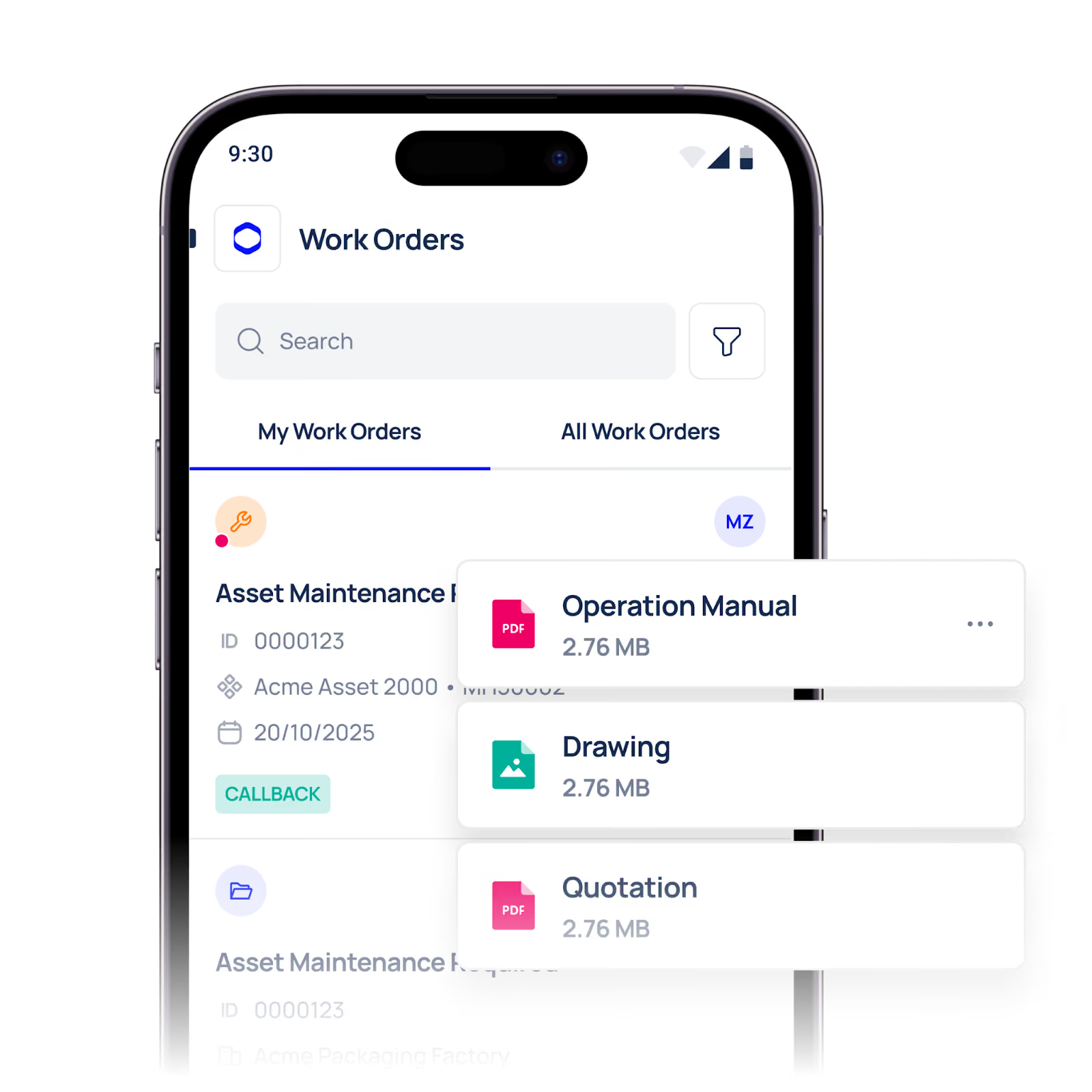
A playbook is useless if nobody reads it. You must roll out your new standards through comprehensive training sessions.
Host separate training tracks for the wider staff (who submit the requests) and the maintenance team (who execute and close them). Teach the general staff why these new required fields matter, explaining that better data leads to faster repair times. For your engineers, focus on the importance of accurate close-out data for future troubleshooting and asset lifecycle management. Using a modern maintenance platform like Makula can simplify this process by enforcing mandatory fields automatically through a user-friendly interface.
Step 6: Review and Refine Regularly
Standardisation is an ongoing discipline. Schedule a quarterly review to audit your work orders under the new system. Check compliance rates to see if technicians are filling out root cause codes and if requestors are accurately identifying assets.
If you notice a specific field is constantly filled out incorrectly, your SOP or training may need a minor adjustment. Continuous refinement ensures your work order standardisation efforts remain effective as your facility grows and your equipment roster changes.
Transform Your Maintenance Operations Today
Unstructured maintenance requests drain your budget, frustrate your engineers, and corrupt your data. By enforcing strict rules on how faults are reported and resolved, you reclaim control over your maintenance schedule. Implementing these six steps will drastically reduce administrative waste and give your technicians the clarity they need to focus on what they do best: keeping your operations running smoothly.
Ready to put these strategies into action? Do not let missing fields dictate your maintenance success. Download the playbook + templates to get access to pre-built SOPs, priority matrices, and audit checklists that you can deploy in your facility right now.