You submit a critical maintenance request, only to watch it sit in a manager's inbox for three days. By the time you get the green light, a minor fix has turned into a major repair. If you manage facilities or maintenance teams, you have likely heard this common complaint: "Approvals slow things down unnecessarily."
Finding the right balance between oversight and efficiency is a constant challenge. You need to control costs and ensure quality, but you cannot afford to create bottlenecks that stop your team from doing their jobs.
So, how do you decide which tasks need a manager's sign-off and which ones can proceed immediately? This guide will break down exactly when you should implement work order approval workflows and when you should let your team bypass them completely.
The approval dilemma: control versus speed
Every maintenance team needs rules. Without them, budgets spiral out of control, and compliance standards slip. However, treating every single task as a high-stakes decision creates administrative gridlock.
When you force a skilled engineer to wait for permission to replace a basic £5 filter, you waste time and money. The labour cost of waiting often exceeds the cost of the part itself. On the flip side, letting anyone order a £5,000 HVAC compressor without a review invites financial disaster.
The secret to a highly efficient maintenance team lies in categorising your tasks. You must build a system that automatically routes high-risk work to management while waving low-risk work straight through to the engineering floor.
When to use work order approval workflows
Certain situations absolutely require a second pair of eyes. You should strictly enforce work order approval workflows in the following scenarios:
High-cost materials and external contractors
Whenever a job requires purchasing expensive parts or hiring outside help, you need an approval step. Set a clear financial threshold. For example, any work order requiring materials over £500 automatically triggers a review. This keeps your budget intact and prevents unexpected invoice shocks at the end of the month.
Health, safety, and compliance tasks
If a job involves hazardous materials, working at heights, or critical safety systems, a manager must review the plan. You need to verify that the assigned technician has the correct certifications and that proper risk assessments are in place before work begins.
Major asset replacements
Repairing an asset is routine, but replacing it entirely requires strategic thinking. If an engineer decides a boiler is beyond repair, a manager needs to approve the replacement to ensure it aligns with the long-term capital expenditure plan.
When to skip the approval process
To stop approvals from slowing things down unnecessarily, you must empower your team to act independently on routine tasks. Skip the approval process for these situations:
Standard preventative maintenance
If a task is already on the monthly preventative maintenance schedule, it does not need another layer of permission. The work was approved when you built the schedule. Let your team execute these tasks immediately so they can keep your assets running efficiently.
Low-cost, routine fixes
Establish a "pre-approved" budget for minor repairs. If a technician needs to replace a lightbulb, fix a leaky tap, or swap out a standard belt, let them do it. Trusting your team with small decisions drastically reduces administrative delays and boosts morale.
Emergency safety hazards
When a pipe bursts and floods a workspace, your team cannot wait for a manager to check their email. Emergency protocols must bypass standard work order approval workflows. In these cases, the priority is making the area safe and stopping further damage. You can review the paperwork and costs after the hazard is contained.
Visualising your approval strategy
To help you organise your approach, here is a quick reference guide on how to route different types of maintenance requests:
Automating the decision process
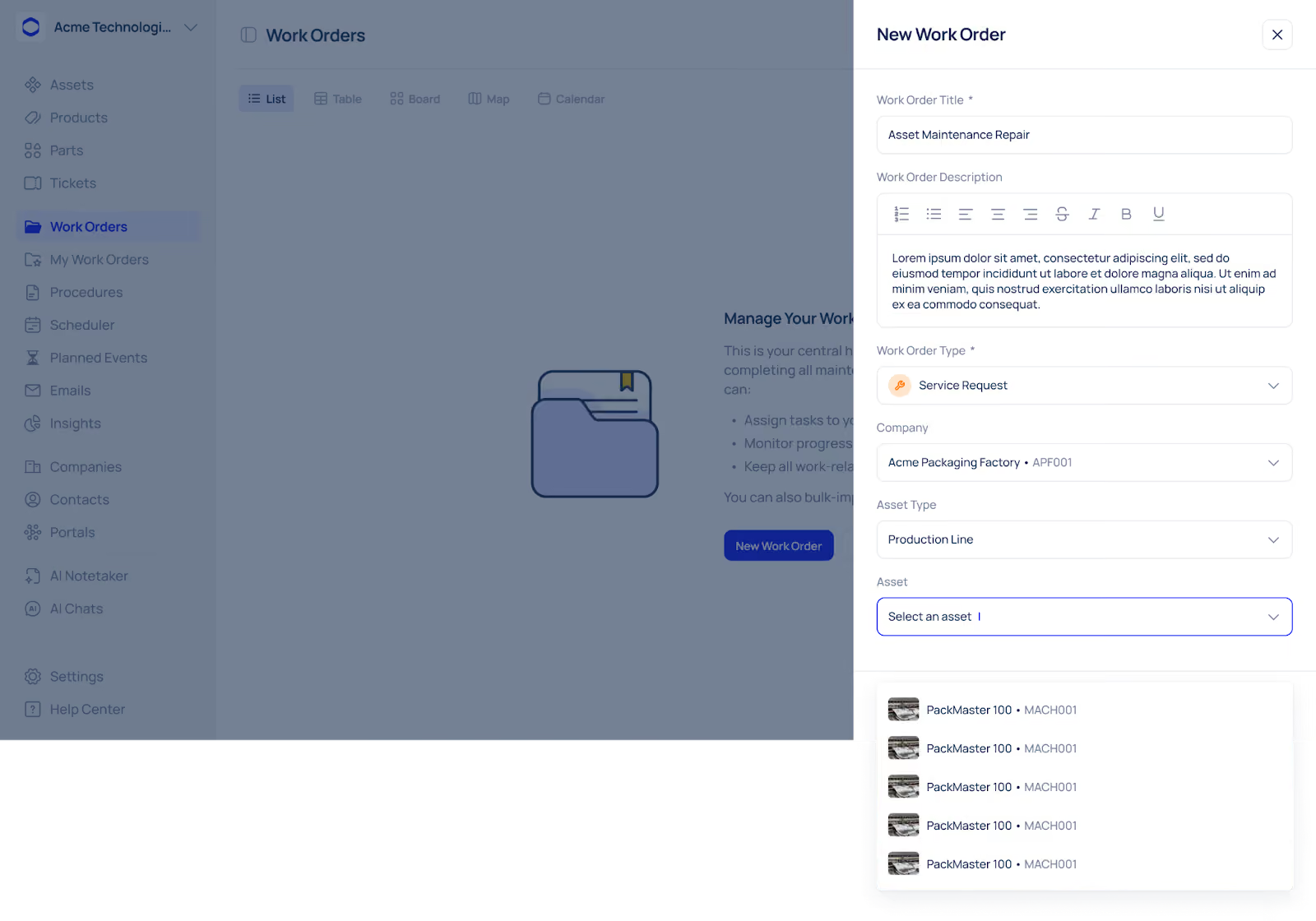
The easiest way to stop approvals from slowing you down is to remove the human element from the routing process. Using an intelligent platform like Makula allows you to set up automated rules for your site.
You can configure the system to instantly approve requests under a certain value, while automatically flagging high-cost or high-risk jobs for managerial review. This ensures your team never waits unnecessarily, whilst keeping you in complete control of your budget and safety standards.
Repurpose this guide for your team
Do not keep this knowledge to yourself. A great way to align your entire department is to take the rules you establish here and include them in your site implementation pack.
By outlining exactly which tasks require sign-off and which do not in your onboarding materials, you set clear expectations from day one. New technicians will know exactly how much autonomy they have, and new managers will understand how to avoid creating bottlenecks.