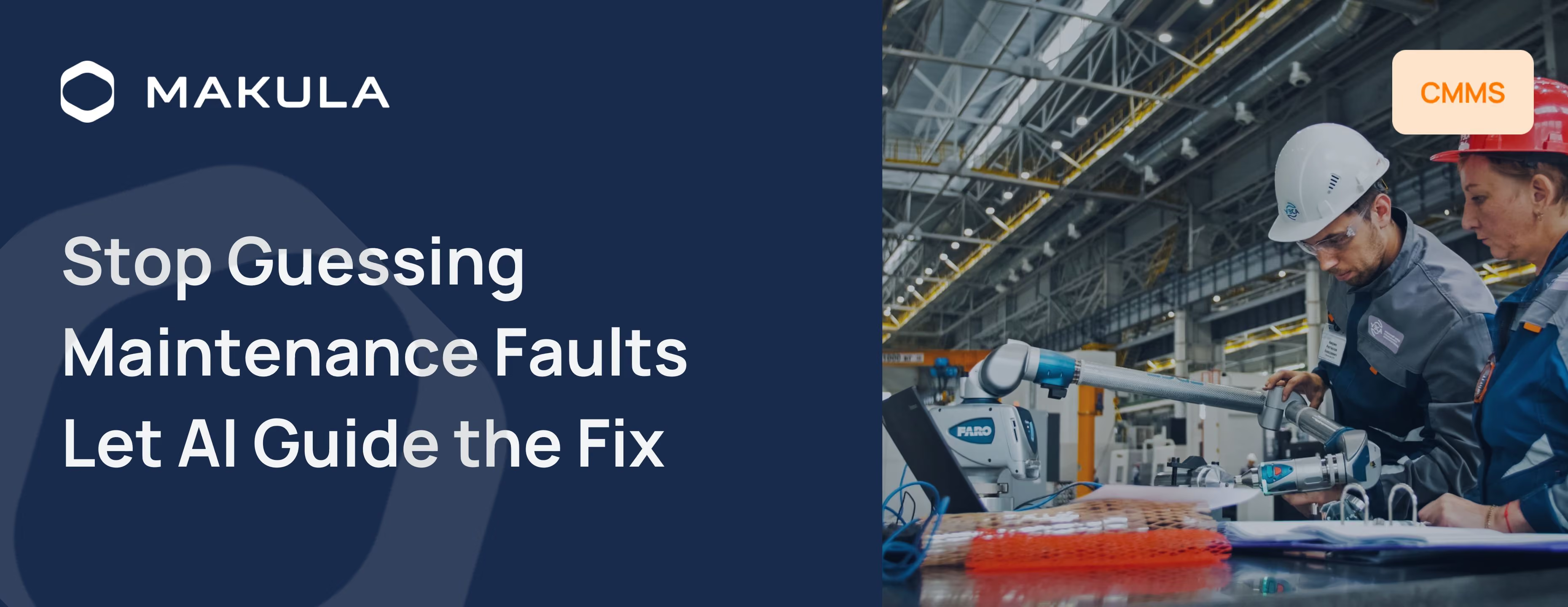
The Everyday Challenge on the Shop Floor
A familiar fault code flashes on the control panel. The machine is down, and every maintenance engineer on the floor has a theory about what is wrong. One thinks it is a sensor calibration issue, another swears it was a dodgy valve last time, and a third is already searching for the wiring diagram, convinced it is an electrical fault.
The problem is that there is no simple place that tells you what commonly fixes this symptom. The answer exists, but it is scattered. It is hidden in years of completed work orders, locked away in the heads of senior technicians, or buried in complex manuals. This lack of accessible, consolidated knowledge turns every repair into a time-consuming exercise in trial and error.
This guesswork costs more than just time; it costs money in wasted parts, extended downtime, and mounting frustration for your skilled team.
Understanding the Hidden Costs of Guesswork
Many teams underestimate just how expensive this inefficiency is. Every extra minute spent hunting for answers means production targets slip further away. Instead of focusing on high-value work, your best engineers are bogged down by admin and research. Stress levels rise as managers push for faster solutions and pressure on new hires mounts when they cannot find quick answers themselves.
The traditional hunt through outdated manuals or vague notes is not just a minor annoyance over time, it erodes productivity and morale.
From Tribal Knowledge to Actionable Intelligence
In many industrial settings, troubleshooting relies on "tribal knowledge." This is the unwritten expertise that experienced engineers accumulate over years of service. While incredibly valuable, it is also a fragile resource. What happens when the one person who knows the "secret fix" is on holiday, on another job, or leaves the company? The knowledge walks out the door with them.
Relying on individual memory means that for the same symptom, your team might try three different fixes before landing on the right one. This is not efficient. A modern maintenance strategy requires shifting from this fragmented knowledge base to a centralised intelligence system. This is where an AI maintenance copilot transforms your operations. It acts as a digital expert, available to everyone, all the time.
Introducing the AI Maintenance Copilot: Changing How We Work
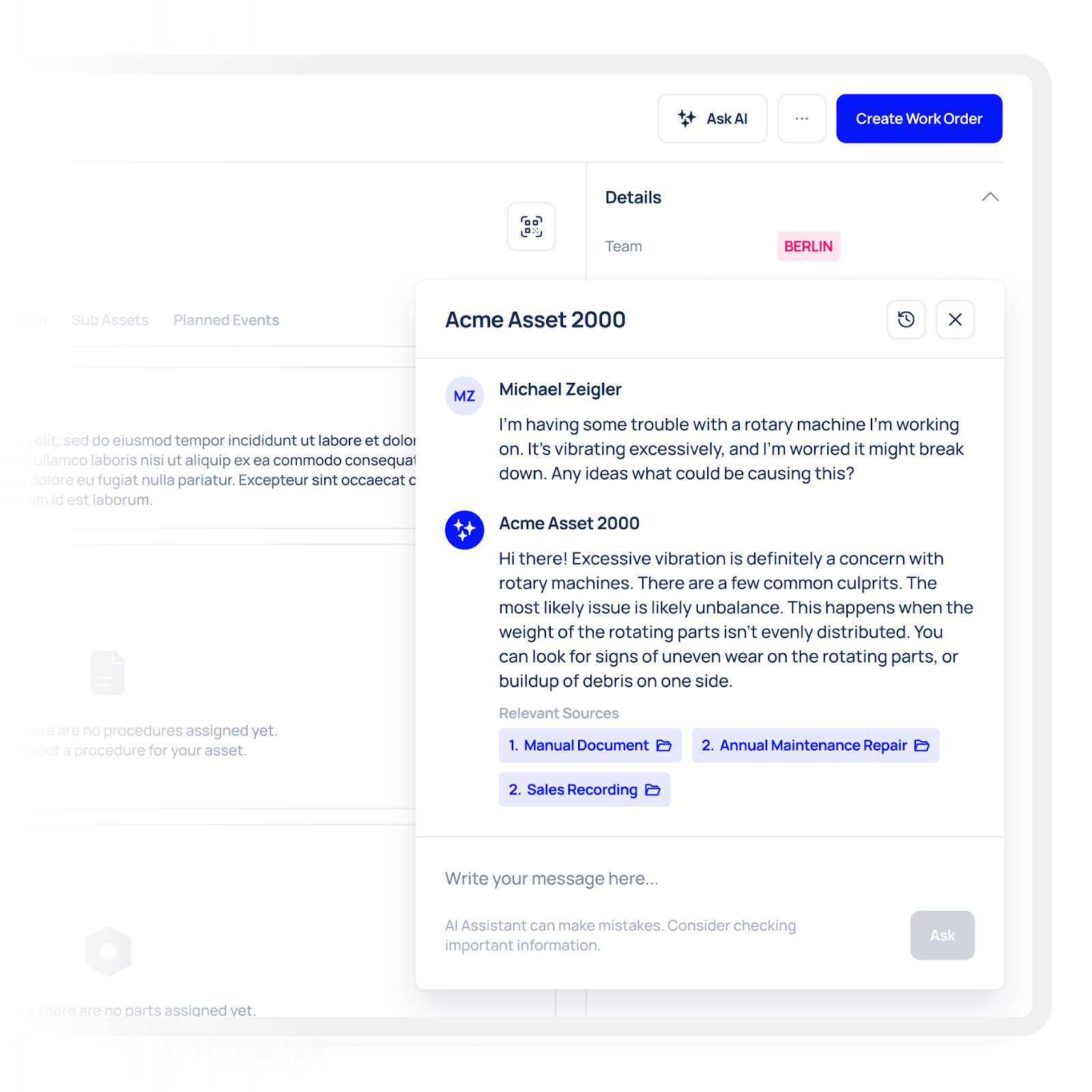
Imagine logging each maintenance activity, capturing key insights as you go, and having them analysed automatically. An AI maintenance copilot does not just store data; it understands it. By analysing historical repair data, work order notes, and technical documentation, it can identify patterns that are invisible to the human eye. When a fault occurs, it does not just present a list of every possible solution. Instead, it provides a prioritised summary of the most likely fixes.
How an AI Maintenance Copilot Works
Your engineer scans a fault code and instantly sees a screen that says:
- 75% Probability: Faulty Solenoid (Part #XYZ-123). Last replaced 18 months ago.
- 15% Probability: Clogged Filter. Check pressure reading at point B.
- 10% Probability: Sensor Miscalibration. Refer to manual page 87 for reset procedure.
This simple summary changes the game entirely. It turns a speculative investigation into a data-driven action plan, ensuring that time and resources are focused on the most probable solutions first. Over time, as the copilot continues to learn, its recommendations become even more precise, shaving hours off response times and boosting team confidence.
Comparing Approaches: Traditional Versus AI-Powered Troubleshooting
To understand just how transformative this change can be, consider the difference between a manual approach and an AI-supported one:
The Real-World Impact: Benefits for Your Team
With an AI maintenance copilot, your team is equipped with collective intelligence that was previously impossible to access so effortlessly. This brings benefits for everyone:
- Faster Onboarding: New hires can deliver results sooner, guided by proven solutions.
- Reduced Downtime: Less time investigating, more time fixing means machinery is back up rapidly.
- Better Resource Planning: Accurate predictions mean fewer wasted parts and more confident ordering.
- Lower Stress: Teams can focus on solving, not searching, boosting morale and building trust.
Stop Guessing, Start Fixing
Your team has the skills to solve complex mechanical and electrical problems. The biggest barrier they face is often the diagnostic process itself, the frustrating hunt for the starting point. Providing them with a tool that shortcuts this process is the single most effective way to boost their efficiency and morale.
An AI maintenance copilot empowers every member of the team, from a new apprentice to a seasoned veteran, with the collective knowledge of your entire organisation. It ensures that the best, most efficient solution is always the first one they try and that mistakes and repeated errors become a thing of the past.
See It in Action
Stop leaving repairs to chance. Give your team the clarity they need to act decisively.
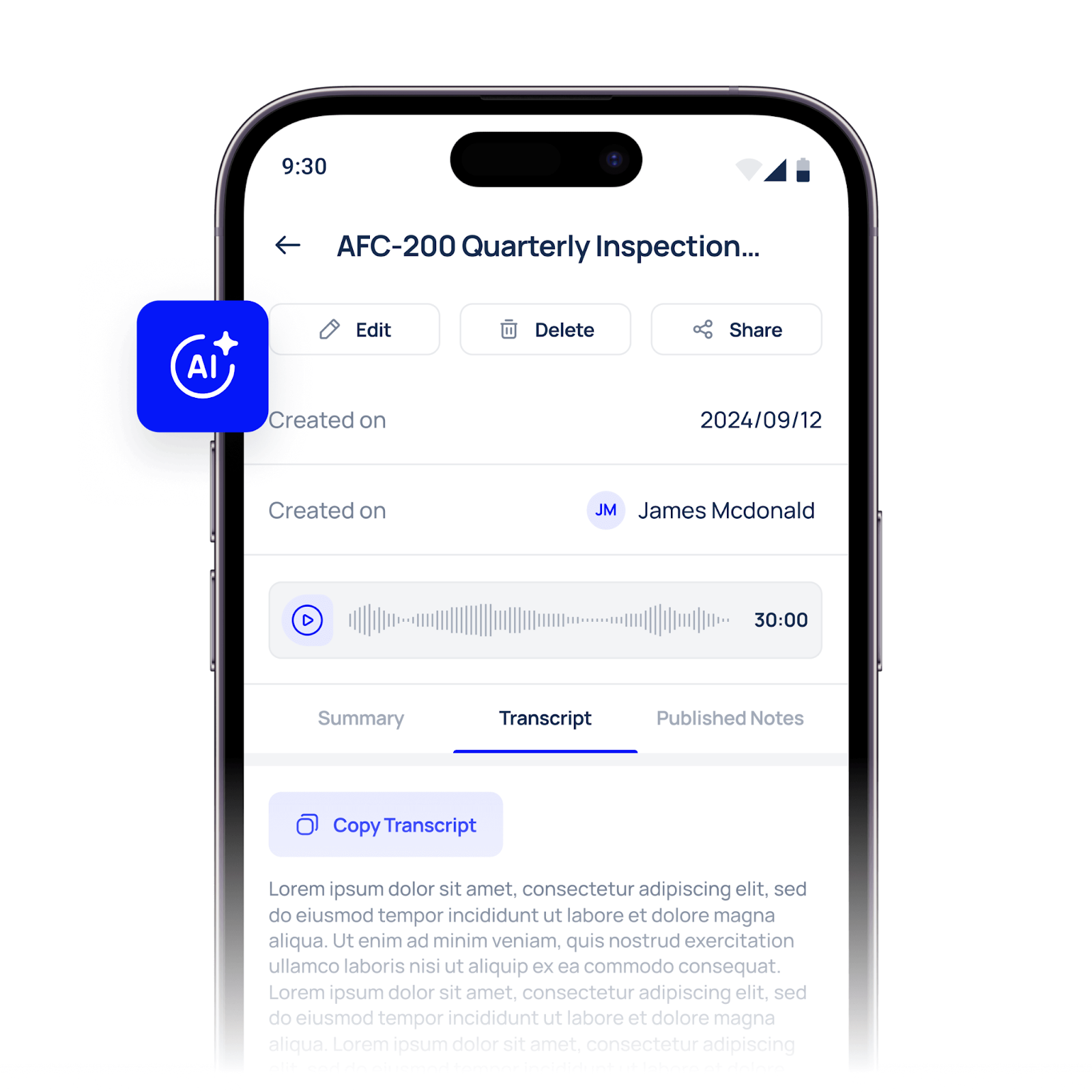
Curious to see what this looks like in practice? We have created a sample summary showing how an AI can present the most likely fixes for a common industrial fault.
What this looks like in daily maintenance
The AI Maintenance Copilot accelerates diagnostics — it surfaces proven fixes from your own records so techs start with the most likely solutions instead of guessing. When a technician enters a fault code or describes a symptom, the copilot returns a concise, evidence-backed summary:
- Top past fix: Replace Solenoid Valve A — documented in 8 similar work orders (link to WO#1234).
- Also try: Inspect filter at point B — previous jobs show this reduced the issue (link to WO#5678).
- Reference: Manual section 4.2 — sensor recalibration procedure.
Each suggestion links to the original work order, photos and manual pages so the technician can quickly verify before acting. Technicians confirm and log the result — that human verification both prevents blind reliance and improves future recommendations.
In short: the copilot brings the right historical evidence to the floor. Techs keep control; the system speeds diagnosis and increases first-fix rates.