.avif)
You already have the data. The problem is that your reports do not always tell the truth.
At the monthly review, the numbers should help you explain what is happening on site. Instead, they often create more questions. Why does downtime look higher this month? Why do the repair times not match what the team experienced? Why do recurring faults appear in one report but disappear in another?
When maintenance data is scattered across spreadsheets, logs, and different systems, the result is unreliable reporting. And when the reports cannot be trusted, it becomes much harder to justify budget, track performance, or prove the value of your maintenance team.
That is why a 7-day maintenance reporting audit matters.
It helps you identify what is wrong with your numbers, where the data is breaking down, and what needs to change before the next leadership review.
See How Better Mobile Workflows Reduce Maintenance Admin Time
Discover how maintenance teams use Makula to simplify mobile workflows, reduce shop-floor admin, and help industrial maintenance technicians complete jobs faster with clearer, technician-friendly processes.

Why maintenance reports lose accuracy
Most reporting problems do not start with one big mistake. They build up over time.
A fault is recorded using one name in a spreadsheet, another in a work order, and another in a handwritten note. A repair is closed late. A time entry is missed. A part is used but not logged. Soon, the numbers no longer match the reality on the floor.
That creates problems such as:
When that happens, your team may be working hard, but the reports do not reflect it clearly.
What a 7-day reporting audit shows
A 7-day maintenance reporting audit is designed to give you a fast and practical view of what is breaking down in your data.
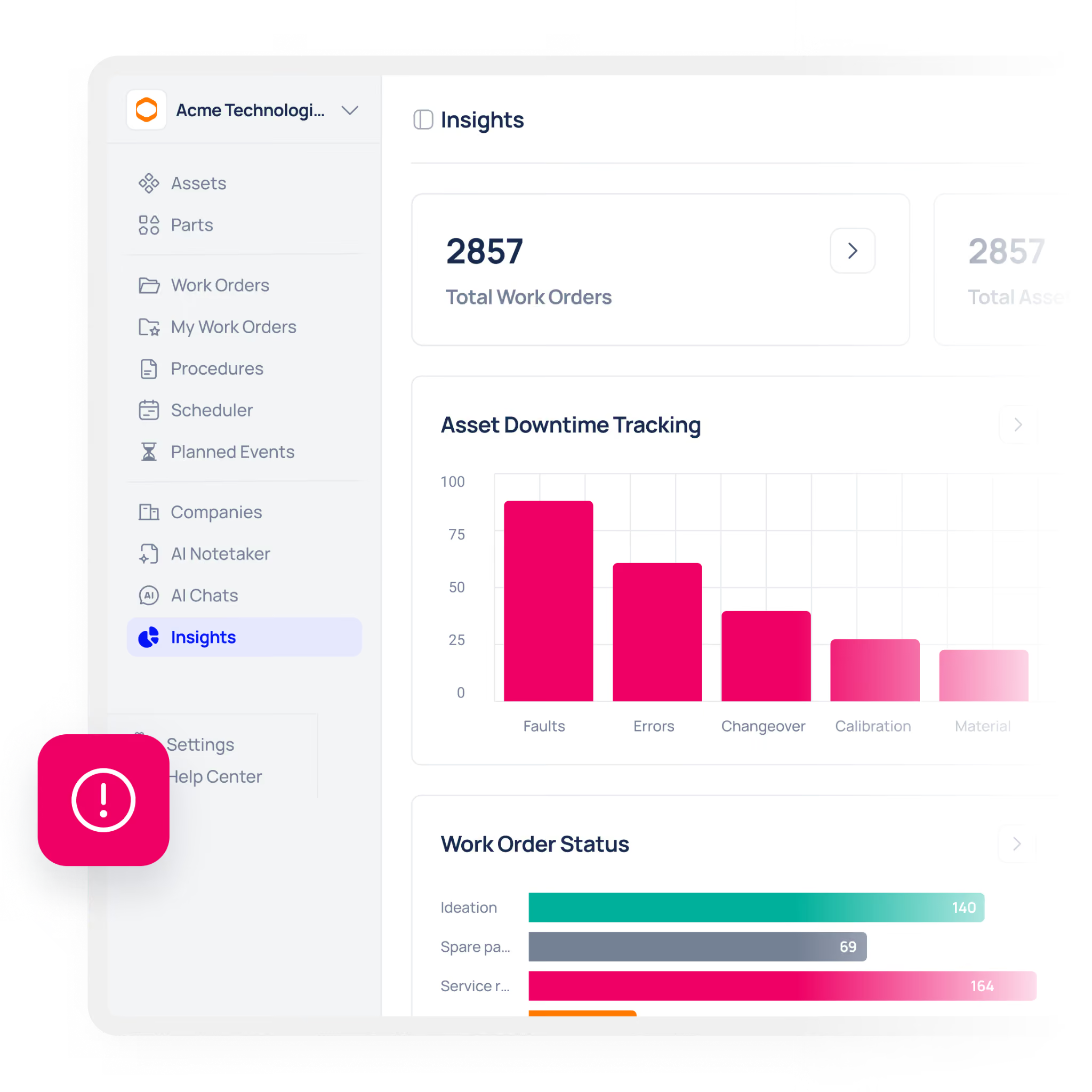
It looks at:
- recent work orders
- maintenance logs
- repair notes
- fault codes
- time tracking
- spare parts usage
- recurring breakdown patterns
The goal is not to rebuild everything. The goal is to show you where the reporting process is failing so you can fix the biggest problems first.
What you should expect to receive
A useful audit should not leave you with a vague summary. It should give you evidence you can act on.
These outputs give you something much more useful than a long consultancy report. They show the problem, explain the cause, and point to the next step.
What goes wrong in reporting
Once the data is reviewed, the same issues usually appear again and again.
1. Missing or inconsistent timestamps
If jobs are opened late or closed inconsistently, your MTTR and response time data becomes unreliable.
2. Faults recorded in different ways
If the same machine issue is entered under multiple names, recurring trends become harder to identify.
3. Poor parts tracking
If parts are used but not recorded clearly, cost reporting and inventory analysis become incomplete.
4. Manual reporting work
If someone has to clean spreadsheets every month, the process is slow and error-prone.
5. No single source of truth
If each team keeps its own version of the data, the final reports will never fully match.
Manual reporting vs structured reporting
Here is the difference between relying on fragmented records and using a structured maintenance reporting process.
This is where a CMMS becomes more than a record-keeping tool. It becomes the foundation for reporting you can trust.
Why this matters before your next leadership review
When your reports are unreliable, every decision becomes harder.
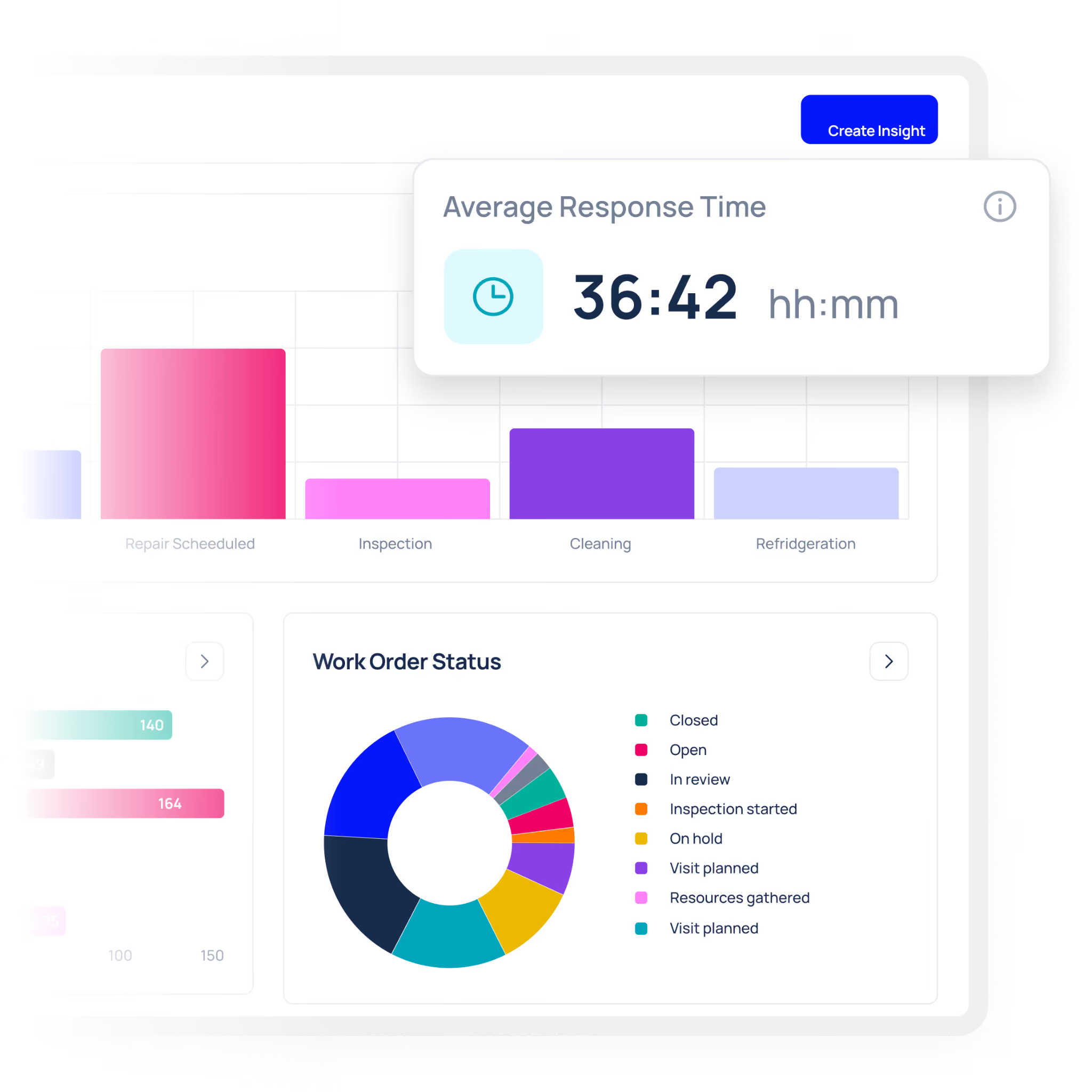
Leadership may question downtime numbers. Finance may question repair costs. Operations may question the value of maintenance improvements. That creates friction, even when your team is doing good work.
A reporting audit helps you walk into the next review with clearer evidence. Instead of defending weak charts, you can explain what the numbers mean and where the data needs improvement.
How Makula CMMS helps
Makula CMMS helps maintenance teams capture cleaner data at the source.
That matters because better reporting starts with better inputs. When fault codes, repair times, asset references, and parts usage are captured properly during daily work, the reports become much easier to trust later.
Makula helps teams:
- record work orders more consistently
- keep maintenance data in one place
- track recurring issues more clearly
- build reports from structured records
- reduce manual spreadsheet work
That makes reporting easier for the maintenance team and more useful for management.
What to test before you choose a system
If you are evaluating a CMMS, do not just ask whether it stores work orders.
Ask whether it can help you trust your numbers.
If the answer to these questions is unclear, the reporting layer is not strong enough.
Conclusion
Your maintenance team may already be doing the work. The real question is whether the numbers tell the same story.
A 7-day reporting audit helps you find out what is wrong with your maintenance data, where the gaps are, and how to fix the biggest reporting problems fast. That gives you clearer insights, stronger management confidence, and better control over how your team is measured.
When the numbers are reliable, decisions become easier.
See what is wrong with your maintenance reports in 7 days and get the clarity you need to trust your numbers.